



Rebuilding schools, restoring stability
The role of teacher education after Hurricane Melissa
In the aftermath of Hurricane Melissa, Jamaicans have watched images of flattened roofs, shattered windows, toppled power lines, and damaged cultural landmarks. Dionne Jackson-Miller’s recent segment on her All Angles programme on Television Jamaica brought these realities into sharp focus, with principals painfully describing the devastation they witnessed in real time.
One principal watched the destruction of his administration block while powerless to intervene; others spoke of months, even a year, before a return to normality.
I have given decades of service to Jamaica’s education system and almost all of those years to teacher education. I feel compelled to comment on the damage done to school infrastructure by the recent record-breaking hurricane, and the deeper educational and psychosocial impact that this disaster now imposes on our students, teachers, and communities.
A NATIONAL EDUCATIONAL EMERGENCY
It is true that Hurricane Melissa destroyed homes, buildings, and livelihoods, and I empathise with those who have suffered loss, but my focus is its disruption of continuity, stability, and the delicate ecosystem of learning that our children rely on.
The All Angles discussion highlighted the reality that educational concerns extend far beyond exam preparation. Primary Exit Profile (PEP), Caribbean Secondary Education Certificate (CSEC), and Caribbean Advanced Proficiency Examinations (CAPE) students face tremendous pressure, and the recent commitment from the Minister of Education, Skills, Youth & Information to support these students, even through holiday sessions, is necessary and commendable.
However, Jackson-Miller’s panel correctly emphasised a deeper truth: Learning is cumulative. Interruptions affect every stage, not only those preparing for exams. When principals warn that grade 7 to grade 9 students are exhibiting signs of “wildness”, diminished discipline, weakened social skills, and regression in classroom behaviour, they are pointing to a psychosocial reality that teacher-educators know well: School is the primary stabilising force for thousands of Jamaican children.
Many Jamaican homes do not provide structure, and communities, particularly post-disaster, can be sites of trauma. School, therefore, becomes the anchor — academically, emotionally, socially. This means that every day out of school matters, especially after Hurricane Melissa’s disruption of home and community stability. Further, every delayed repair, every unsafe classroom, every unaddressed gap compounds long-term educational loss.
THE IMPERATIVE OF TRAINED TEACHERS IN A PERIOD OF NATIONAL RECOVERY
As we confront this crisis, our society should recognise the centrality of the teaching profession in our national rebuilding process. The All Angles conversation was a public reminder that:
• We face not only infrastructural damage, but a student development crisis as well.
• Post-COVID 19 pandemic learning loss has already widened gaps in literacy, numeracy, discipline, and social readiness.
• Hurricane Melissa challenge threaten to deepen these gaps unless we mobilise both physical and human resources swiftly.
In my view, teacher-training institutions like The Mico University College must be partners — active and strategic — in the reconstruction agenda. Our future teachers must be prepared to deliver curriculum, but they must also be ready to support students who:
• have experienced trauma,
• have lost homes or security,
• have regressed behaviourally, and
• require individualised support to re-engage academically.
Teacher training institutions must accept a new reality: Disaster-responsive pedagogy is no longer optional; it is essential.
The devastation described by principals underscores the fact that the Ministry of Education cannot recover alone, and neither can individual schools. Recovery must be a coordinated, multi-sector partnership. :
While the Government is accelerating assessments, repairs, and safe reopening, Teacher-training institutions must prepare to provide:
• psychosocial training modules,
• classroom-management support,
• diagnostic testing assistance, and
• practicum students who can support overloaded schools during the transition period.
Every part of society has a role to play. The private sector and philanthropic individuals or non-government organisations (NGOs) have been, thankfully, supporting rebuilding with materials, equipment, and targeted financial support. So, as Jamaicans we have been demonstrating great will, the moment demands that we also channel that ‘will’ strategically. We must place greater focus on healing our nation’s children.
STUDENTS CANNOT AFFORD ANOTHER EDUCATIONAL SETBACK
The principals interviewed also spoke powerfully about a concern that every educator shares — the fear of leaving some students behind because their “moment” is not immediate. This is a profound insight.
If we focus only on exam cohorts, we risk creating future crises in literacy, numeracy, science readiness, and vocational capacity. Interventions must, therefore, be equitable. They should reaching:
• early grades,
• middle school cohorts,
• vulnerable learners, and
• students with special needs.
Lecturers at The Mico are tasked with ensuring that our newest graduates and student teachers understand this complexity and are trained to respond to it. Teacher-training institutions nationwide should adopt a similar approach, because these are necessary skill sets in this age of increased more intense natural disasters.
A TIME FOR NATIONAL RESOLVE
Hurricane Melissa has truly tested Jamaica’s education system, but it is also revealing our resilience, our capacity for collective action, and the courage of our principals and teachers who show up even when their own schools, homes, and lives have been shaken. This moment marks what was destroyed, but it also marks what we should rebuild stronger.
The Mico University College stands ready to:
• support the national response,
• equip teachers with disaster-responsive skills,
• assist schools facing learning loss, and
• serve as an educational backbone during this period of reconstruction.
Our nation’s children cannot and must not wait. Let us rebuild not only classrooms, but confidence, continuity, and the promise of education that every Jamaican child deserves.
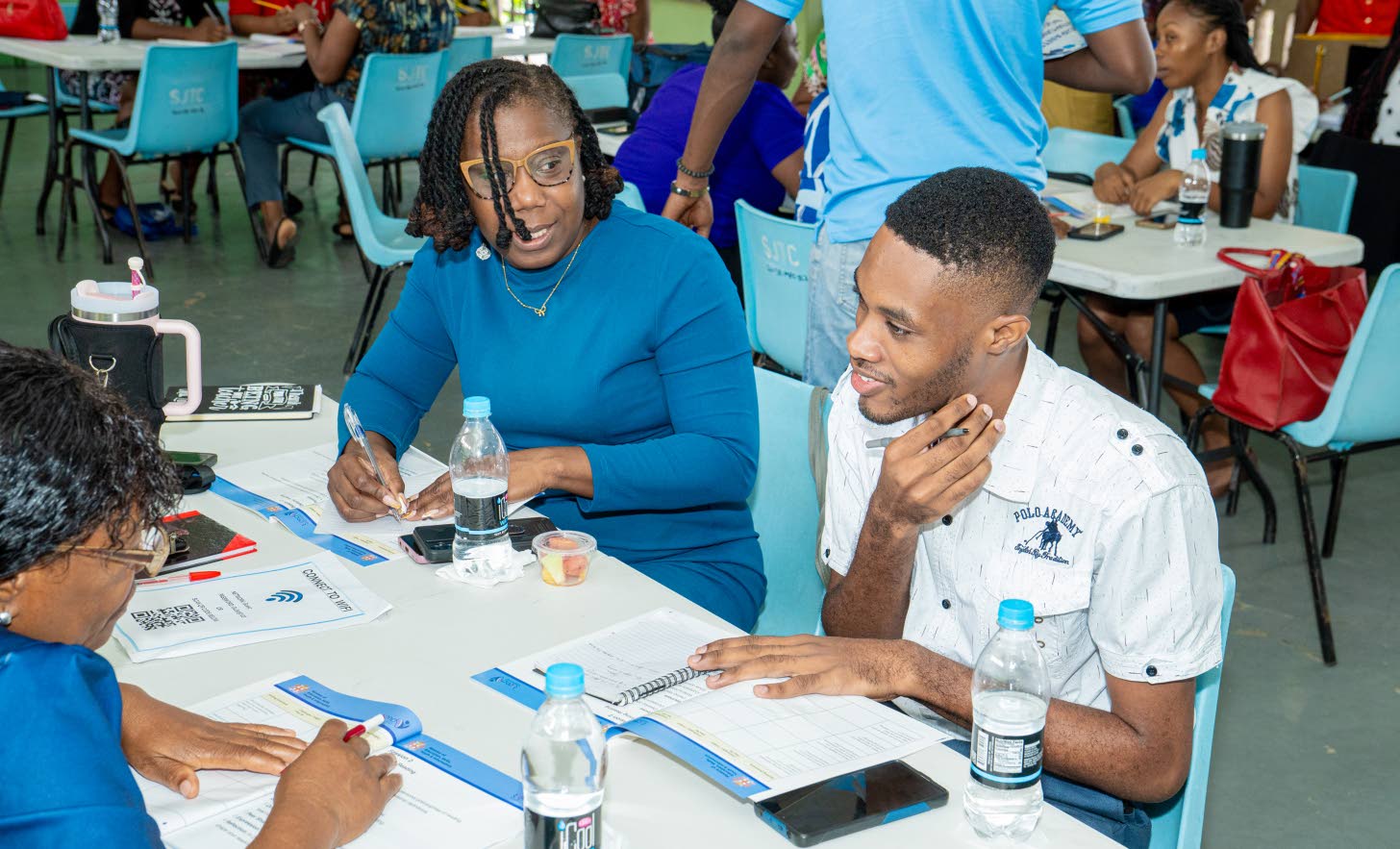
Participants engage in collaborative learning during an early reading intervention training session at St Joseph’s Teachers’ College recently.


