


Women: The quiet backbone in crisis situations
WHEN disaster strikes, survival stories often focus on the physical, that is, who found shelter, who rescued whom, and who built what out of nothing.
But beneath every dramatic headline, there’s another kind of heroism unfolding in the quieter, often unseen and just as essential woman. She’s the one making meals, keeping her children calm while her own hands shake, and holding her family’s sense of normal together.
“In crises, women don’t just face the storm, they face the structures that make surviving it harder,” said Gender professional Carlissa Farquharson. “Disasters magnify existing inequalities, and women are more likely to be the caregivers, the ones responsible for children, the elderly and the sick, and sadly, the ones targeted for their vulnerabilities.”
She said shelters aren’t always designed with women’s safety in mind, either, and privacy and security can vanish overnight, making something as basic as changing clothes or finding a safe bathroom feel like a risk. In the chaos of relief distribution, women can also be the last in line, literally and metaphorically.
“Then there’s the economic aftershock, in that women’s work, the domestic, the informal disappears first and recovers last. The result is a long tail of financial and emotional strain that outlives the disaster itself,” she said.
Farquharson said while men are often expected to rebuild the physical structures, women are expected to rebuild the emotional.
“They become the unofficial therapists, teachers and cheerleaders, maintaining morale while the world outside (and sometimes inside) falls apart,” she said.
Life coach Beth-Ann Falconer said it’s not that women are naturally better at survival, it’s just that they’ve had to do it.
“Society has long conditioned women to regulate not only their own emotions, but everyone else’s,” she said. “So when disaster hits, they’re suddenly the anchor everyone clings to, even when they’re barely afloat themselves.”
She said the cruel irony is that society celebrates women’s resilience, but rarely support it.
“We tell mothers, wives and daughters how “strong” they are without asking if they’re okay. Strength, in these moments, becomes both compliment and burden.
“Staying mentally grounded in a disaster isn’t about serenity, it’s about survival,” she added. “For many women, it means compartmentalising fear, suppressing panic and performing calmly so their children don’t absorb the chaos.”
She said it takes a toll, and studies show that women often experience higher rates of post-traumatic stress, depression and anxiety after disasters not because they’re weaker, but because they’ve been holding everyone else up.
So what would it look like if women were truly supported in disasters not just with sympathy, but with structure?
Falconer shared these tips:
•Provide safe spaces in shelters and camps where privacy and protection are guaranteed.
•Provide gender-sensitive aid distribution that recognises caregiving burdens and ensures women aren’t last in line.
•Have mental health services designed for those who carry emotional loads, which are accessible, stigma-free, and available long after the news cameras leave.
•Provide women’s voices in disaster planning and recovery teams, because the people most affected should be shaping the response.
“Resilience shouldn’t be another word for doing everything for everyone, forever,” Farquharson said.
“Sometimes the bravest thing a woman can do in a disaster isn’t just keeping calm, it’s finally being allowed to fall apart, knowing the world she’s held together for so long will hold her too.”
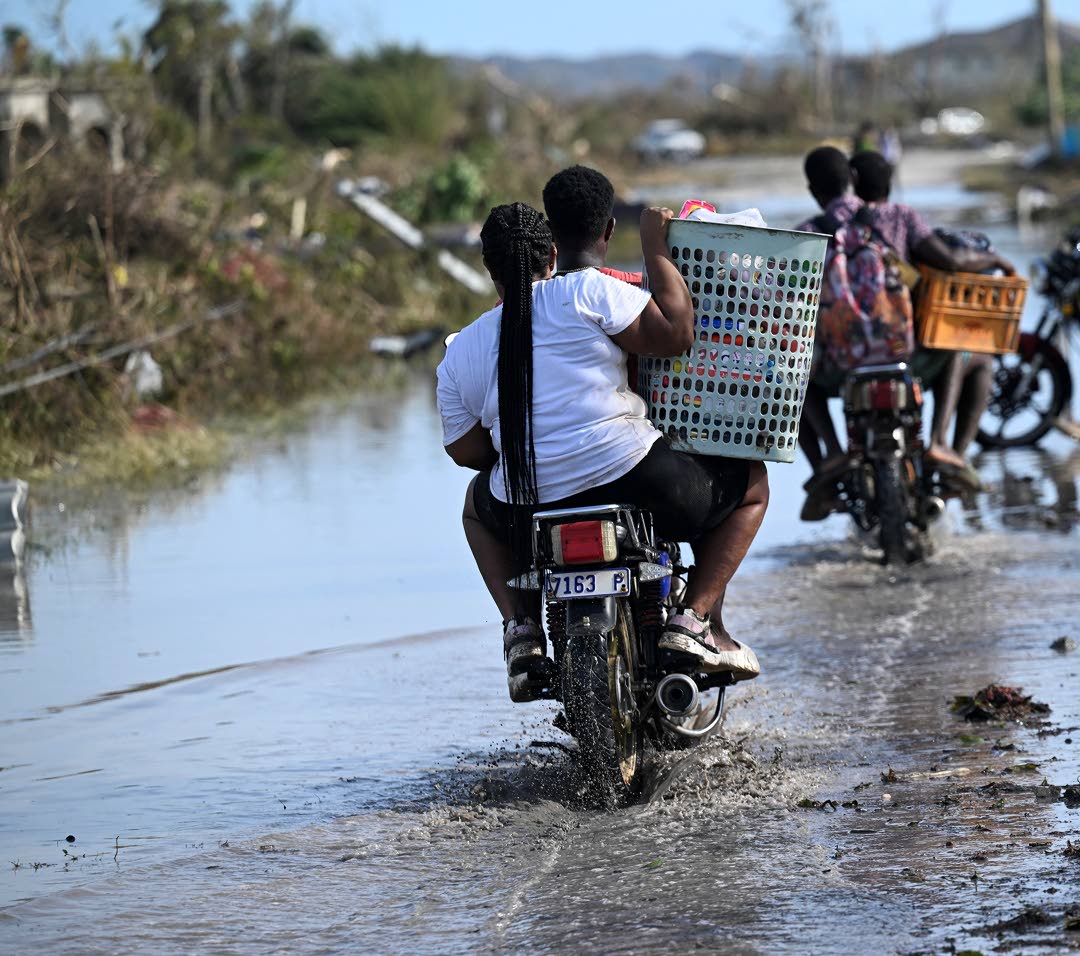
Residents make their way from Black River along the Crane main road following the passage of Hurricane Melissa, in St Elizabeth on October 29. (AFP)

