Truth and democracy in Ja’s 2025 election
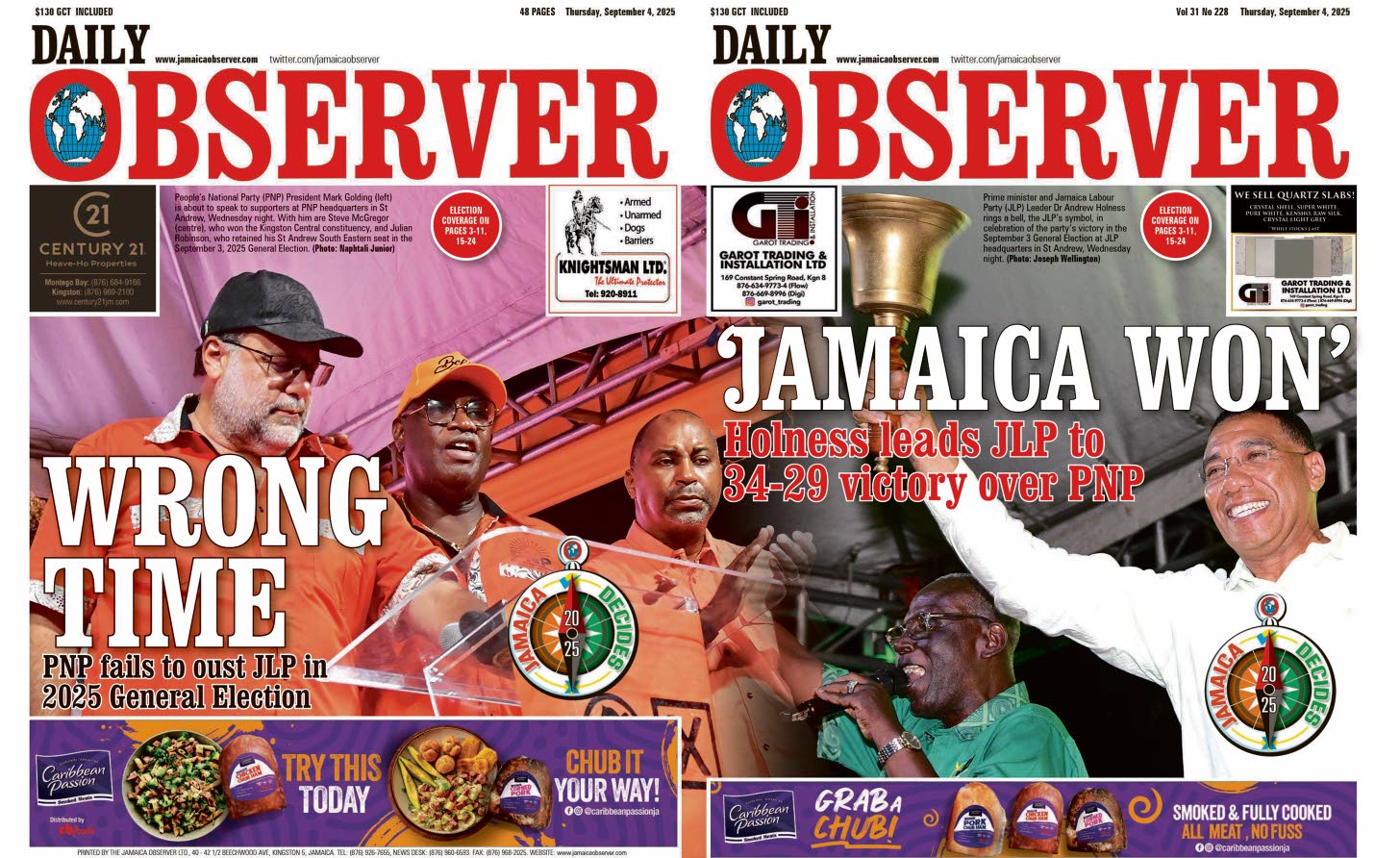
The election is over. The Jamaican people have spoken, and they have chosen continuity under Dr Andrew Holness and the Jamaica Labour Party (JLP).
Dr Holness becomes only the second prime minister in Jamaican history, and the first JLP leader, to win three consecutive terms in Government. He deserves credit for achieving that feat.
But beyond the historic nature of the achievement, there are deeper truths about the campaign that must be spoken. They must be spoken because generations to come must know that, in the defining moment of the 2025 General Election, when misinformation, political malice, and scare tactics threatened the body politic, the Jamaican voter stood in defence of truth.
An insidious narrative was defeated last Wednesday. It must never again be allowed to take root in this country.
GOVERNANCE AND THE ‘AUTHORITARIAN’ CLAIM
One of the central lines of attack in this election was that Jamaica’s governance arrangements were somehow under siege. Commentators, some in academia, in the media, and sections of civil society, issued dark warnings that the country was on the brink of authoritarianism.
Their evidence? That institutions were criticised. That citizens, specifically Andrew Holness, turned to the courts when they felt aggrieved by decisions of public bodies. And that the Government asked the people for a third mandate.
By any fair measure, these do not amount to a threat to democracy. On the contrary, they are the very essence of it. Freedom to dissent, to criticise, and to challenge the state is the cornerstone of Jamaica’s democratic experiment, those rights do not cease to exist when an individual is sworn in as prime minister.
It should also be noted the pursuit of a third term is not unusual. P J Patterson, leading the People’s National Party (PNP) broke that mould in Jamaica more than two decades ago. Ralph Gonsalves in St Vincent and the Grenadines has surpassed three terms and shows no signs of slowing. In Barbados, Mia Mottley, a darling of the Jamaican left, has already announced her intention to do the same.
And yet, when Holness sought a third mandate, words like “dictatorship” and “tyranny” were suddenly on the lips of his fiercest critics. Suddenly there were concerns about the powers of the Office of the Prime Minister. Powers, by the way, that have largely remained unchanged since Independence.
Holness does not now wield any power his predecessors did not have. So why the double standard? Was this really about principle, or about personality? Was this just about Andrew Holness?
Of course, the critics are right about one thing: Long incumbencies can breed arrogance, complacency, and a sense of entitlement to power. Those risks are real and demand vigilance. The concern, then, should not be whether three terms are permissible — history and precedent show they are — but whether those who hold office continue to respect limits, checks, and accountability.
On this point, critics serve an essential purpose: Reminding the Government that its authority must remain subject to scrutiny.
But what we heard in the campaign — and the run-up to it — was not careful argument about accountability or reform. It was organised extremism. Scare tactics designed to convince voters that a third term was illegitimate in itself.
The people saw through that. And they rejected it.
THE AGE OF MISINFORMATION
If exaggerated claims about governance tested the limits of honesty, misinformation during this campaign broke through them entirely.
We saw the rise of platforms that thrived on distortion, speculation, and outright falsehood. Some were amplified by clergymen who should have known better. Others were repeated by politicians who hoped to capitalise on public discontent. Together, they fed voters a steady diet of innuendo and mistrust.
This was not just politics as usual. It was dangerous. When people are taught to distrust every institution when they are told, for example, that the Financial Investigations Division is compromised, or that a prime minister can send the police after critics, they do not simply grow to doubt a leader; they lose faith in democracy itself.
We need only look at the United States, where conspiracy movements like QAnon have warped public perception, to see where this road leads — cynicism, extremism, and division.
Make no mistake, the lies told about Andrew Holness were aimed at one man. But, in the process, those who spread them risked inflicting lasting damage on the entire body politic. Consider the innuendo about official statistics. There were politicians — some now poised to take seats in Parliament — who openly questioned data from the police and Statistical Institute of Jamaica (Statin). In their quest to discredit Holness and the JLP they were prepared to sow distrust in official institutions. That was reckless. One cannot burn it all down to rule over ashes. To destroy everything in the pursuit of power was a price too high for Jamaica to pay.
THE ROAD AHEAD
It would be naïve to think the forces defeated on election day will rest. New arguments will be invented. The legitimacy of the Government will be questioned in subtle, but deliberate ways.
One line we should expect to hear is that this is a “minority Government”. It is not. The JLP won an outright parliamentary majority. It will hold that majority in the House of Representatives, with a five-seat cushion, and in the Senate. It does not need outside support to govern.
Another argument will be that the PNP’s 14-seat rebound has left the Government weakened. What that line omits is that most of the PNP’s gains were in traditional strongholds. In the competitive battlegrounds, the JLP prevailed. This suggests that independent and undecided voters largely chose continuity.
None of that is to take away from Mark Golding and the PNP’s achievement. They performed creditably in the election. That’s undeniable. But it must be said the election outcome does not reflect a Government in retreat.
Still, victory does not mean immunity from criticism. Nor should it. The parliamentary Opposition must be constructive, but fierce, in their advocacy. They must resist the urge to oppose for its own sake, while ensuring the push for the critical oversight role their place in Parliament was intended to play. Jamaica deserves a Government that is held to account, and the JLP must resist any temptation toward arrogance or malfeasance.
The prime minister would do well to consider:
• restoring Opposition oversight of parliamentary committees, as a gesture of confidence in democratic checks and balances;
• strengthening legal advice within Government, given repeated losses in the courts that have raised questions about the Administration’s regard for legal limits;
• refreshing the Cabinet, bringing in new faces and new ideas, while also signalling serious thought about succession planning; and
• pursuing reform, including a recall law for non-performing or disgraced MPs, to strengthen accountability between elections.
On the constitutional front, the Government must not proceed unilaterally. Issues such as the move to a republic; the choice of final appellate court; and even the most divisive social questions, like abortion and the buggery law, require direct consultation with the people. These are decisions that must rest with Jamaicans, not just politicians.
DEMOCRACY’S DEFINING MOMENT
The 2025 General Election will be remembered as a defining moment in Jamaica’s democratic history. Not just because Andrew Holness secured a third term, but because the people, faced with a campaign of misinformation and fear, chose stability and truth.
That does not absolve the Government of the duty to govern well, nor does it mean critics should be silenced. Democracy thrives on dissent and rigorous debate. But dissent must be grounded in honesty and principle, not malice and manipulation.
In the end, Jamaica’s democracy, strained and tested though it was, proved resilient. The people stood guard over it. And, for at least one shining moment, decency had its day in the sun.
Ricardo Brooks is a journalist at Nationwide News Network.
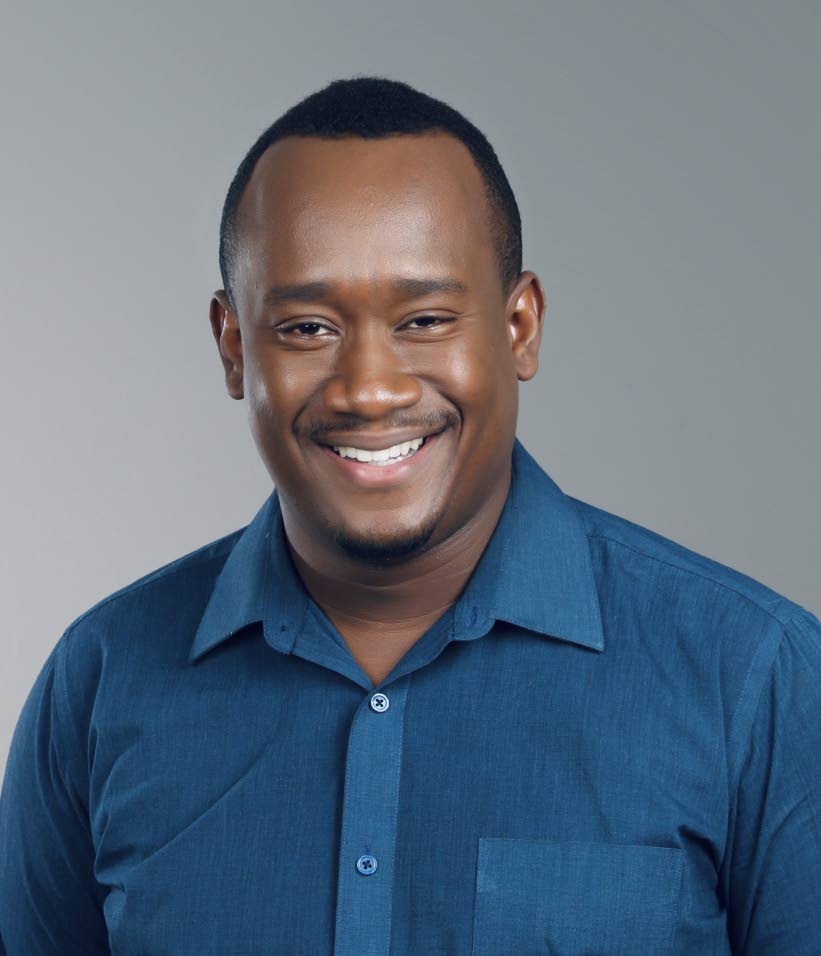
Ricardo Brooks