Responding to Brooks’ one-dimensional narrative
Dear Editor,
On Sunday, September 7, 2025 I read a piece penned by Ricardo Brooks in the Jamaica Observer’s The Agenda magazine, headlined ‘Truth and democracy in Ja’s 2025 election’, celebrating Andrew Holness’s third-consecutive term; calling it historic, dare I say, triumphant. But beneath that, the article is riddled with framing devices that play fast and loose with complexity in favour of a one-dimensional narrative.
In my own view, it is reductive and characterises the patterns of thought of those who prefer that all ideas should converge around Holness and the Jamaica Labour Party (JLP).
First, Brooks assures us that Holness’s court challenge of the Integrity Commission constitutes an exercise in democratic dissent, not authoritarian overreach. He insists that “freedom to dissent, to criticise, and to challenge the state is the cornerstone of Jamaica’s democratic experiment”. But this interpretation avoids the optics and stakes: When the sitting prime minister uses litigation to delay or dilute an adverse institutional report, he blurs the line between citizen and officeholder, effectively weaponising institution-to-institution accountability. Oversight becomes optional if it’s inconvenient — hardly the mark of robust democracy.
By the way, if Holness wishes to quell talk on his wealth accumulation, the simplest remedy would be full financial disclosure. To date, he has refused.
On the matter of Dennis Chung’s appointment as head of the Financial Investigations Division, Brooks, in dismissing public concern as exaggerated or conspiratorial, ignores key democratic principles. Citizens were raising legitimate questions about conflict and undue influence, especially when Chung had already publicly weighed in on matters he could again rule on. Democracy thrives on such scrutiny. Brushing it off as paranoia only corrodes accountability.
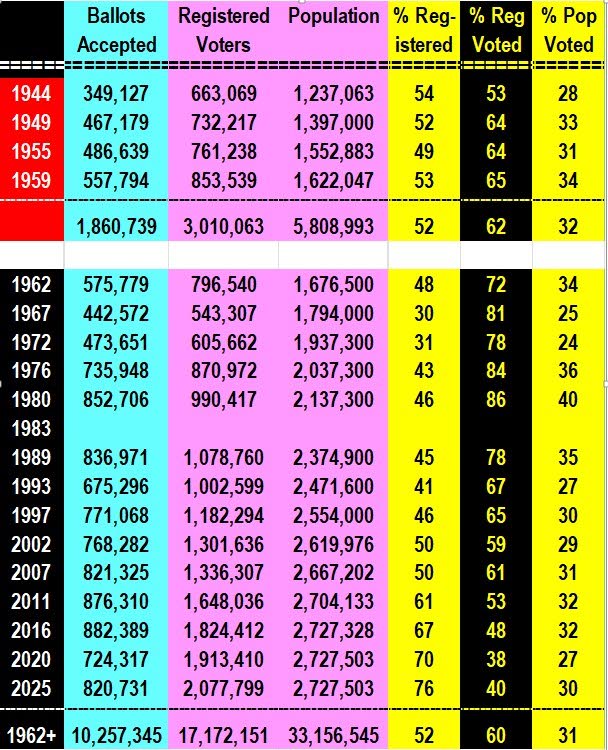
Brooks’ hand-wringing over the phrase “minority Government” is semantic nit-picking. Whether one calls it that or not, the fact remains that with only 39 per cent voter turnout, significantly less than half of Jamaica’s eligible voters endorsed Holness’s JLP. Nobody disputes the legality of the win; what is questioned is whether this electoral system is truly representative of the will of the people.
Finally, the article decries misinformation and scare tactics; lamenting that pundits “fed voters a steady diet of innuendo” to destabilise trust in democracy. Yet Brooks works for a network that routinely amplifies Holness-friendly perspectives while sidestepping alternative ideas. You only need to recall the station’s blitz of economists on air, assembled not to debate, but to discredit the People’s National Party’s (PNP) tax proposals, all while lionizing the JLP’s. To fetishize the virtues of “truth” while contributing so blatantly to the erosion of honest debate is a staggering double standard.
Brooks closes with a call for vigilance and recommends institutional reforms and renewed democratic engagement. Admirable words. But bold rhetoric means little without equal willingness to challenge one’s own side. Democracy isn’t a one-way mirror, it demands reflection, even in the halls of power.
Sean Peart
seanpeart143@gmail.com