



ASPIRE, like us
Williams urges region to embrace Jamaica’s economic model
MONTEGO BAY, St James — Minister of Finance and the Public Service Fayval Williams is urging regional stakeholders to embrace Jamaica’s ASPIRE framework as a model for driving economic transformation across the Caribbean.
The ASPIRE framework was launched by Prime Minister Dr Andrew Holness last November with the acronym pointing to his Administration’s plan to offer: Access to economic opportunity for all; Safety and security, People (human capital development); Infrastructure development; Reform of the bureaucracy (ease, speed, and cost of doing business); and Economic diversification/new industries.
Emphasising the framework’s broader relevance beyond national borders, Williams positioned ASPIRE as a template for sustainable development, anchored in fiscal discipline, visionary leadership, and strong partnerships.
“This Government’s call is a call to invest in a Caribbean future. ASPIRE is not just Jamaica’s growth framework. It is a regional blueprint for transformation. We are proving that small states with discipline, vision and partnership can deliver big results. We have restored macroeconomic credibility. We are improving governance and we are creating a pipeline of bankable projects in high growth sectors,” Williams said.
She was delivering the keynote address during the opening ceremony for the fourth Caribbean Investment Forum (CIF), held at Montego Bay Convention Centre Tuesday evening.
The finance minister made a strong appeal for private investors to get on board with the region’s development agenda, stressing that economic transformation needs all hands on deck.
“Transformation is not the task of governments alone. We need private capital, innovation and cross-border collaboration — and that is why the Caribbean Investment Forum is so vital. It is a place not just for dialogue, but for deals, real deals; not just for vision, but for execution,” Williams said.
“To every investor here today, I say this, the Caribbean is not simply waiting to be discovered, we are ready to partner with you. We are investing in the future, and we invite you to do the same. Let us move from potential to performance; from ambition to achievement. Let us build a Caribbean that aspires and delivers,” she added.
Williams also expressed strong support for the Caricom Single Market and Economy, as she argued that the Caribbean’s future competitiveness depends on developing new comparative advantages and strengthening regional value chains.
She welcomed what she described as “the progress made in removing obstacles to the free movement of capital, labour and services,” and added that, “The Caribbean is not too small to matter. In fact, our strategic location, our young population and collective market power make us uniquely positioned to punch above our weight.”
The three-day conference will focuses on four strategic pillars: the green economy, digital transformation, sustainable agriculture and food security, as well as logistics and transport — critical areas for building a resilient, innovative, and self-reliant regional economy.
During the opening ceremony, executive director of the Caribbean Export Development Agency Dr Damie Sinanan highlighted CIF’s growth since its 2022 launch, describing it as the region’s premier investment platform.
He noted that from its beginnings in Trinidad and Tobago to The Bahamas in 2023 and Guyana in 2024, CIF has connected more than 1,500 delegates and investors from more than 50 countries, showcasing nearly 60 bankable projects worth more than US$350 million.
Sinanan stressed that CIF is about translating vision into real investment opportunities through strong public-private partnerships.
He told the function that the Caribbean is much more than its traditional image of sun, sea, and sand.
“The Caribbean is also ripe for investment and investment opportunities across the various sectors, and this forum provides the platform to enable various public-private stakeholders to meet and advance the cause,” Sinanan said.
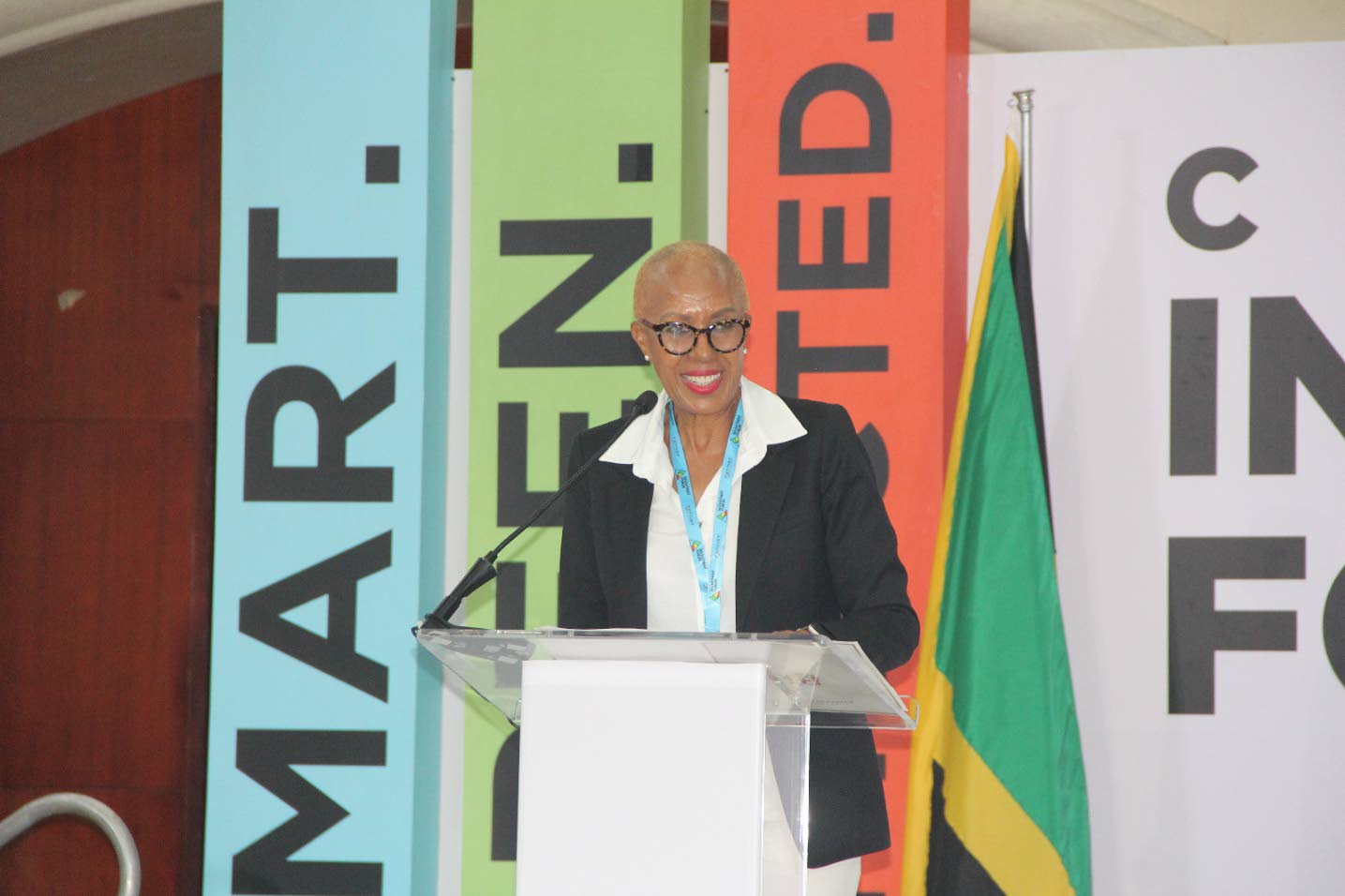
Minister of Finance and the Public Service Fayval Williams speaking during Tuesday evening’s opening ceremony of the Caribbean Investment Forum in Montego Bay.


