



‘We got justice’
Family of murdered returning resident Delroy Walker still hurting, but satisfied killers punished
“WE got justice and we had to fight hard for it; for us as a family, it’s not a win, it’s not victory, it’s justice,” was the reaction of the 10 family members of murdered returning resident Delroy Walker to the combined 50-plus years’ worth of sentences handed down on Tuesday to convicted murderers Dwayne Barton and Davion Edwards.
Walker, who left the island when he was 11 years old, was savagely murdered in his Tower Isle, St Mary, dream home in April 2018 following a disagreement between him and Barton over work done on the property. Barton, returning to the house later with Edwards in tow, during a physical fight, “possibly inflicted the fatal wound to his chest”, according to prosecutors.
According to the prosecution, while the wound to Walker’s chest was the stab that actually killed the returning resident, he had 19 other wounds — which were not fatal — to his face, head, fingers, hand and knees. According to the evidence, Edwards participated in the killing.
Tuesday, Barton, the main aggressor, was sentenced to 27 years and nine months with eligibility for parole after serving 15 years, while Edwards was sentenced to 22 years and nine months with eligibility for parole after serving 13 years.
Steve Walker, Delroy’s brother, who along with four other family members travelled from the United Kingdom and were joined by five relatives here for the hearing, told the Jamaica Observer that while his family viewed the sentencing and conviction of the men as a “success”, the void created from the killing of their brother, who was considered “the magnet” of the family, loomed larger.
“Personally, it’s emptiness in the sense that my brother loved Jamaica, this was his place, he should have been here. So I feel empty. We got all these things, we can stand up and applaud, but I feel empty. My brother was not old, he was not ill, and he did not have an accident and he is not here because those two men went into his house and got to him. So that’s how I feel, empty, but with justice and success,” Walker told the Observer.
“He was the magnet, he would bring us all together so even though we were in England, because he travelled back and forth, he would say you have a cousin here or a family member here and he would bring us all together. He made us know about Jamaica and our history and that has been taken away; those are the things he would have wanted to pass on to his grandson. Jamaica has lost that,” Walker said.
“He wanted to put what money he had left in this world into the Jamaican economy and he trusted these two guys. There was an incident before and he was told ‘don’t go local’ and my brother decided everyone deserves a second chance and that second chance cost him his life,” Walker further lamented.
Despite his heaviness, however, Walker commended Chief Justice Bryan Sykes, the head of Jamaica’s judiciary, who presided over the case, as well as members of the Office of the Director of Public Prosecutions, and the police.
“Judge Sykes was very forensic in terms of how the sentencing process was going to be worked. He had been very forensic and very studious in every element of the case and really outlining things and putting deep legal detail. Thanks to the various organisations such as the Jamaica Constabulary, the Crown prosecution service, and also the community because obviously without those elements and without our family’s fortitude as well, this case might not have gotten where it got to, and that’s my honest perception,” Walker told the Observer.
In the meantime, in calling for further changes in the operations of the courts here, Walker said the wait between May 2018 when the convicted men were charged, and April 2025 when their trial began, enhanced the trauma for his family.
“The long wait — this is not just Jamaica, other countries around the world have these issues — but we came to Jamaica four times waiting for a trial [before one began] and it’s emotional, it’s expensive. We get to Jamaica, we would walk into the waiting room having been assured everything would go ahead, only to get to the courtroom and the clerk comes out and says, ‘you have to go back home, it’s not happening’. Four times and justice delayed is justice denied. We spent thousands of pounds, millions of dollars [in airfare and accommodation],” Walker stated.
He further pressed for changes to the system to ensure that if a matter is going to be delayed it can be communicated ahead of time to the parties involved and not necessarily on the day it is scheduled to be called up.
In the final analysis, however, Walker said, “We got success and we can’t be negative about that, but without my family I could not have done it. Every day on my WhatsApp picture I see my brother and I vowed I was going to get justice for him.”
The prosecution’s case hinged on oral statements by the two men when they were brought in by the police during the investigation into the crime, and DNA evidence found at the scene. The evidence led by the Crown showed that both men were present at Walker’s home at the time of the murder.
Both men, who were 25 years old at the time of the murder, gave unsworn statements during the trial, with Barton denying that he made an oral statement to the police and Edwards admitting that what the police said about what transpired was the truth.
The case was prosecuted by Deputy Director of Public Prosecutions (Acting) Lenster Lewis-Meade and Crown Counsel Ashley Innis. Barton was represented by attorney Carl McDonald, while Edwards was represented by attorney Everald Webster.
Tuesday, following the sentencing, the Observer was told that “the men showed no outward signs of remorse” with the only reaction coming from Edwards, who asked the Chief Justice, “What is my parole?”
Justice Sykes, in his sentencing address, was keen to remind the men that the jury, although they received instructions on murder, mere presence, and manslaughter, did not form the view that they went to the home of their victim for any legitimate purpose but had been of the view that they “went there for a nefarious purpose”. He said the jury accepted that on the part of Barton, the assault was “payback” for the argument he had earlier with his employer, supposedly over money.
“From their view, you went there to kill,” Justice Sykes said of Barton.
For Edwards, he said the view of the jury was that he was not innocently present. “The DNA put you there. The jury may have interpreted the evidence that you were there as the look-out and to assist with the intention to kill,” the trial judge stated, noting that had the jury believed the men’s account as to why they were at the property “it would have been an acquittal or at least manslaughter”.
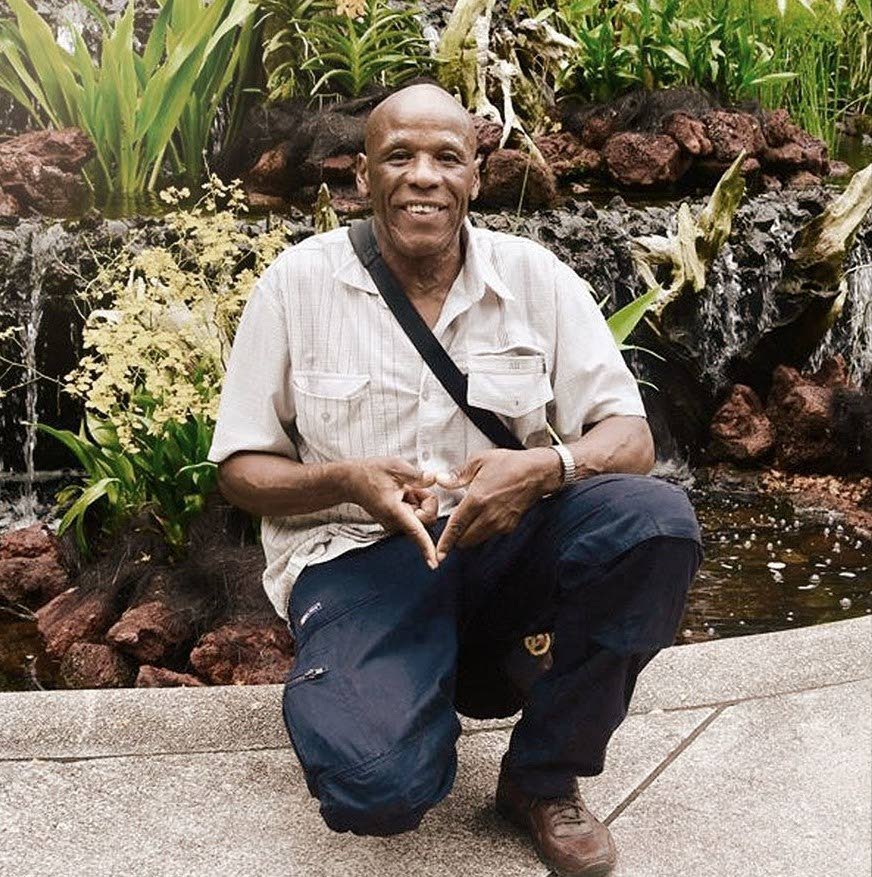
Delroy Walker in happier times.


