



North American horse racing on brink of collapse: A call to action
The last three decades has seen nothing short of a disastrous decline of the racing industry in the USA and Canada. In 1992, there were 70,393 races in the USA, which declined to 30,852 by 2024. Foals of 1992 amounted to 35,051, but the breeding sheds delivered only 16,675 in 2024. Canadian farms bred 1,701 foals in 2019, but this plummeted to 850 in 2024. Incidentally, the Canadian peak of 7,614 races in 1991 stood at 2,697 at the end of 2024.
Meanwhile, Jamaica’s 1,021 races in 1992 declined to 755 by 2024, with under 200 foals registered each year of the last five, since a peak of over 400 a decade and a half ago. In varying degrees, all Pan American jurisdictions, excluding Argentina, have reported a continuous reduction and worsening of investment in the breeding industry.
To underscore this greatly concerning decline of the industry, the US pari-mutuel handle of US$9.6 billion in 1992 with 255 million inhabitants was only US$11.6 billion in 2024, although the US population had reached 345.5 million. The principals of US Jockey have recognised the malaise but I am yet to see a comprehensive strategy to save the industry.
Clearly, Generation Z has not been attracted to horse racing, but this can be addressed with a definite strategy to make the racing product more marketable. Only the classification of the horse population, which has been proposed by the US Jockey Club, will arrest and eventually reverse the decline if the artificial and counterproductive weight allotment under claiming is abandoned.
Any objective analysis of the trajectory of these statistics makes it possible to predict that, if no action is taken, sometime before 2040, the promotion of horse racing will no longer be an economically viable commercial activity in the Pan American region generally, and North America particularly. This existential threat must be addressed with urgency.
Against this background, it has become necessary for establishing a means of funding, by direct investment of promoters in the North American breeding industry, if the domestic and export markets are to return to their former glory. One approach is a coalition, including the likes of the New York Racing Association as well as the authorities in the 38 states where gaming is permitted, taking an interest.
The reveal in the Supreme Ventures Ltd financial statement that has accumulated a $400-million loss on the Caymanas operations should be a decisive wake-up call. However, the denial that the racing product delivered in the 1930 Claiming System is inherently flawed continues unabated. It is incapable of delivering growth to compete with the exponential growth of wagering on the other major sports.
The Thoroughbred Owners & Breeders Association and the United Racehorse Trainers Association of Jamaica are seemingly happy to perpetuate Claiming but still expect the promoting company to be economically viable. Prior to divestment, the Government kept the industry operational with cash injections amounting to US$30 million including a debt write-off of $1.2 billion. This subsidy is now being funded by the owners.
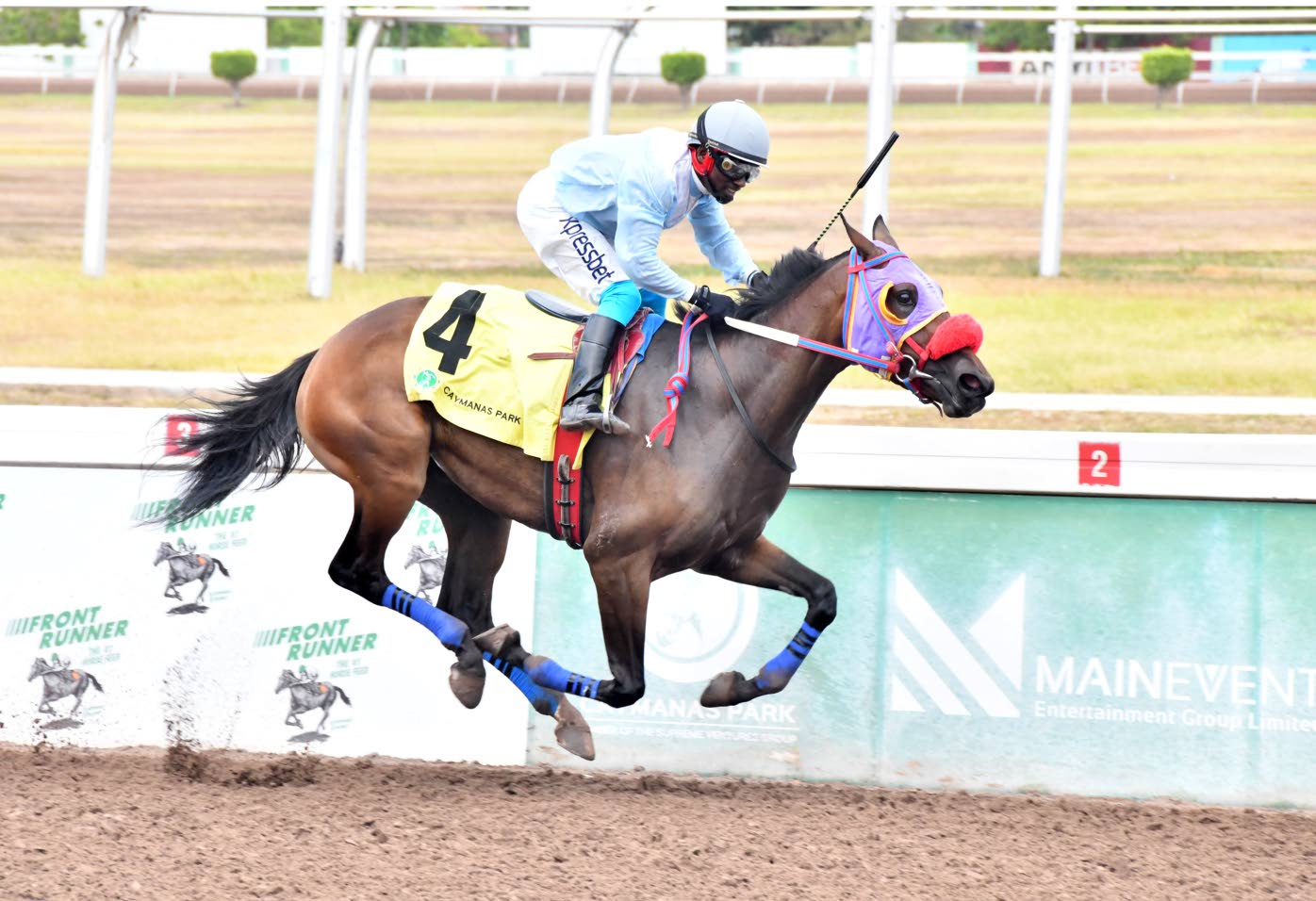
CutOut (Wesley Henry) easily wins a maiden condition race on Saturday, July 19, 2025. (Photo: Naphtali Junior)


