



Stewart Castle a dumping ground?
ANIMAL skeletal remains. Scrap metal. Bullet casings.
These are items one would not expect to find at one of the country’s national heritage sites, protected and owned by the Jamaica National Heritage Trust (JNHT). Yet they litter the grounds at Stewart Castle in Duncans, Trelawny, a national monument fortified for protection against attacks in the 1700s.
It was about 2:30 pm when the Jamaica Observer turned off the main road onto a rocky path leading to the castle. The mission: to explore historic monuments now reduced to ruins, highlighting their cultural significance and preserving a piece of Jamaica’s heritage during a time when the nation reflects on both Independence and Emancipation.
The forested area flanking the path is dense, with trees lining both sides, their branches reaching across the road slightly as if curious about the unfamiliar vehicle passing through. Tucked away among the foliage, a few scattered houses bring a touch of life to an otherwise quiet and dead space.
After what seemed like a five-minute drive, a sign erected by the JNHT confirmed that the location was near, with an arrow showing the way to Stewart Castle. A few turns of the car’s wheels later, the ruins of the monument were peaking through the forest before revealing itself fully to its new visitors.
‘Stewart Castle’, read another sign that shared the history of the structure, which can be traced as far back as 1754 when ‘Stewart Castle Estate’ was patented. The property started out as 167 acres given to James Stewart, who is believed to have immigrated to Jamaica from Great Britain.
Stewart started the first phase of construction at the castle in the 1760s. He built a large square house that had two towers on the north-west and south-east corners of the property. The second phase of construction was carried out by his son, James Stewart II, in the 18th century. He connected the towers to the main structure with the addition of a courtyard.
The castle had three floors and a cellar built with cut stones. In addition to the high towers, it was fortified with gun holes.
While much is not known about the elder Stewart, his son was a prominent figure in Trelawny, who worked in the political and military fields in Jamaica. Stewart II was a major general in the Militia, a collector of customs for Falmouth, an assistant judge of the Supreme Court, president of the Falmouth Water Company, a member of the Jamaica Assembly, and a custos of Trelawny.
The estate grew from its original 167 acres to 1,200 acres in 1799. During its peak, the location was a sugar estate operated with more than 300 slaves.
In 1957, Charles Cotter excavated a Taino midden located on the property, uncovering valuable evidence about the dietary habits of the Tainos. The excavation yielded a range of materials, including both perforated and unperforated marine shells — such as giant conchs — along with giant crab limbs, bird breastbones, and turtle bones. The property, which includes both the midden and nearby ruins, was later transferred to the JNHT by Kaiser Bauxite Company.
The ruins of the castle were declared a National Monument on April 4, 1991.
The castle that had withered away from the elements over the centuries seemed normal. Trees took the place of furniture, and windows and doors were chipped away, leaving behind ill-shaped holes in the walls of the structure. A small path welcomed visitors to take a closer look, and it was there, nestled between a tower and the main structure, that the horror scene greeted us.
Bones, scrap metal, and bullet casings are strewen across the ground. At first, the skeletal remains were mistaken for those of a human. However, that view changed quickly on seeing an animal-shaped skull. The skeletal structure of a spine was also seen, void of the muscles, skin, and fat that protected it, and smaller pieces of bone scattered the pathway that led deep into the forest.
A closer inspection of the area revealed a bullet casing concealed in the wilted grass, along with scraps of metal and discarded appliances, clearly remnants of the 21st century, not the 18th.
While unconfirmed, it appears that the former home of a prominent figure in Jamaica’s history has been reduced to a slaughtering site for animals, an informal dumping ground, and a possible haven for criminals.
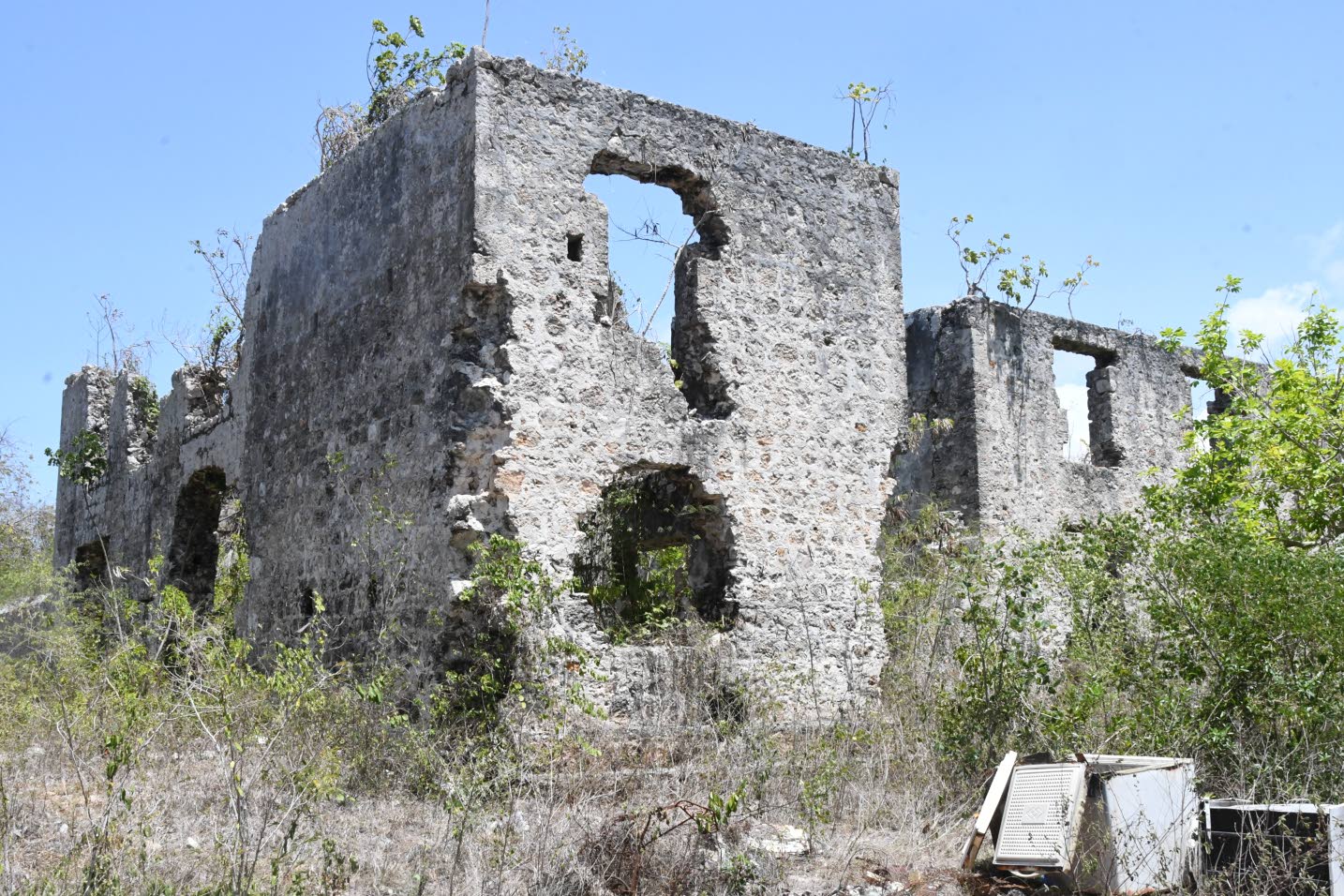
Old appliances and pieces of scrap metal dumped outside Stewart Castle in Duncans, Trelawny.
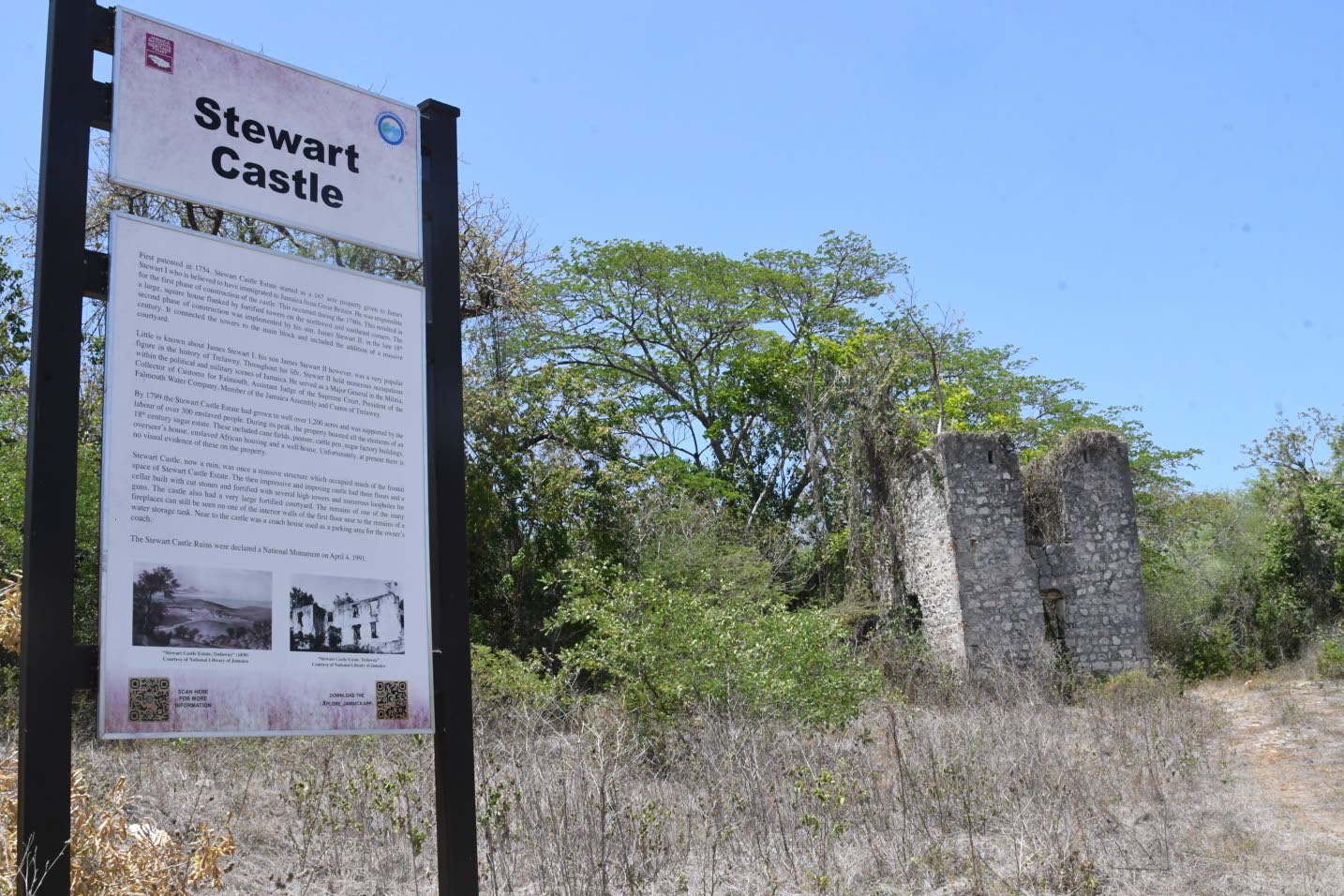
The ruins of Stewart Castle was declared a National Monument on April 4, 1991.
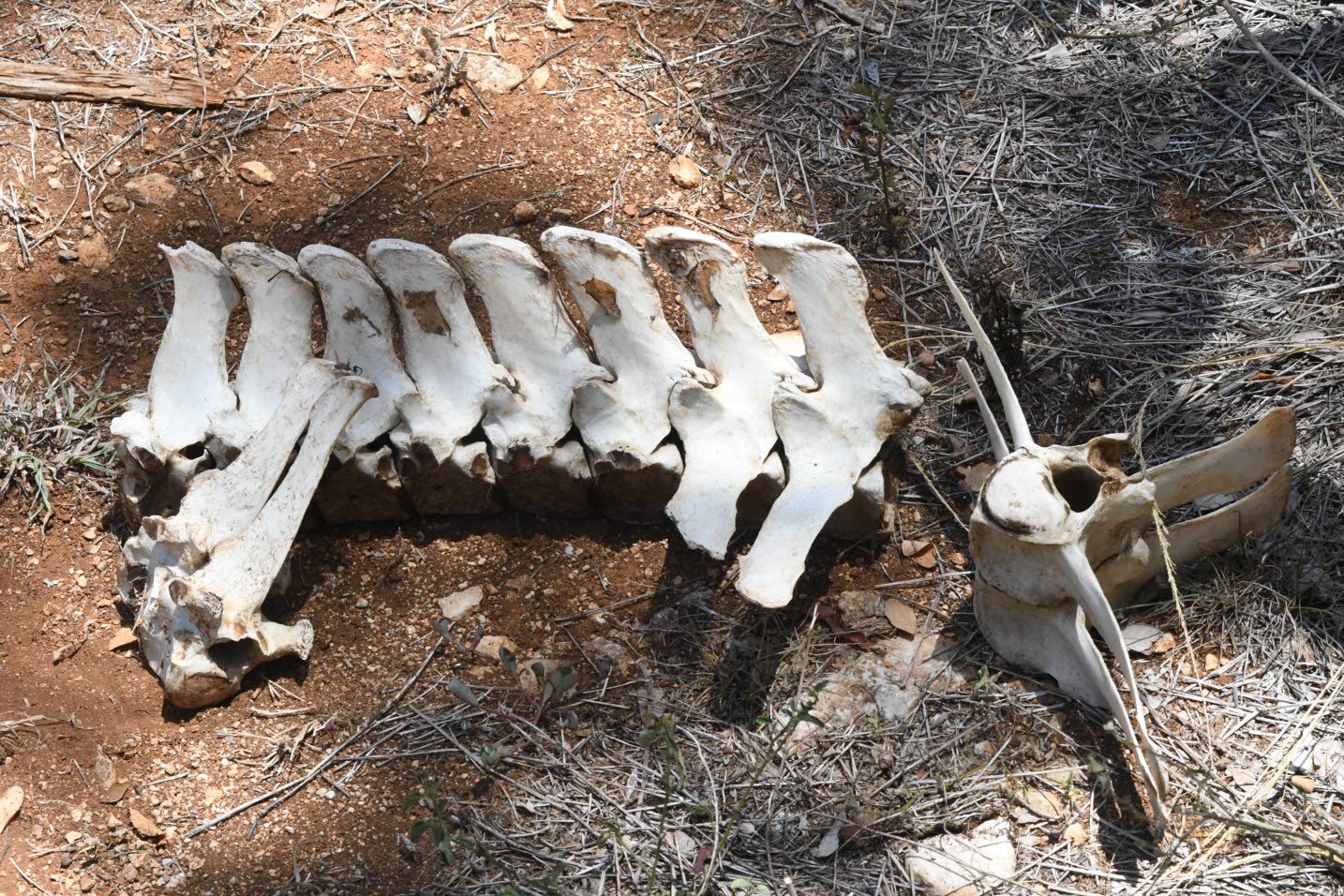
The skeletal structure, seemingly the remnant of a spine, is pictured on the grounds of the national heritage site, Stewart Castle.


