



This Day in History – August 4
Today is the 216th day of 2025. There are 149 days left in the year
TODAY’S HIGHLIGHT
2017: Rwandan President Paul Kagame wins a third term with 98.63 per cent of the vote.
OTHER EVENTS
1578: The Portuguese armies of King Sebastian — an ally of deposed Moroccan sultan al-Mutawakkil — invade Morocco but are defeated by the Sad sultan Abd al-Malik, in the Battle of the Three Kings.
1790: United States Secretary of the Treasury Alexander Hamilton establishes the Revenue Marine Service, which later becomes the US Coast Guard.
1892: Lizzie Borden’s father and stepmother are murdered in Fall River, Massachusetts, USA; she is later tried for the crime but acquitted.
1914: In response to the German invasion of Belgium, Great Britain enters World War I, declaring war on Germany.
1941: A tax Bill of US$3,206,200,000 is voted in, 369 to 40, by the US House of Representatives.
1942: The House of Commons passes a Bill transferring criminal jurisdiction over members of the US armed forces in England from British courts to US military tribunals.
1944: The secret annex in Amsterdam where Anne Frank and seven others are hiding is discovered by the Gestapo; all are sent to concentration camps, with only Otto Frank surviving.
1946: Recep Peker is asked to form a new Turkish Government after the resignation of Premier Shukru Saracoglu and his Cabinet.
1949: Comptroller General Lindsay C Warren reports to Congress that a sampling of war contract settlements has revealed overpayment of more than US$11,500,000 to contractors through waste and fraud.
1952: The US 5th Air Force reveals that it has served notice on 78 North Korean cities to evacuate danger areas marked for destruction by bombing.
1954: The Indonesian Government announces its decision not to join any anti-communist security treaty in south-east Asia.
1955: Some 11 US airmen released by the Chinese communist Government arrive in Hong Kong from Peking, China.
1956: Indonesia repudiates its debts to the Netherlands, reportedly in excess of US$1,000,000,000.
1958: The US and Britain exchange notes bringing into force a new agreement, signed July 3, 1958, for cooperation on the uses of atomic energy for mutual defence purposes.
1959: A special US Senate Committee report denounces Teamster’s President Hoffa and two of his chief aides for union abuses.
1962: Nelson Mandela is arrested.
1964: The leone, the first decimal currency made of sterling in West Africa, is introduced as Sierra Leone’s first national currency.
1970: The right wing Gahal faction resigns from the Israeli Cabinet to protest Israel’s acceptance of the US-Middle East peace plan.
1973: US Supreme Court Justice William O Douglas upholds the July 25 injunction ordering an immediate end to US bombing in Cambodia; hours later Justice Thurgood Marshall, supported by the seven other justices, overturns Douglas ruling.
1977: As a step toward solving numerous problems stemming from the presence of between 4 million and 12 million illegal aliens in the US, President Carter presents Congress with a series of proposals that include the issuance of permanent resident aliens status to illegal aliens who had entered the US before the end of 1969 and had resided continuously in that country since that time; a five-year termporary resident alien status is suggested for those who arrived between 1970 and the end of 1976, while civil fines of up to US$1,000 are suggested for those who knowingly hire an illegal alien, and criminal penalties for those who act as brokers in such hirings.
1984: Prince’s Purple Rain album goes to number one and stays in that position for 24 weeks.
1989: Two speeding passenger trains collide head-on at Colon, Cuba; 25 persons are killed, and 100 others are injured.
1993: Rwandan President Juvenal Habyarimana and two leaders of the rebel Rwandan Patriotic Front sign a peace accord in Tanzania that is designed to end three years of civil conflict between the majority Hutu tribe and the Tutsi.
1997: UPS handles 80 per cent of the parcels delivered in the US after negotiations in Washington, DC, break down between the International Brotherhood of Teamsters and United Parcel Service, and the union goes on strike.
1999: Victor “The Hunk” Mature, American actor (Samson and Delilah, Kiss of Death), dies in San Diego, California, USA.
2000: A blast in an apartment building in Jiangxi province, China, where illegal fireworks are produced claims the lives of at least 27 persons and injures 26 others.
2003: Azerbaijan’s legislature elects Ilham Aliyev, son of President Heydar Aliyev, prime minister; opponents believe this move is meant as groundwork for the transfer of power to the younger man.
2004: Swarms of locusts, which had been devastating large areas of North Africa and West Africa, inundate Nouakchott, the capital of Mauritania. The African Union agrees to broaden its peacekeeping mission in the Darfur region of The Sudan while tens of thousands of people in Khartoum demonstrate against the United Nations, which has threatened to take action if the ethnic cleansing does not stop.
2005: Israel’s first desalination plant opens in Ashqelon; it is the largest seawater reverse osmosis plant in the world.
2006: Four bridges along the main north-south highway north of Beirut are destroyed by Israeli shelling, and more than 30 people are killed; Hezbollah continues to shell Israel, killing four.
2007: British authorities burn the bodies of 60 cattle and impose a cordon around a farm in Guildford, Surrey, where foot-and-mouth disease was discovered two days earlier.
2008: Chinese State media report that two Uighur separatists rammed a truck into a brigade of border patrol officers outside their barracks in Kashgar, Xinkiang state, and then attacked the officers with knives and by throwing several bombs, killing at least 16 of them.
2009: After a day-long battle, police in South Korea gain control of most of the Ssangyong Motor Company factory, which had been occupied since May 22 by workers opposing large planned layoffs.
2010: Vaughn R Walker, a US federal judge in San Francisco, rules that the law approved by voters in 2008 that allows only opposite-sex couples to marry violates the equal protection clause of the sonstitution; he stays the ruling, however, pending appeal. 2010 Naxalite rebels ambush a police patrol in India’s Chhattisgarh state; some 70 police officers are missing after the attack.
2012: Shelly-Ann Fraser-Pryce of Jamaica defends her 100-metre Olympic title at the London Olympics.
2014: It is reported that Russia has in the past several weeks greatly increased its armed forces and armaments near its border with Ukraine.
2015: Forbes magazine names Robert Downey Jr as the world’s highest-paid actor with earnings of US$80 million.
2017: Aldi supermarket withdraws all eggs from sale after the chemical fipronil is found in those from the Netherlands.
2018: President Nicolás Maduro of Venezuela survives an assassination attempt by drone, live on TV.
2019: Australian cricket batsman Steve Smith hits a brilliant 142 following his first innings of 144 in the first Test against England at Edgbaston; he is only the fourth batsman of all time to score more than 140 in each innings of a Test match.
2021: Rihanna is named the world’s wealthiest female musician, worth US$1.7 billion, by Forbes magazine.
2022: A Russian court sentences Women’s National Basketball Association star Brittney Griner to nine years in prison for drug smuggling, amid claims she is being used as a pawn between the US and Russia.
2024: At the Paris Olympics, Noah Lyles becomes the first American sprinter to win the 100m gold medal in 20 years; his time of 9.784 seconds edges Jamaica’s Kishane Thompson by 0.005 seconds.
TODAY’S BIRTHDAYS
Louis Armstrong, prolifically gifted natural musician and the leading trumpeter in jazz history (1901-1971);
Kishore Kumar Indian actor, singer, composer, and director (1929-1987); Barack Obama, president of the United States from 2009-2017 (1961- )
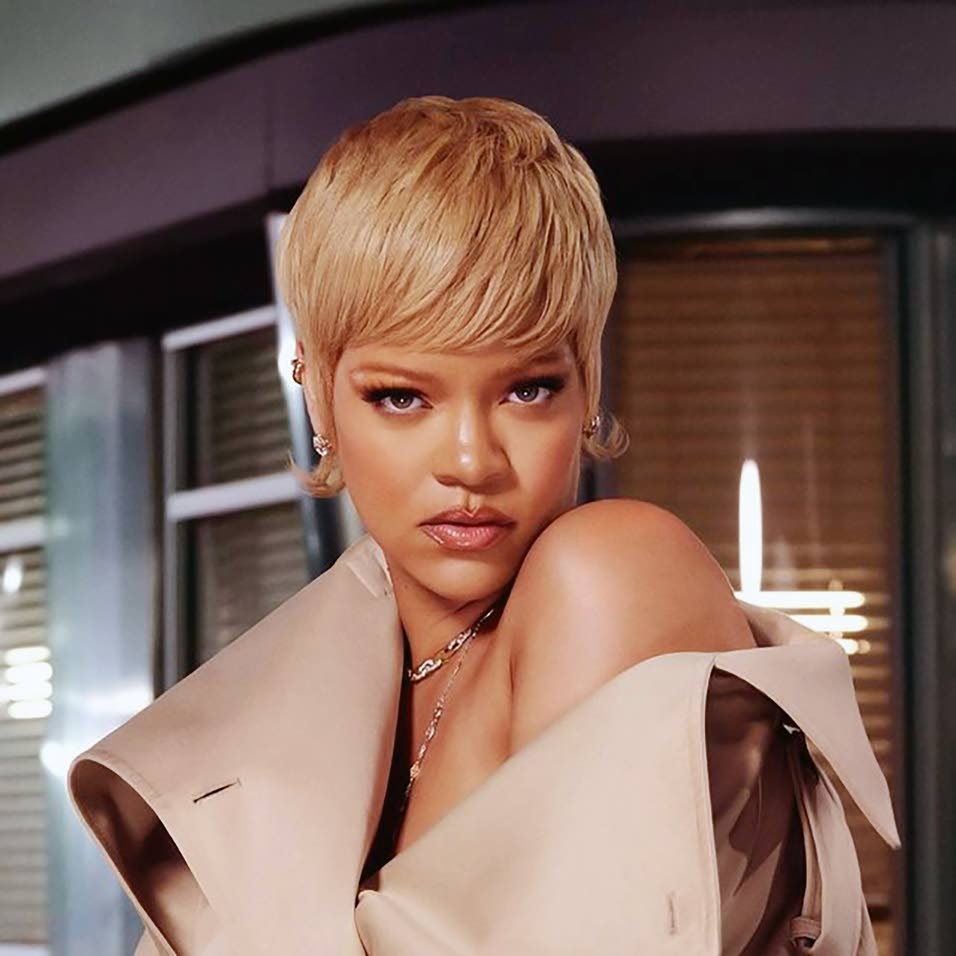
Rihanna is named by Forbes magazine as the world’s wealthiest female musician, worth US$1.7 billion, on this day, 2021.IG/@badgalriri

Shelly-Ann Fraser-Pryce of Jamaica defends her 100-metre Olympic title at the London Olympics today in 2012.
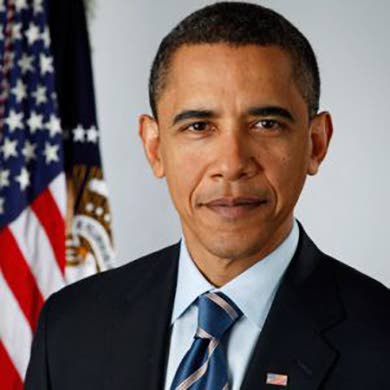
Barack Obama, president of the United States from 2009 to 2017, is celebrating a birthday today.

The secret annex in Amsterdam of Anne Frank and seven others in hiding is discovered by the Gestapo this day, 1944; all are sent to concentration camps, with only Otto Frank surviving.


