



Bush fire spike
Drought, rising temperatures, human carelessness blamed for 3,423 blazes so far
JAMAICA, like much of the rest of the world, is seeing a sharp increase in bush fires this year, with 3,423 blazes recorded so far. This is a tick below the 4,523 recorded for all of last year.
While July figures are not yet available, head of the Jamaica Fire Brigade (JFB), Stewart Beckford, told the Jamaica Observer that 583 bush fires were recorded in June compared to 105 for the same month last year.
Internationally, the United Nations Environment Programme has reported that climate change and land-use change are projected to make wildfires more frequent and intense, with a global increase of extreme fires of up to 14 per cent by 2030, 30 per cent by the end of 2050, and 50 per cent by the end of the century.
Locally, Commissioner Beckford has blamed the spike in bush fires on a number of factors, including the ongoing drought, rising temperatures, and human carelessness.
“It is a lot drier this year than it was last year. Last year it was a lot wetter and so we would have seen a reduction in terms of the number of bush fires that we would normally respond to in the month of June, going back to probably 2020.
“So we are, as a fire brigade, bearing the brunt of this and it’s translating into the number of bush fire calls that we are now responding to,” said Beckford as he noted that the spike has placed a strain on both personnel and equipment.
Beckford pointed out that St Catherine — where construction and farming near highways have increased fire risk — Kingston, St Andrew, Clarendon, St James, St Ann, and St Elizabeth were some of the main “hot-spot zones”.
“There is no doubt that the extreme temperatures that we are experiencing and the prolonged drought, as was highlighted by the Met Office a few weeks ago, are worsening the issue. We know that certain parts of the island are now experiencing extreme conditions and this will continue maybe to September before we see any improvement,” said Beckford.
He noted that with the men and women of the JFB tasked with medical aid, residential and commercial fires, and rescue operations, the spike in bush fires have left the brigade stretched thin.
“It’s the same set of people. We are just recycling them, for want of a better phrase. But they leave work, and tomorrow again they’re back at it, so it’s a constant battle, and it’s a constant demand being placed on them.
“They have to be out there, sometimes spending hours working under terrible conditions. It does take a toll on them, both physically and mentally. We are doing whatever we can to kind of lessen that burden in terms of equipping them with fit-for-purpose gear and making sure that they stay rehydrated as best as possible while out in the field,” said Beckford.
He also pointed to the impact the increased number of bush fires is having on the brigade’s resources.
Beckford told the Observer that the brigade already struggles with limited resources and with the increase in bush fires the vehicles are being overworked and attracting higher maintenance costs.
“The units are coming under tremendous pressure because if they [firefighters] are there for six hours, that unit has to remain there. The engine has to be running because we have to constantly pump water to tackle these fires, which is a further strain on these trucks…
“Additional fuel is being consumed. The working hours on the engines are going up. They require servicing a lot more often than a normal vehicle that just drives from one point to the other and stops and parks. So it is multifaceted,” added Beckford.
He urged Jamaicans to exercise caution when handling a blaze by assessing the environment to ensure that it does not spread and pleaded for the early reporting of any uncontained fire.
According to Beckford, oftentimes fires escalate due to people underestimating their likeliness to expand.
“If you have to burn, we are asking that you do it later in the afternoon into evening when it’s a bit cooler and less windy. Because what we do know for a fact is that embers from fires can travel great distances away and result in starting a fire.
“That is why sometimes when you drive along the roadways and you see fires it doesn’t necessarily mean that the fire was started by somebody or some action by an individual at that location. It could be that embers from a fire some distance away would have travelled,” stated Beckford.
He further urged farmers to avoid the slash and burn method to clear parcels of land and pleaded with drivers to refrain from tossing lit cigarettes from their vehicle onto highways as these are also factors that have led to the increase in bush fires.
The JFB commissioner also called on the public to report any sightings of an untamed fire to reduce damage caused by flames or to possibly interrupt and prevent an outbreak.
“What we see happening in most instances, these fires are small and somebody may have seen something and not report it until it turns into a large, growing fire. Sometimes, depending on where it’s taking place, if it’s on the highway, it can disrupt traffic or result in a crash. We have seen that in the past.
“So we encourage people, if you’re driving and you see a fire — even if it’s small — call the nearest fire station and we will respond. We would rather respond early, when it’s just getting started, so we can quickly knock that down from covering acres of land,” added Beckford.
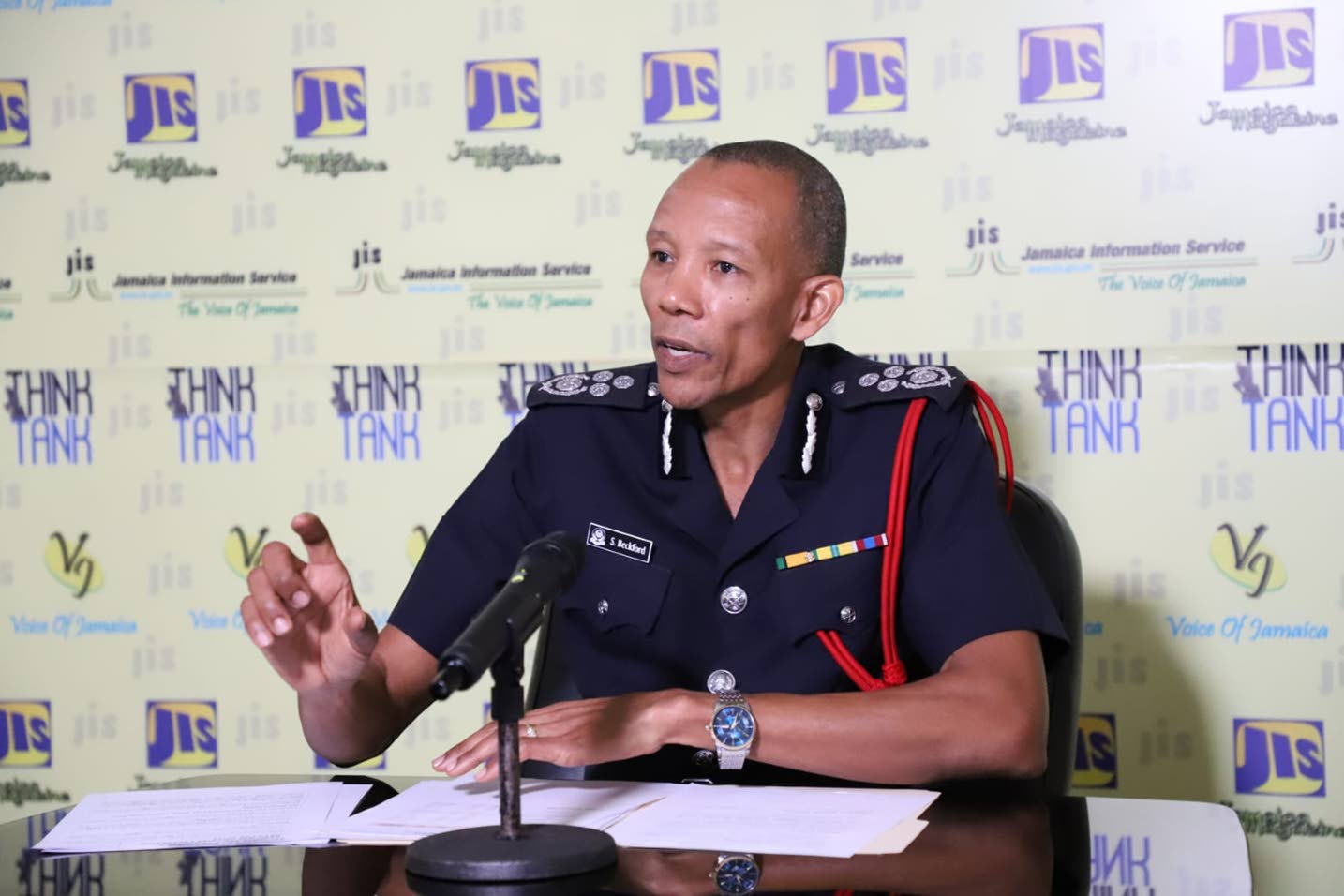
BECKFORD…the spike in bush fires is based on a number of factors, including the ongoing drought, rising temperatures, and human carelessness.


