



The engineer who never sleeps
Meet Scott George Beckford, The Best Dressed Chicken’s problem-solving perfectionist
IF you’re asking him when he wakes up in the morning, you’ve already misunderstood the assignment. “Assuming I sleep is bold,” Scott George Beckford jokes, and it’s not entirely an exaggeration. As maintenance manager at The Best Dressed Chicken, his phone starts ringing from as early as 2:00 am, operations at his facility kick off by 6:00, and he’s at his desk by 8:00, running a team and solving problems most people wouldn’t know how to pronounce.
He’s a chemical engineer by degree, a mechanical engineer by curiosity, and a fixer-of-everything by nature. He didn’t just stumble into engineering; he was born with the instinct to solve.
“From a young age, I always wanted to fix things,” he explains. “But not just the thing itself — I always wanted to go deeper. Understand why it broke in the first place, find the root cause, and prevent it from happening again.” That instinct, paired with a strong foundation built by two teacher parents, formed a grounded, detail-obsessed, passionate engineer who somehow thrives in the high-stakes chaos of operations.
Perfectionism is both his best and worst trait. He admits it openly — it’s the reason things get done at the highest level, but also why deadlines tend to sneak up on him whilst he’s opening three new communication loops at once.
His process is refreshingly simple. “I’m a grassroots guy,” he says. “ Google Calendar and Excel are fine. AI is fine. But I use them as alternatives, not crutches.”
His early years reflect the same sense of grounded hustle. Beckford’s first job was at Jamaica Broilers, where he started as an intern and, through sheer effort, curiosity, and visible commitment, earned himself a full-time role. When there were no logs or chemical tests to conduct, he’d insert himself into the mechanical side, servicing generators or solving problems with electrical components. His formal background was chemical engineering, but he trained himself into a mechanical and electrical complement, becoming a self-made, multidisciplinary hybrid.
The irony? He almost didn’t study chemical engineering at all. In CAPE, he was laser-focused on mechanical. But chemistry intrigued him and with a nudge from his uncle, he decided to give chemical engineering a try. That “mistake”, as he jokingly calls it, gave him the edge that would later land him a role in Canada at a major company.
It wasn’t until he started climbing the ranks that he realised the real challenge wasn’t the systems, the tools, or the machinery — it was the people. “Equipment is easy,” he says. “But managing people? That’s the hardest part. Still, I welcome the challenge. I try to see things from their perspective before offering a solution.”
Empathy, it turns out, is another engineering tool. When asked what keeps him going, he doesn’t hesitate to say his mother. After 42 years on the job, she’s never taken a single sick day. “That level of dedication is unmatched,” he says. “She’s my biggest motivation.”
Looking forward, his dream is surprising — he hopes to work himself out of a job.
“I’d love to build systems that are so sustainable, anyone with basic competencies can come in and thrive,” he says. “No more dependence on one person’s technical know-how. Just systems that work and grow.”
His legacy, though, won’t be in the machines or the flow charts. It’ll be in the way he approached the work. With joy — “People will always think work is just work. But if you do what you love, it feels like a hobby. It won’t feel like a burden.”
Even though he’s multidisciplinary now, if he could go back and give his younger self advice, it would be this: “Specialise earlier,” he says without hesitation. “You can’t learn everything — there’s more than enough to master in one discipline. Focus.”
And to a brand-new engineering graduate? “Don’t place limits on yourself. People say the sky is the limit, but even the sky has a limit. Whatever your goal is, map it out, weigh the pros and cons, and work towards it. Execute. Don’t just talk about it.”
That’s how Scott George did it. No sleep required.
How Beckford gets it done
•Problem-solving approach: Start at the goal and work backwards. “Map out every possible roadblock from the end back to the beginning. It’s easier to see obstacles that way.”
•Process philosophy: “I try to be very detailed. It’s not about overthinking; it’s about respecting the process.”
•Tools of choice: Sticky notes, a whiteboard, some old-school logic and reverse engineering. Simple but effective.
•Recharge method: River water and silence. “On weekends, I head up to Westmoreland, where my mother is from, and find peace in the early morning calm of the river.”
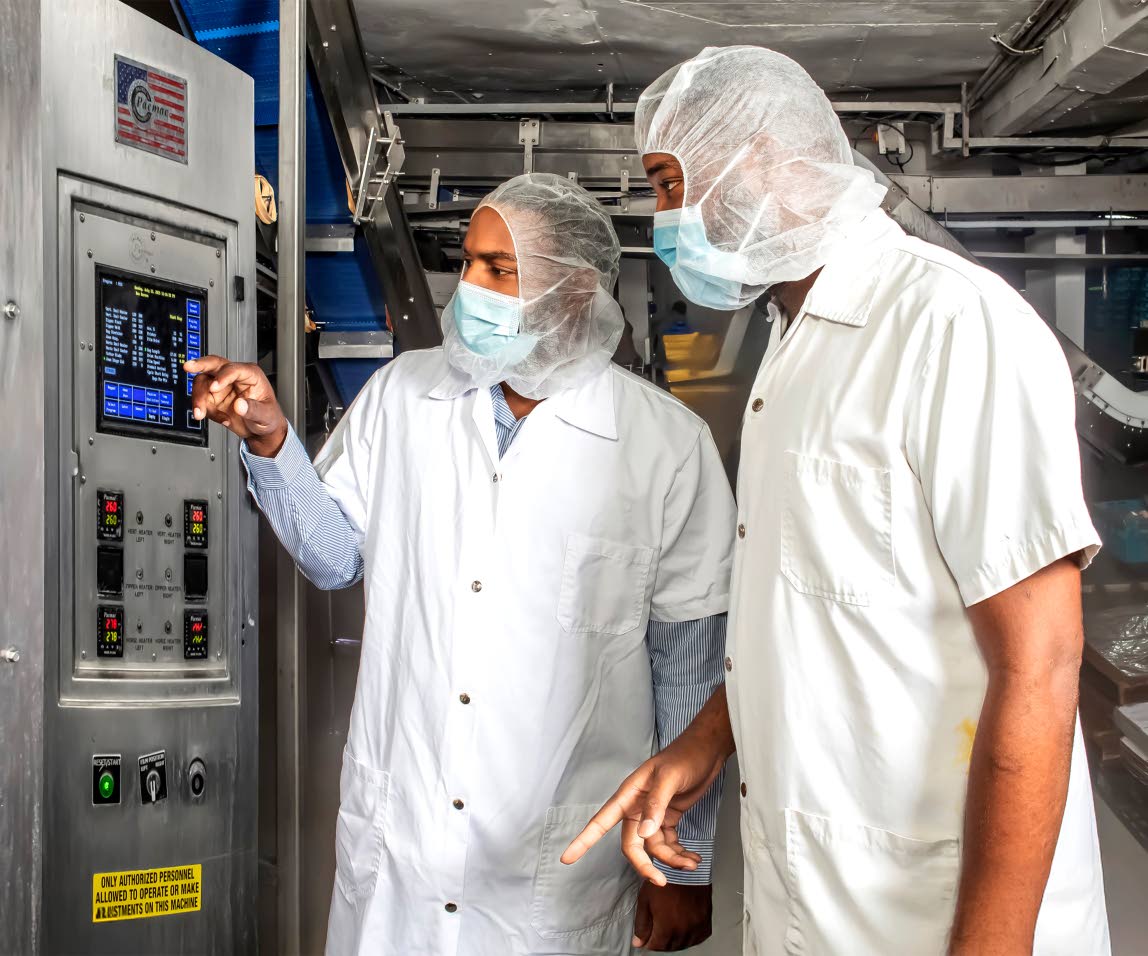
Scoot-George Beckford (left) at work with Paul Douglas, instrumentation engineer, demonstrating the leadership philosophy that drives his dream: building systems so sustainable that “anyone with basic competencies can come in and thrive”.
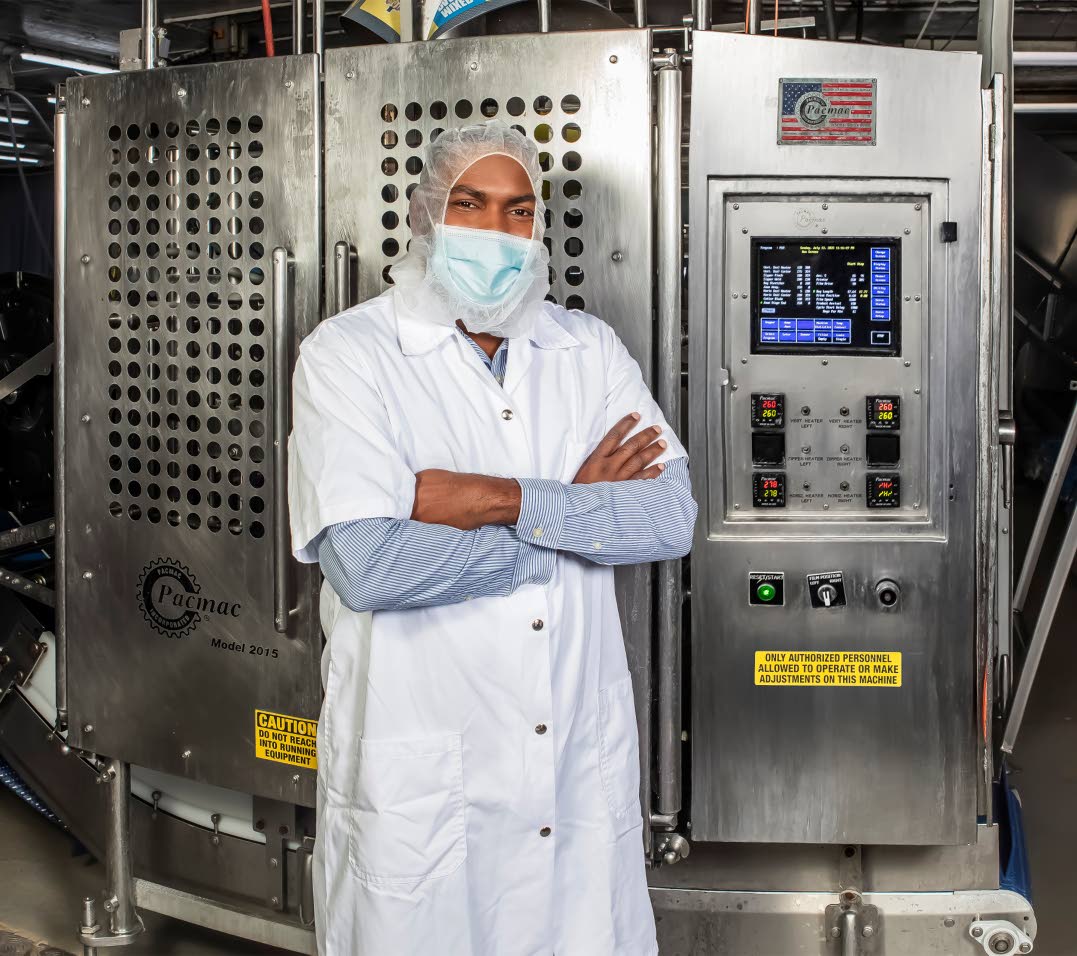
What started as a “mistake” for Scott-George Beckford — switching from mechanical to chemical engineering in CAPE — became the edge that would define his career and land him roles from Jamaica to Canada.


