



Robotic cardiac surgery: Baptist Health Miami redefines heart treatment standards
AS cardiovascular disease remains one of the leading causes of death across Latin America and the Caribbean, a revolutionary surgical approach is offering new hope for patients facing complex heart procedures. Robotic cardiac surgery, which provides greater precision and significantly less trauma than traditional open-heart surgery, is emerging as a powerful tool for improving patient outcomes and dramatically shortening recovery times.
Dr Makoto Hashimoto, director of robotic cardiac surgery at Baptist Health’s Miami Cardiac & Vascular Institute and professor at Florida International University, is among the few surgeons in the United States with extensive experience in this cutting-edge field. He has performed over 500 robotic cardiac procedures and previously led one of Japan’s largest robotic heart surgery programmes.
“Robotic surgery allows us to treat serious heart conditions with minimal trauma to the body,” says Dr Hashimoto. “Patients often go home within days and are back to normal activities within one or two weeks, compared to the six weeks or more required for traditional heart surgery.”
Robotic cardiac surgery can effectively treat conditions including coronary artery disease, mitral valve regurgitation, atrial septal defects, and certain types of cardiac tumours.
The technology uses computer-controlled robotic arms that translate the surgeon’s hand movements into precise, real-time instrument movements through tiny incisions between the ribs. This approach avoids the need to open the chest entirely, dramatically reducing pain, blood loss, and infection risk while leaving smaller, less visible scars.
“With the robotic surgical system, we have a degree of motion that is better than the human hand, a magnified field of vision, and the ability to use multiple instruments simultaneously,” Dr Hashimoto recently explained to an international audience when he shared his expertise with 115 physicians from 17 countries at the Baptist Health International World-Class Medical Care International Symposium, which was broadcast live to medical schools throughout Latin America and the Caribbean. The symposium demonstrated how robotic systems enhance surgical precision beyond what the human hand alone can achieve.
As health systems seek innovative solutions to improve patient care, robotic cardiac surgery represents a significant advancement in treating cardiovascular disease. While a highly trained heart surgeon always leads the procedure, the robotic technology enhances human skill rather than replacing it.
Looking toward the future, Dr Hashimoto envisions even greater possibilities.
“We will be looking at telesurgery, where the patient and surgeon aren’t even in the same facility. This will be a game-changer for those in rural areas or countries that don’t currently have access to cardiac surgery.”
For patients in Jamaica and the wider Caribbean who require heart surgery, this innovative approach, offering a safer, faster path to healing and a quicker return to everyday life, is available at Baptist Health Miami Cardiac & Vascular Institute, a pioneer in minimally invasive cardiovascular procedures.

Robotic cardiac surgery provides greater precision and significantly less trauma than traditional open-heart surgery .
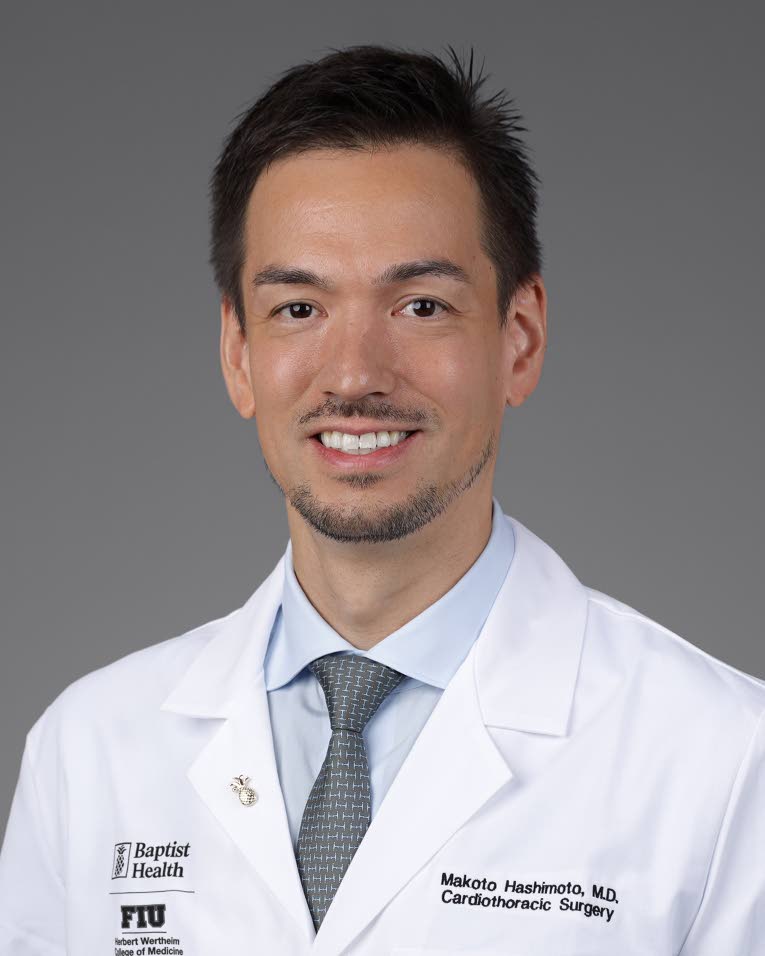
Dr Makoto Hashimoto.


