



Crafting manifestos for economic resilience in 2025
As Jamaica hurtles towards its general election on September 3, 2025 — with nomination day locked in for August 18 — the nation’s political landscape is at a decisive turning point. Prime Minister Dr Andrew Holness made the long-anticipated announcement today, August 10, at a mass rally in Half-Way-Tree, St Andrew, declaring the poll date amid chants of progress and promises of continuity.
This comes after weeks of speculation, with the Jamaica Labour Party (JLP) touting its record of stability, while the People’s National Party (PNP) positions itself as the agent of urgent change. Yet, as of this writing, neither party has released its manifesto, a document that should serve as a binding contract with the electorate.
The Gleaner recently demanded ‘Manifestos now!’, stressing their critical role in ensuring accountability and informed voting. With turnout at a historic low of 37 per cent in 2020, any delay risks deepening cynicism. In an era of global uncertainty and domestic economic headwinds, the absence of detailed, costed plans is not just disappointing, it’s dangerous.
Progress Amid Peril
Jamaica’s economy presents a paradox. Under the JLP’s stewardship, since 2016, macroeconomic stability has been achieved: unemployment is at a record 3.3 per cent; Fitch Ratings has upgraded Jamaica to BB-, with a positive outlook; and the country recorded 20 consecutive quarters of pre-COVID-19 growth. Tourism and remittances — accounting for more than 70 per cent of gross domestic product (GDP) — have driven much of this rebound, with Fitch projecting 2.0 per cent growth in 2024.
But cracks are widening. The economy contracted by 0.4 per cent in 2024 due to external shocks, such as Hurricane Beryl, and growth for 2025 is forecast at just 1.2 per cent. Public debt still hovers at ~70 per cent of GDP, inflation continues to erode purchasing power, and Jamaica remains overly dependent on services. International analysts, including Coface, point to chronic weaknesses — crime, inadequate infrastructure, and climate vulnerability — that suppress investment potential.
Business leaders are urging the political class to put “substance over spectacle”. The PNP, according to General Secretary Dr Dayton Campbell, has completed its manifesto and will unveil it soon, hinting at people-centred reforms. The JLP, meanwhile, has leaned on its record but has yet to outline a bold, forward-looking agenda.
A Manifesto Blueprint for Economic Transformation
To transform promises into performance, both parties must embed transparent, innovative, and fiscally responsible policies into their manifestos. Drawing on insights from economic analysts, the Caribbean Policy Research Institute (CaPRI) and UN Trade and Development (UNCTAD), here’s a five-pillar framework that could help Jamaica weather 2025’s headwinds and chart a course towards Vision 2030.
1) Fiscal transparency and debt discipline: Political cycles tempt fiscal looseness. Without costed proposals, voters face a gamble.
What’s needed: Mandate independent costing of manifestos by the Independent Fiscal Commission, published at least two weeks before elections; introduce a constitutional debt ceiling requiring a super majority to approve increases; and expand revenue by broadening the tax base without raising burdens on low-income earners, continuing the JLP’s “no-new-taxes” policy.
2) Economic diversification and growth acceleration: Over-reliance on tourism and remittances leaves Jamaica vulnerable.
What’s needed: Drive investment into digital services and agro-processing, targeting 90 per cent broadband penetration by 2027 and 50,000 new digital jobs; launch a Green Growth Fund, channelling 5 per cent of GDP into renewables and climate-resilient agriculture, turning post-hurricane recovery into long-term resilience; and offer Diaspora investment tax credits to redirect a portion of the $3B+ in annual remittances into productive sectors.
3) Tackling the cost-of-living crisis: Relief measures are too short-term; small businesses still stagger from the pandemic.
What’s needed: Expand the reverse income tax credit to cover informal workers, benefiting an additional 100,000 households; roll out a national food security plan with subsidies for local farmers and targeted import tariffs to cut food prices by 15 per cent; and introduce urban rent controls and scale up social housing linked to employment programmes.
4) Human capital and workforce transformation: Skills mismatch persists despite low unemployment.
What’s needed: Create regional STEM academies in partnership with tech firms, training 20,000 youth annually for high-growth sectors; reform education funding to prioritise early childhood and vocational training; and launch a skills passport to incentivise Diaspora returnees and reverse brain drain.
5) Governance and accountability: Manifestos lack enforcement mechanisms, eroding trust.
What’s needed: Pass campaign finance reforms with real-time disclosure of donations; Grant the Integrity Commission prosecutorial powers and mandate annual audits tied to manifesto pledges; and integrate climate and environmental commitments into economic planning, ensuring sustainability is not an afterthought.
A Defining Moment for Jamaica
The election is less than a month away, and the stakes are generational. The JLP must evolve its “prosperity” narrative into a detailed plan that addresses a slowing economy without overpromising. The PNP must deliver bold alternatives rooted in equity but disciplined enough to avoid fiscal pitfalls.
Jamaica cannot afford manifestos filled with vague aspirations. Voters deserve blueprints for breakthroughs, not Band Aids for ballots. The right set of policies — costed, transparent, and transformative — could reignite voter faith, stabilise the economy, and finally deliver on the promise of Independence.
The world is watching. Let September 3, 2025 be remembered not just as an election, but as the day Jamaica chose to redefine its destiny.
janielmcewan17@gmail.com
Neither political party has published a manifesto for assessment by the Jamaican electorate.
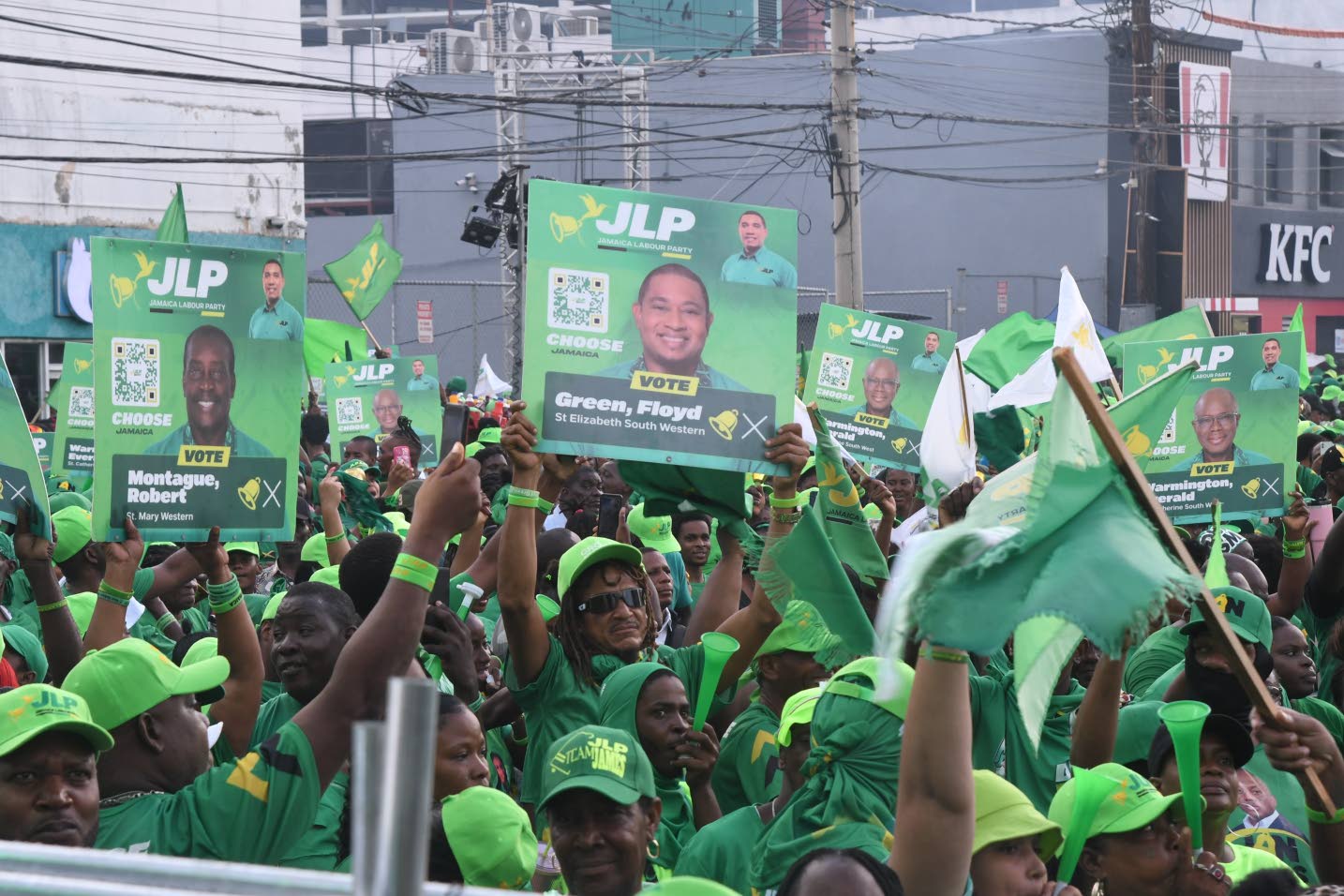
Jamaica Labour Party supporters at Sunday’s mass rally in Half-Way-Tree, St Andrew, where the September 3, 2025 General Election date was announced. (Photo: Karl Mclarty)

Janiel McEwan


