



Setbacks hit MPC Clean’s Q1
Company eyes improved revenues from Monte Plata Phase One repowering; Paradise Park sale proceeds to boost Q2 results following completion of reorganisation
MPC Caribbean Clean Energy posted a net loss of US$60,394 in Q1 2025, impacted by macroeconomic issues, weather, and project delays.
Generation and revenues were below budget across projects, with some offset by higher tariffs and Monte Plata Phase II exceeding targets despite technical losses.
The company aims to improve performance through repowering and reorganization by September 2025, with no new investments planned and Paradise Park sale proceeds expected in Q2 2025.
MPC Caribbean Clean Energy faced a difficult 2024, resulting in losses marked by extreme macroeconomic pressures, adverse weather conditions, and delays in its Monte Plata solar project in the Dominican Republic.
For the quarter ended March 31, 2025, MPC Caribbean Clean Energy recorded an overall net loss of US$60,394, despite generating US$261,383 in investment income. The loss came after factoring in expenses of US$239,209 and a US$300,292 loss on financial assets held for sale. Providing details on the company’s performance during its recent annual general meeting on Tuesday, the company broke down into segments the areas that contributed to its low performance.
The company’s diversified renewable energy portfolio includes the San Isidro Solar Park in El Salvador, the Tilawind wind farm in Costa Rica, and Monte Plata Phases I and II in the Dominican Republic, all of which are now operational. Combined, the assets have an installed capacity of 154 MW and produced 205,696 MWh of renewable energy over the past year. But according to the company, each project encountered unique challenges during 2024. For Tilawind, adverse weather was cited as the primary factor impacting generation. While output improved in the final month of the year, the gains were not enough to offset earlier deficits, leaving year-to-date generation 18 per cent below budget.
Monte Plata Phase II operations in August 2024 boost overall generation despite Phase I being affected by module degradation. As a result, the combined year-to-date generation exceeded budget by 12 per cent. However, grid curtailment significantly reduced output, resulting in losses of 124,000 kWh for Phase I and 923,000 kWh for Phase II. Automatic voltage control requirements further hindered Phase II, causing low power factor levels and reactive power generation, which led to an additional 1,064,000 kWh loss in active power. Overall, total generation for the reporting period was 8.8 per cent below expectations.
Revenues for both phases were consistently below budget due to technical performance issues, though March recorded the highest revenue of the quarter. Combined revenues ended the period 8 per cent below the target. At San Isidro, generation fell short of the 5 per cent target due to lower solar resource availability. However, higher energy tariffs helped offset the shortfall, resulting in revenues 6.7 per cent above forecast. Shareholders questioned when the company expects to achieve profitability after continued losses. The company, however, pointed out that the key factor has been the high cash usage tied to the company’s reorganisation, which is expected to be completed by early September without further costs.
“The repowering process at Monte Plata Phase One will help generate additional revenues and improve performance for the project,” said head of asset management Juste Kubilitute, highlighting it as a major focus for 2025 and beyond.
The company expects that after completing the reorganisation and achieving a period of stable operations, it will be in a stronger position to optimise financing. Subsequent to that, managing director Fernando Zuniga added that no new investments are planned in the near term. In its most recent unaudited results, the company announced that on March 31, 2025, it had completed the sale of Paradise Park in Jamaica. However, due to the group structure and timing of the transaction, the investment remains categorised as “held for sale” in Q1 2025. The sale was executed at the holding company level, with proceeds to be recognised at the company level once received as repayment of a shareholder loan. The financial impact will be reflected in the Q2 2025 results.
“We are now in the final phases of accessing and anticipating distributions resulting from the sale of Paradise Park,” the company noted.
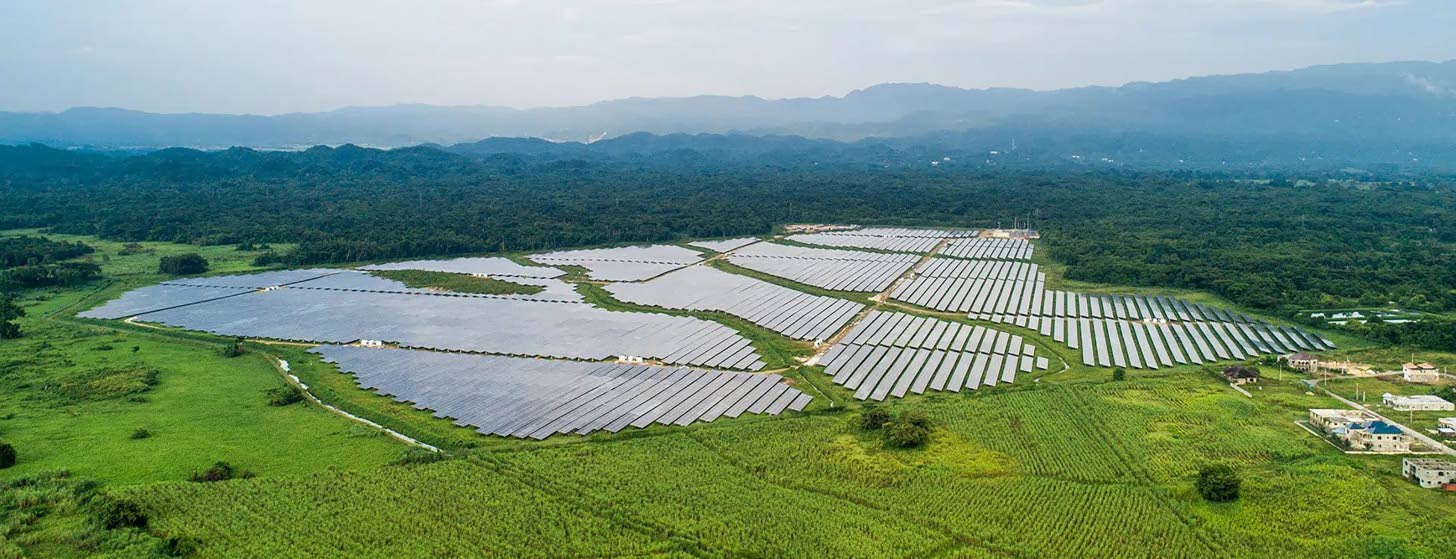
Paradise Park, one of MPC Clean Energy’s key renewable assets, sold in March 2025.


