



Multiple states slam new plastic pollution treaty draft
GENEVA, Switzerland (AFP) — Multiple countries at a United Nations meeting aimed at finalising a landmark global treaty against plastic pollution slammed the new draft text issued Wednesday as the talks descended into disarray.
With 30 hours left for the 184 countries attending to agree on a way forward, nations one by one took the floor to reject the proposed text put forward by the talks chair.
While the more ambitious nations blasted the dearth of legally binding action, oil-producing states from across the aisle said red lines had been crossed for them, too.
After talks Chair Luis Vayas Valdivieso presented a new draft, with today’s deadline approaching, matters quickly unravelled.
The European Union, Panama, Chile, Mexico, and Colombia were among the delegations which rejected the proposed text.
Panama said the goal was to end plastic pollution, not get a political arrangement.
“This text is about closing a wound…but the text presented here makes that wound fatal and we will not accept it,” Panama’s negotiator said, adding: “It is not ambition: it is surrender.”
The EU said it was “not acceptable” and lacked “clear, robust and actionable measures”, while Kenya decried that there were no global binding obligations on anything, meaning it “does not have any demonstrable value”.
Tuvalu, speaking for 14 Pacific small island developing states, said the draft risked producing a treaty “that fails to protect our people, culture and ecosystem from the existential threat of plastic pollution.”
Britain called it a text that drove countries “towards the lowest common denominator.”
Environmental non-governmental organisations following the talks closely also blasted the draft.
The proposed text “is a gift to the petrochemical industry and a betrayal of humanity,” said Greenpeace delegation chief Graham Forbes.
“By failing to address production or harmful chemicals in any way, this text glorifies the industry lie that we can recycle our way out of this crisis, ignoring the root cause: the relentless expansion of plastic production.”
The World Wide Fund for Nature slammed the draft text, calling it a “devastating blow” to people suffering from the impact of plastic pollution.
“It lacks the bare minimum of measures and accountability to actually be effective, with no binding global bans on harmful products and chemicals and no way for it to be strengthened over time,” WWF’s global plastics adviser Eirik Lindebjerg told AFP.
The Center for International Environmental Law delegation chief David Azoulay called it a “mockery” of the three years of build-up.
“This is a treaty that all but ensures that nothing will change. It gives in to petrostate and industry demands with weak, voluntary measures that guarantee we continue to produce plastic at increasing levels indefinitely, fail to safeguard human health, endanger the environment, and damn future generations,” he said.
The talks are due to close today.
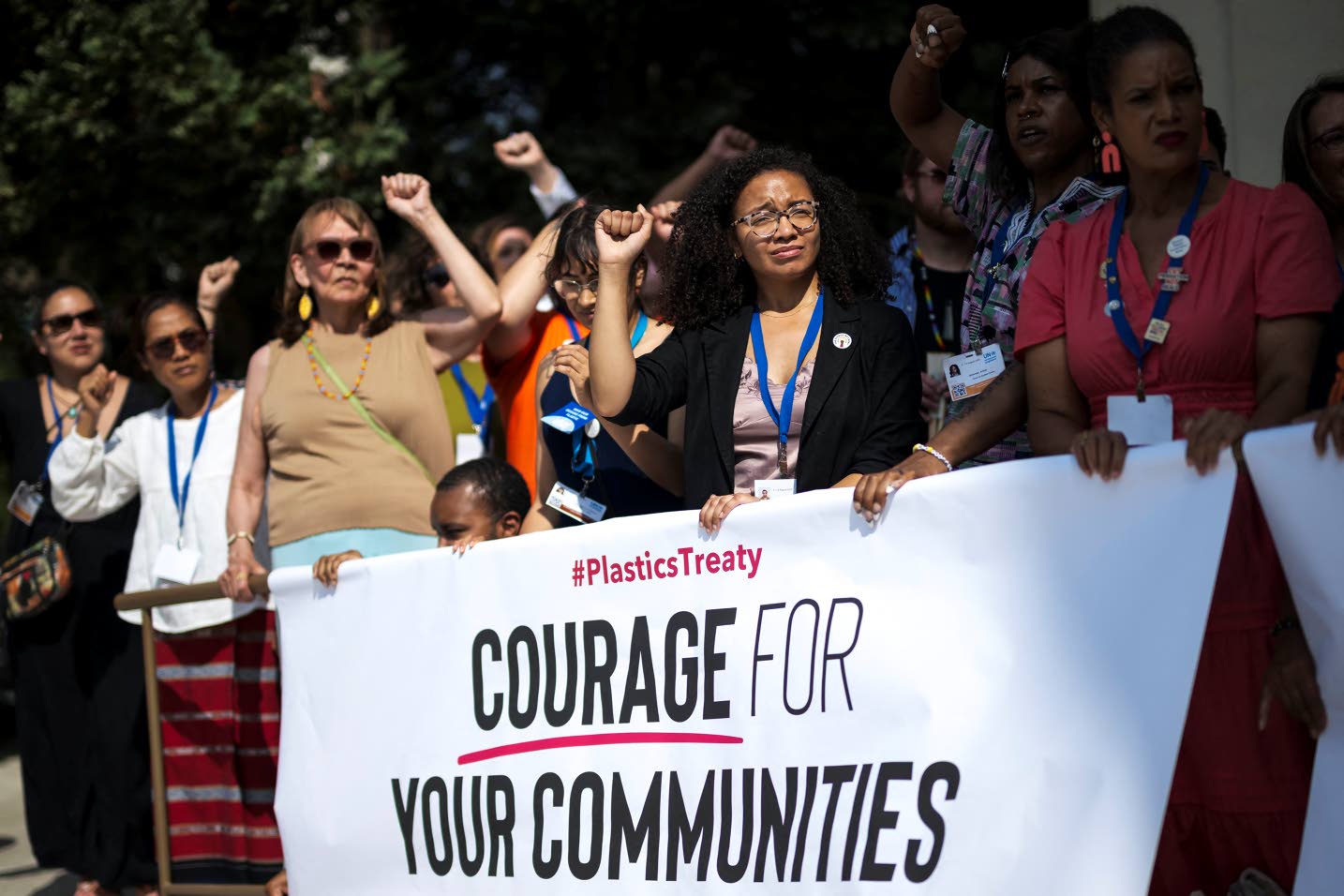
Activists stage a protest during the final days of the Plastics Treaty Negotiations at the United Nations Offices in Geneva on Wednesday. Negotiators from 184 countries remained riven on how to curb plastic pollution, less than 36 hours before they were slated to deliver a binding global treaty. (Photo: AFP)


