



No safety in the sanctuary
Rogue fishermen target protected marine life area in Portland
OFFICIALS of the Alligator Head Foundation are expressing concern about the action of rogue fishermen who continue to break the law by targeting marine life in the East Portland Fish Sanctuary.
Established in 2016, the East Portland Fish Sanctuary spans six kilometres sqaure of coral reefs and is a no-take marine protected area established to help depleted fish populations recover and protect vital marine habitats.
It encompasses coral reefs, seagrass beds, mangrove and deep reef habitats, and is a community-led initiative focused on sustainable fishing practices.
But marine protected area manager with the Alligator Head Foundation Alex Simpson says there is a real problem with fishermen who ignore the law and target the sanctuary.
“A lot of them think that the best fish in the area are found in the sanctuary — and it is easier for them to access the reefs that are in the sanctuary because of their proximity to the coastline,” Simpson told the Jamaica Observer as he pointed to a recent case in which two men were arrested after they were caught with fish, lobster and conch from the sanctuary.
According to Simpson, a late-night operation by the marine police and the Alligator Head Foundation on August 6, resulted in the arrest of the two men.
He said the operation was launched after officials of the foundation received a tip about suspicious activity in the sanctuary.
Simpson said checks were made between 11:30 pm and 2:20 am as divers were seen using spearfishing equipment near a protected reef. The marine police was alerted and an hour later they tracked three men who were fishing in the sanctuary. Two of the men were nabbed but the other escaped.
The arrested men were found with a substantial haul of illegally harvested marine life, including more than 30 pounds of fish, 18 pounds of lobster, and a quantity of conch.
They have since been charged with multiple offences, including illegal fishing in a fish sanctuary, spearfishing at night, and possession of conch without a permit. The men are scheduled to appear in court in September.
Simpson told the Observer that the incident was not an isolated case as while most local fishermen respect the sanctuary’s boundaries, a persistent minority intentionally defy regulations.
He said the matter is compounded as the people who enforce the rules against fishing in the sanctuary sometimes face community conflicts and threats.
“Officers face difficulties, both on and off-duty, because they actively live in the community. They have lived in the communities for their entire lives, so the people who are engaged in these activities do know them. There might be conflicts with them outside of the workplace, especially in instances like this, as there is always a possibility of someone trying to approach or threaten them for one reason or the next,” said Simpson.
According to the marine protected area manager, the recent incident underscores the importance of continued monitoring and community collaboration to protect the vital fish sanctuaries from illegal fishing activities.
“We are going for a more random approach. Sometimes we will collaborate with the compliance officers from the National Fisheries Authority, going out early in the morning on one occasion or late into the night the next. Instead of ending the patrol, we might stay for another half an hour and then go back out, giving them enough time to think that the patrol has ended for the day and that it is safe for them to explore,” said Simpson.
Jamaica’s fish sanctuaries are anticipated to gradually increase fish populations affected by overfishing, habitat degradation and land-based pollution, among other stressors.
The sanctuaries have been proven to improve the island’s fish stocks by three to 21 times its original biomass. Furthermore, due to the spillover effect, adjacent marine areas benefit as excess fish from the reserves will migrate into these areas where fishing is allowed.

SIMPSON… there is a real problem with fishermen who ignore the law and target the sanctuary
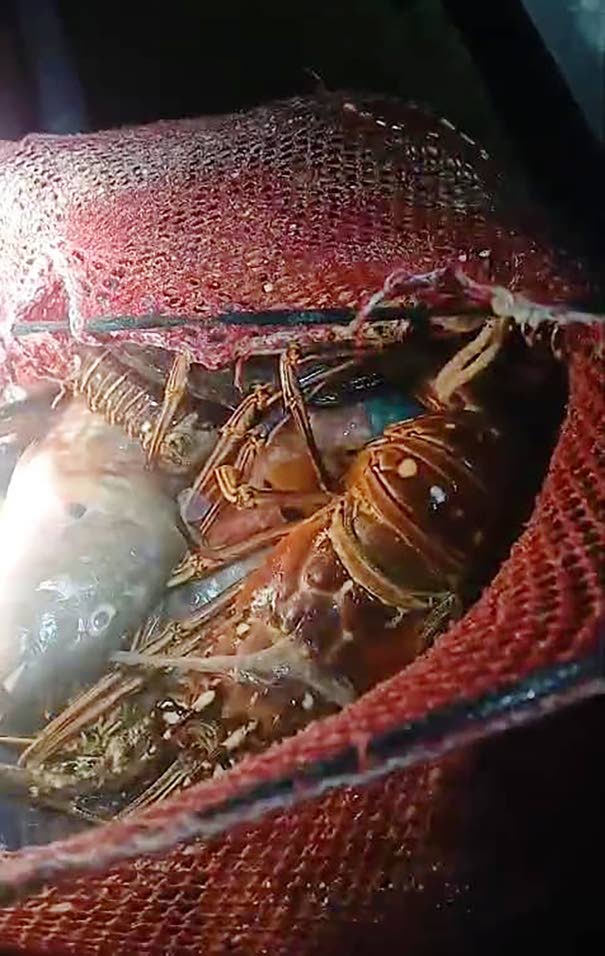
Lobster and fish recovered from rouge fishermen found breaching the East Portland Fish Sanctuaryx


