



On the matter of sovereignty
Recently, as is traditional every year in the first week of August, we celebrated our national holidays of Emancipation and Independence. This is normally a time when pride in the black, green, and gold is at its height, when we all get into that patriotic spirit of revelling in what it means to be Jamaican and enjoy the trappings of nationhood.
Yet there are those who would make the claim that Jamaica is not sovereign, and they’re not saying this because they think we are economically trapped with high debt, nor are they saying it because they think we are under some kind of siege from some violent external force. Their sole reason for asserting that Jamaica is not fully sovereign is because we do not have a president.
Why is this the standard? The logic behind it rests on the assumption that the world only recognises a country as sovereign if it has a president. This, of course, is not even remotely true as I can point to several countries where that is most certainly not the case. Take, for example, Taiwan, a country which has had presidents since 1949 yet the majority of the world denies that Taiwan is sovereign due to the One China Policy that requires it to recognise that Taiwan is part of China. The fact that it has a president makes no difference.
Then there is South Ossetia, a country in eastern Europe which has had several presidents since 1991 yet its sovereignty is also in dispute. Again, the fact that it has a president does not guarantee it international recognition as an independent State.
There is also Catalonia, which had declared its independence from Spain unilaterally and tried getting the world to recognise it as a sovereign nation. It should be noted that Spain has a monarchy, but the Catalans choose not to recognise King Felipe VI as head of State and opted instead to have a president. This fact made no difference to the international community and it was not counted as a marker of sovereignty.
And, of course, I could not help but bring up the case of Palestine, a country recognised by some, but not all. A country that is fighting not only for recognition, but its very existence. The Palestinian Authority, which in theory has jurisdiction, is not universally recognised, notwithstanding the fact it is headed by a president.
Now that we have established that merely having a president does not sovereignty make, let us look at the alternative: replacing the governor general. The so-called common wisdom says that by having a governor general we are telling the world that we are not fully independent. But is that so? Currently, there are only 14 countries that have a governor general, and all of them are members of the Commonwealth. These countries range from extremely large nations, such as Canada, to very small countries, such as Saint Kitts and Nevis. But the one thing they have in common is the fact that they are all recognised as sovereign in the international community.
We saw this clearly when US President Donald Trump threatened to annex Canada and make it America’s 51st state. Such sentiments drew wide condemnation within Canada and around the world as world leaders immediately affirmed their recognition of Canadian nationhood — not British sovereignty over Canada, but Canadian sovereignty as its own unique thing in the world. This was further underscored when the Canadian Government invited King Charles III to open Parliament in person, and he did so — not as a representative of anything British, but as king of Canada, opening Canada’s Parliament upon the free invitation of Canada’s Government.
No one then dared claim that Canada was British territory or a US state, its sovereignty was fully underscored, not by a president (be it Trump or any other) but by rejecting presidencies entirely in favour of the Crown. And so it is there, so it is with every other country in the Commonwealth that has a governor general. It is not and has never been a symbol of partial sovereignty. Only independent members of the Commonwealth have a governor general, and those who claim otherwise have no evidence to back up such claims.
So now that we have firmly cemented that having a president does not make a country a sovereign State and lacking a president does not deny sovereignty, let us look at the components that define sovereignty to see if Jamaica fulfils these criteria.
For this we must turn to international law. The quintessential authorised document used by legal and academic minds is the Montevideo Convention on the Rights and Duties of States. According to Article 1: “The state as a person of international law should possess the following qualifications: (a) a permanent population; (b) a defined territory; (c) government and (d) capacity to enter into relations with the other states.” It is plain as day that Jamaica unequivocally ticks all four boxes.
But to cement the point, let us explore further. Article 4 states the following: “States are juridically equal, enjoy the same rights, and have equal capacity in their exercise.” This is important as it now calls into question whether Jamaica is equal to other states within the global community of nations. Can, for example, Trinidad and Tobago do certain things in the international sphere that Jamaica cannot because it has a president and we don’t? Is Dominica (a country younger than us by 16 years) more recognised among sovereign nations than we are because it has a president and we don’t? I would love to see the evidence of that.
What about Article 8 of the convention, which says, “No state has the right to intervene in the internal or external affairs of another”? It has been a common practice among both the ignorant and the wilfully dishonest, who are trying to push an agenda, to claim that the governor general is an agent of Britain in Jamaica. If this were true, it would not only violate the convention but also our own constitution.
So let me make it clear: The governor general of Jamaica is not an agent of Britain, he represents the King of Jamaica, in Jamaica. Let me point to some excerpts from our constitution to underscore this. In Section 32, subsection 1 it says: “The Governor-General shall act in accordance with the advice of the Cabinet or a Minister acting under the general authority of the Cabinet in the exercise of his functions.” Further on in subsection 5 of the same Section 32, the constitution refers to the governor general acting on advice of the prime minister after consulting the leader of the Opposition. In fact, every single time that the constitution mentions the governor general acting on advice or on directive, it is always in reference to a Jamaican. There is not a single clause in the constitution that directs the governor general to act on the basis of any authority that isn’t Jamaican, those who claim otherwise need to reread our constitution, they’ll find no proof to support their assertions.
There is zero evidence whatsoever that declaring ourselves a republic will raise our standing in the world, as there is not a single country that does not already recognise Jamaican sovereignty. The only people who are loudly proclaiming that Jamaica isn’t already a free, sovereign, and independent nation are those with an agenda to overthrow our constitution and replace it with one of their own making.
Jamaica’s Independence was declared on August 6, 1962, and contrary to the untruths put out by republic proponents, it wasn’t a mere stepping stone to “true independence” but was and still is our true Independence. At midnight on August 6 we sent a message to the world: Jamaica is here, a full-fledged nation, a parliamentary democracy, a constitutional monarchy, and a proud member of the community of nations.
The idea spread by some that having a governor general instead of a president makes us less of a nation is frankly incredulous at best and treasonous at worst since it is their way of attempting to get Jamaican people to question who we are.
At the end of day, we already know who we are, we have never needed a president to confirm it, and we don’t need one now. Some say becoming a republic will honour our ancestors, but I would remind that it was those same ancestors who drafted the constitution that we have now. We honour our foreparents, therefore, not by turning away from their legacy, but by embracing it. If they wanted a republic, they had a chance to make it so. The fact that they rejected it should tell us of the wisdom of their choice. I can think of no better way to honour their memories than to keep what they gave us.
What they did to get us to Independence was well done, and to suggest that it wasn’t is an insult to their memories. Their struggle was to make Jamaica free, sovereign, and independent — and they succeed. Our struggle, on the other hand, is to make Jamaica safe and prosperous, to create a Jamaica that is in full alignment with the UN Sustainable Development Goals, and I dare say, objectively speaking, a presidency is nowhere on the list of priorities, nor should it be.
Jason Green
jaeson.greene@outlook.com
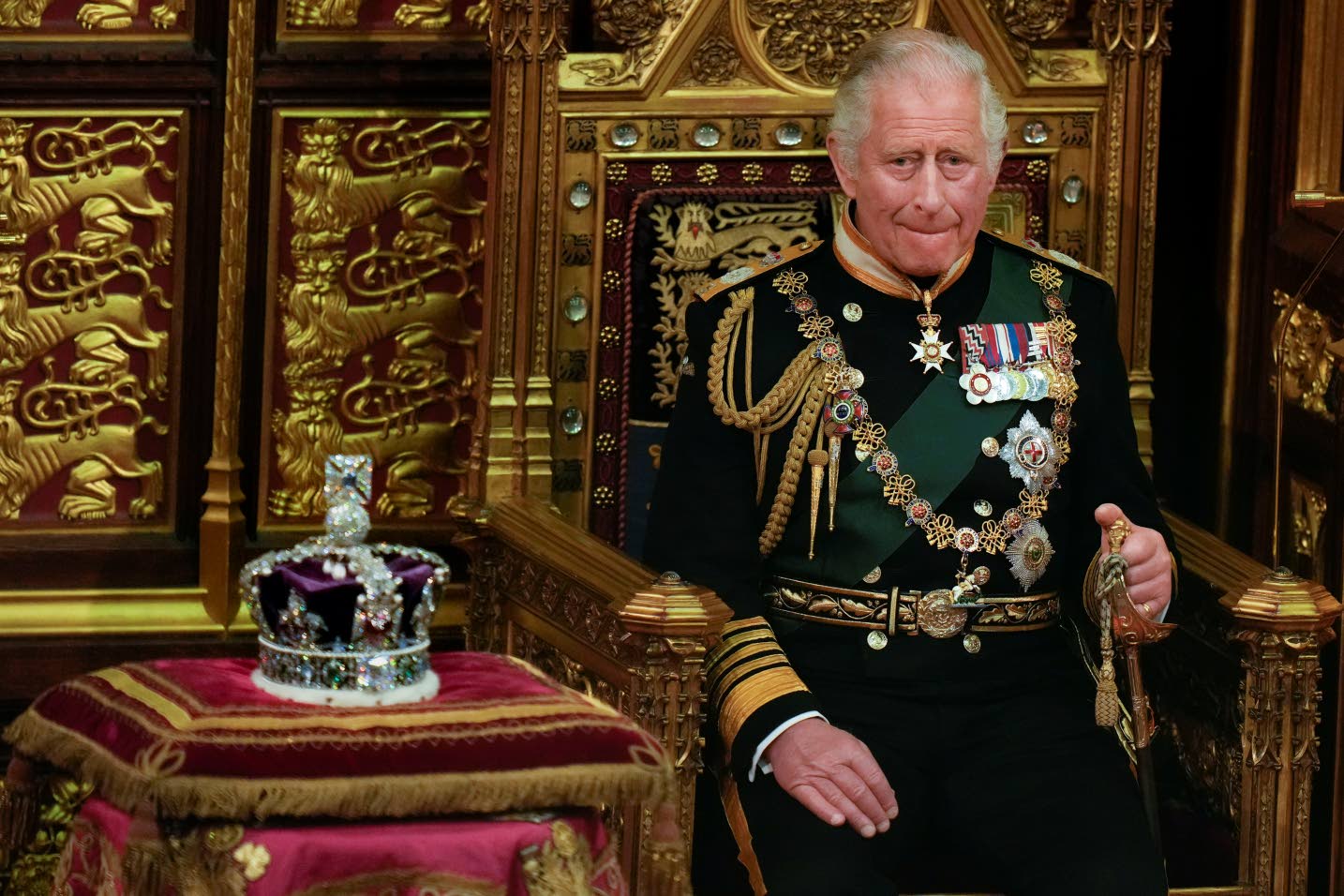
King Charles III


