



Beyond sun, sea and sand
In a world grappling with supply chain disruptions and economic volatility, a new blueprint for Jamaica’s economic future has emerged.
The Caribbean cruise industry has long been a pillar of Jamaica’s tourism sector, with visitors flocking to its shores for excursions and experiences. Yet, for decades, a significant economic opportunity has sailed right past its ports: the massive business of supplying cruise vessels with the provisions they need. While Jamaica has focused on what happens after the ship docks, the ships themselves are often stocked with goods sourced from far away, leaving local farmers and producers on the sidelines.
A Mona School of Business & Management (MSBM) student-led research project, ‘Developing Local Logistics Hubs to Support the Caribbean Cruise Industry’, is set to change that. It proposes a strategic, four-hub logistics network designed to not only capture this missed opportunity but also to fundamentally transform Jamaica into a regional logistics powerhouse.
This is a story of moving beyond the traditional role of a tourist destination and building a resilient, locally-driven economic future.
Connecting the Nation: The Four-Hub Model for Economic Growth
The core of this transformative plan is a network of four specialised hubs, each with a unique role that creates a highly efficient and interconnected national supply chain. Think of it as a smart system in which each part works together seamlessly.
1) Kingston: The logistics command centre. Located near the country’s largest seaport, Kingston would be the digital brain of the operation. It would handle all the planning, inventory management, and customs coordination. This is where a team of logistics professionals use real-time data to ensure that a ship’s order is processed and dispatched with pinpoint accuracy.
2) Montego Bay: The perishables and bunkering hub. Leveraging its international airport, this hub is designed for speed. It specialises in handling perishable goods like fresh seafood and exotic fruits. It is also planned to become a future hub for liquefied natural gas (LNG) bunkering, positioning Montego Bay as a modern port that can both provision and refuel the next generation of cruise ships.
3) The Southern Belt: The local farm link. Imagine a farmer in Clarendon/St Elizabeth, who has historically struggled to find a reliable market for his/her produce. This hub, positioned in Jamaica’s agricultural heartland, would be his/her direct link to the high-value cruise industry. It acts as a collection point, consolidating fresh produce from local farms, ensuring consistent quality and a steady supply.
4) Falmouth: The value-added centre. This hub takes the raw produce from the Southern Belt and transforms it into what the cruise ships need: pre-portioned vegetables, packaged goods, and specialty items. It is a place of innovation and local enterprise, where small businesses can add value to Jamaica’s agricultural bounty before it’s delivered to the ships or distributed to local hotels.
A New Chapter for Jamaican Agriculture
To understand the real impact of this plan, consider the story of Pauline, a farmer from Manchester. For years she has seen her harvests fluctuate with the seasons, often struggling to sell all her produce before it spoils. The new logistics network changes everything. Now she can sell her crops directly to the Southern Belt hub, which provides a guaranteed market and a stable income. Her produce is then sent to Falmouth, where it’s processed into a ready-to-use format for cruise ship galleys, creating an even bigger demand for her hard work. This isn’t just a logistics plan, it is a lifeline for local communities and a boost to Jamaica’s food security.
Beyond the Hubs: Long-term
This four-hub model is projected to do more than just supply cruise ships. The research estimates it could lead to a 30 per cent faster perishable turnover, drastically reducing waste and ensuring fresher products. The project’s cost-benefit analysis also shows a high return on investment (ROI), with key hubs projected to have a 53 per cent ROI and a payback period of under two years.
This initiative is a powerful step towards:
• Creating sustainable jobs: It will create new jobs in agriculture, logistics, and manufacturing, empowering local communities.
• Strengthening food security: By prioritising local producers, the plan reduces Jamaica’s reliance on imported goods and strengthens its ability to withstand global supply chain disruptions.
• Attracting investment: The potential for special economic zone (SEZ) designation offers powerful incentives for private-sector investment, creating a cycle of growth and innovation.
• Driving a green economy: The project incorporates green technologies like solar-powered cold storage and an LNG refuelling station, minimising its carbon footprint and aligning with Jamaica’s environmental goals.
This isn’t just about moving goods from point A to point B. It’s a strategic move that redefines Jamaica’s economic identity, transforming it from a destination reliant on tourism into a robust, resilient, and indispensable regional logistics hub. By investing in its people and its resources, Jamaica is building a more sustainable future for all.
Jamaica is not just a stopover, it is a cornerstone of the Caribbean economy.
Carl Anderson, Martin Walcott, Roxanne Henlon, Shanique Powell, Shawnalee Kerr, and Yanique Aikens are MSc logistics and supply chain management students at the Mona School of Business & Management. Send comments to brown.ainsleyc@gmail.com
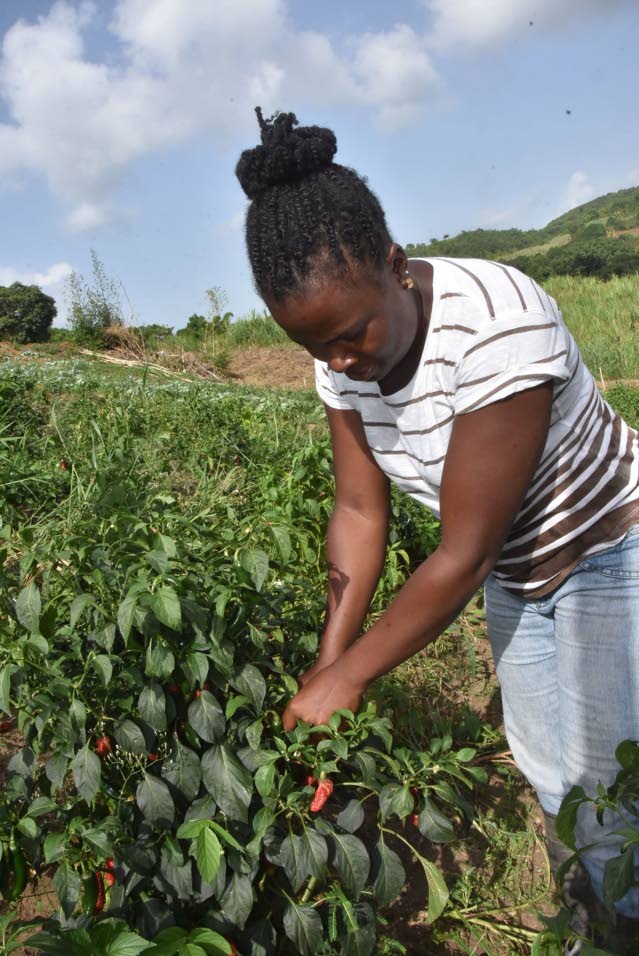
Local farmers would benefit from having an additional and reliable market to sell their produce. (Photo: Karl Mclarty)


