Morality, faith and democracy
As the nation faces another general election and is now immersed in the season of political campaigning we are being bombarded by the usual partisan political rivalry which has characterised such moments in the life of the nation, as well as the results of polls conducted by various individuals and agencies of varying levels of credibility.
One interesting, if not troubling finding from the polls is that, while the nation acknowledges the widespread nature of corruption, it does not figure as a major factor in the decision-making process for many Jamaicans, neither do issues of a moral nature seem to have much appeal to the electorate, albeit a nation that identifies itself as Christian. And yet, whatever policies and programmes are advanced or pursued by the ruling party or the Opposition has at base considerations of a moral and religious nature.
In a world in which many now see the Church and the gospel it proclaims to be about prosperity, emotional stimulation, and confinement to that nebulous sphere designated “the spiritual”, the prophetic tradition of the Old Testament and into which tradition Jesus announced the beginning of his ministry in St Luke 4: 18-19 to be to bring good news to the poor… to proclaim release to the captives and recovery of sight to the blind, to set free those who are oppressed, to proclaim the year of the Lord’s favour, provides a paradigm of the nature of the engagement of faith within the life of the nation.
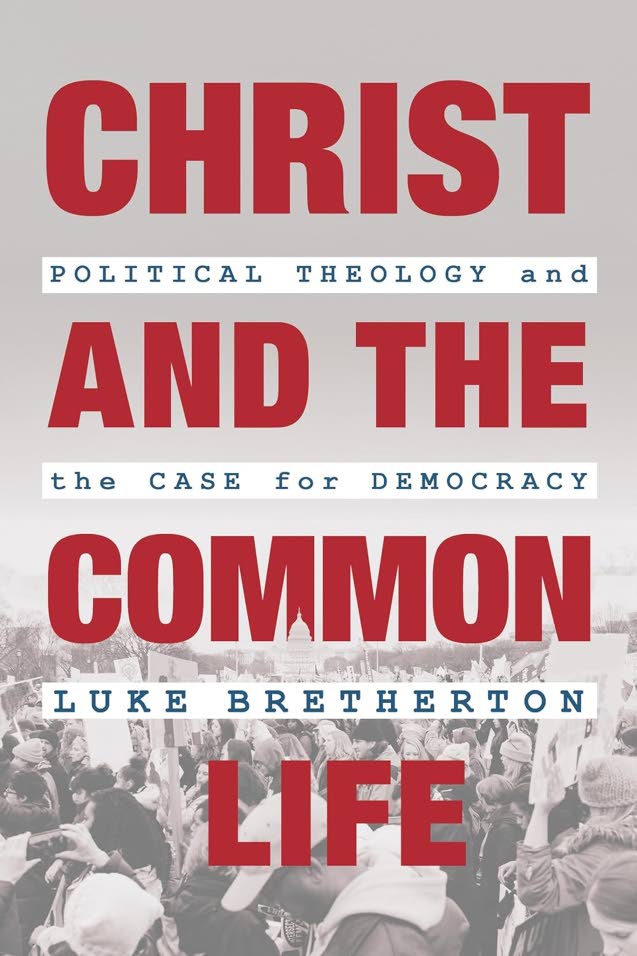
In his publication Christ and the Common Life: Political Theology and the case for Democracy, Luke Bretherton, far from creating a wedge between faith and politics, argues that: “Talk of God and talk of politics are mutually constitutive and retract each other, and show how, for better or for worse, this inter-relationship shapes both ecclesial and political life…”
The prophetic tradition as exemplified, for example, in the prophet Jeremiah, was one in which the prophet would, through a process of discernment, make pronouncements in the name of God regarding the punishment of Israel for its sin and infidelity; the political situation; the compromising expressions of their religious faith tradition and practice; social injustices; the oppression of the poor by the wealthy and the powerful; and offer a predictive element which pointed to consequences in the future for inaction and moral and religious re-alignment. It should not surprise us that prophecy developed during the period of settled living in Israel with urbanisation; kingship; the emergence of economic prosperity for some; the emergence of a ruling class; and alliances of various institutions, be they administrative, military and religious, to create the operative status quo. Perhaps, like today’s Jamaica, their national life was structured around a paradigm of prosperity.
It is into this kind of context that Jeremiah was being commissioned to be the prophet for the moment. The call and mission entrusted to Jeremiah was to engage, challenge, and confront rulers, institutions, and power structures, and the assumptions and values which underlay their modus operandi. The prophetic voice is not a voice of perfection, neither is it a voice only of morality. It involves advocacy and education, hospitality for victims, and at times it may involve the mobilisation of people in the face of social injustice or violation of the created order/environment.
Contemporary theologians, such as American Richard John Neuhaus, and several Caribbean theologians, including Rev Dr Burchell Taylor and Rev Dr Garnett Roper, in reflecting on the prophetic motif, have argued that the public square is morally empty, with reference to our Jamaican context, and a global picture that seems no different. They have argued that the public square ought to be occupied by competing moral visions of faith, non-faith, or other faith communities.
Looking internationally at what is transpiring in Gaza; Ukraine; the global inhospitality towards displaced peoples, refugees, and migrants; and the current internal and global actions of the Administration of the US in relation to provision of health care for the vulnerable, the prospect of citizens losing their social security and health care point to a dearth of moral discourse and clarity. Likewise, the pressing issues of social and economic inequities, poverty, gender and domestic violence, crime and violence, are issues which are before us and which we cannot wish away.
As a nation whose system is one of a parliamentary democracy, we need to remind ourselves that this is a system of governance by the population of a State, typically through elected representatives whose task is to protect the rights of the population and pass laws, formulate policies, and offer leadership that promote the common good. While pointing to the participation of a broad cross section of the population, it does not speak implicitly to the representation of minority groups or interests in the system of governance. This broad definition of democracy does not relegate this sphere of a nation’s life to the confines of a single discipline known as politics, as some have assumed. As an ideal, it does not speak to the distortions that take place in democracies when those who have been elected display a lack of accountability to the population but are focused on their core political base; abuse the power entrusted to them; become corrupt; or use the power of their office for purpose of self-perpetuation.
What may not be immediately evident is that across the world many of the violations of the rights of citizens and the perpetration of social injustices against citizens are being perpetrated in nations with a democratic system of governance. Underlying this all is how the duly elected leaders and ruling political parties interpret their mandate, even where they have not received the majority of the popular vote.
In some situations political power has been gained by deception of the people and which becomes evident when the variance between policies being pursued and election manifestos and promises become evident. In some other instances, victory is secured at the polls by playing on people’s fears as is happening in many parts of Europe and the United States in relation to the issue of migrants, refugees, and the displaced, and the way Haitian migrants who land on the shores of Jamaica are handled. In some instances, political aspirants have been able to engage and receive the support of influential power bases — as has happened with the billionaires, the “Make America Great Again” (MAGA) advocates, and the Christian right in the US, and which may be cause for pause and reflection in the Jamaican context.
These things thrive where party loyalties are unyielding and benefits are promised or advantages are to be gained for assisting in ensuring victory at the polls. So, as we have seen, billionaires get what they want for their support in the presidential elections, and the MAGA advocates have their recommended candidates for appointment to take over the reins of government, even as the people of the religious right have their limited multi-point moral agenda imposed on the rest of the nation.
When does the discourse about cutting feeding programmes for the hungry, health care for the millions who are set to lose this benefit, or the retention of hospital facility for the rural people take place? When, for example, do the people of the democratic nation of Israel, which is founded on a faith tradition, but also consisting today of individuals with no faith, engage in a moral and/or faith discourse on the starvation of a people as the route to advance their democracy, or the apparent genocide taking place in Gaza?
The point is that to have a working democracy does not ensure that it acts on the basis of principle and morality and works for the majority interests of the people and the common good. In our national context in which a very significant section of the electorate is not participating in voting we need to reflect on the extent to which moral concerns underlay their decision-making.
The point is that a democratic Government may be structured around a paradigm that is not at base concerned with morality or with the promotion of critical reflection and discourse and reflection by its citizens, and may even suppress such activity. So, we can dispel the notion assumed by many in this nation and beyond that a democratic system of government is “the Christian” expression of government, even as we can dispel the notion that capitalism is inherently Christian. They are systems for the organisation and good ordering of society, but not coterminous with Christian governance, although elements of Christian religious expression can be utilised by political figures in soliciting widespread support.
As the nation prepares itself for a general election we must take a critical stance in relation to our nation, its current state, the paradigms and policies which inform who we are and who we strive to become, what moral or faith concerns inform our common life together, the nature and extent of social justice and equality practised within the society, and the fate of the vulnerable and marginalised within our midst. These are fundamental questions in our current context in which a greater percentage of our electorate are opting out of political engagement within the last decade or two and choosing not to vote in increasing numbers, attributing their decision to a lack of trust in political leaders, unaddressed moral concerns, and a sense of marginalisation in relation to the operation of the direction in which the society is moving.
This need not be a primary concern for our political parties as, one way or another, the loyal core will ensure that one or the other forms the Government, regardless of its obvious undermining of the very principle of democratic government reflecting the mind and will of the majority.
The truth is that those who seek to constitute the Government of the land are not just driven by altruistic corporate interests but the gaining or retention of power. This is not a call to start throwing Bible verses around at each other, but to ask critical questions of morality, of faith, or no faith regarding the principles and premises on which decisions are made, governance is exercised, the common good is served, and people feel a sense of inclusion and belonging as a Jamaican.
The number one issue facing the nation — as revealed in various polls — is that of crime and violence, and among the major concerns, are the high murder statistics and its impact on the economy, a situation that has been in the making over many years. So the focus has been on how to bring the statistics down. In the process we have made this out to be primarily a matter of policing. So we await their periodic release of statistics, celebrate each indication of a decrease in murders, while remaining divided and befuddled about how to address the increase in police killings during the same period.
It is clear that this level of killing by agents of the State is now at an unacceptable level and the responses given to calls for greater accountability are unacceptable. The publication of a litany of allegations and charges after each killing does not constitute the establishment of guilt as this is the purview of the court. Supposedly, if we continue on this path, crime will go down and the economy will pick up perhaps in corresponding proportion.
Absent from much of the public discourse, and certainly from the political operatives who control the medium of radio which talk shows offer, is a fundamental discussion of who are we as human beings; how do we affirm the value, worth and dignity of every human life; why are murders and violence, along with strong crime-fighting measures confined to specific geographical communities across the country, usually of certain socio-economic standing and opportunities; and, why are so many of our young men perpetrators and victims in a nation that is ageing.
The national response of shouting, “Stop the killing!” and “Give up the guns!”, “Get rid of all of the gunmen and murderers!, so that we can have back our supposedly peaceful, just, and prosperous nation, may be nothing more than an exercise in self-deception until we address fundamental issues addressing the life of many underprivileged and underserved black young males in our supposedly unified and integrated society. We skirt these uncomfortable issues of race and class to our peril.
In this supposedly Christian country we must ask those questions about who are we as human beings created by God, and of what worth and value is each human life, how are we structured as a society to ensure that there is equity and justice and with opportunities for the development of the potential of all. In so doing, we will face the complexity of balancing what appear to be contradictory and opposing concerns. So while we are aware of the positive reading of the economic indices in terms of the performance of the economy, and hearing how the country now enjoys the lowest level of poverty, we must at the same time ask what does wealth distribution across the nation look like, and why at the same time are the lines at soup kitchens getting longer?
Regarding the focus on economic indices, Bretherton challenges us to pause and reflect as he asserts that: “Economics is a central part of creating and sustaining a common life… Economic relations must be understood as embedded within prior moral and political relations if they are to help generate forms of human and ecological flourishing.”
When in recent weeks a principal of a Kingston school indicated that about two-thirds of the students entering a high school are performing at literacy levels way below their grade, and we multiply that across the nation, can we ask what future awaits these young people even after we have supposedly sterilised the nation of the young people who are currently associated with murders and violence?
The economy and its performance is a primary concern of a nation and those responsible for governance. Nevertheless, there is no such thing as a generic economy that is applicable to every nation. So there are questions which arise regarding who or what are the primary beneficiaries of the economy. As a nation, we need not look very far to see how those who are already the leading beneficiaries can manipulate the nation’s life to further their accumulation of wealth at the expense of the poor and the most vulnerable in the nation, thereby bringing to the fore the extent to which equity and social justice have a place within the political discourse of this nation. The tragedy is that at this time of electioneering the poor and vulnerable become beneficiaries of largesse and promises, and while reinforcing loyalty and dependence, does nothing to transform the life circumstances of these people between election campaigns.
It is horrifying to think that in a country that declares itself to be Christian, and in which corruption is a widespread phenomenon, there is little discourse on the matter. Instead, there is widespread indifference, mistrust, and a willingness to sacrifice the institution that wise leaders of the past have put in place to ensure integrity, transparency, and accountability in governance and in the public service. The truth is that where morality and faith are not engaged as part of the national discourse there tends to be governance that takes the form of dictates that foster partisan divide on political and national issues, rather than the fostering of a culture of critical thinking. What little exchange that is taking place has to do with name-calling, comparing different political administrations, and support for muzzling and rendering impotent the Integrity Commission as the way to create a society of transparency, honesty, integrity, and accountability.
Within a democracy the government manages and directs the status quo. In its operation there are entities and concerns which tend to be peripheral to the status quo such as the interest of vulnerable groups and entities, or those who are victims of the operation of the status quo. These may be constituted by civil society groups. They are not intended to represent the interests of the status quo or to be cheerleaders for the Government of the day or certain stakeholders. The Christian cannot read the Bible and not see how the vulnerable, marginalised and forgotten have been the concern of God the Father and given expression in the mission of Jesus Christ.
In addition, the prophetic tradition of the Old Testament is one which held kings and Governments to account and at times with very strong words of rebuke or announcement of their demise. Yet, it is not only Christians or people of faith who have such a moral concern for these individuals and interests. Because of their interests and concerns they are usually perceived to be antagonistic to Government and those whose needs are satisfied within the operation of the status quo. Whether it is Jamaicans for Justice, National Integrity Action Jamaica, Jamaica AIDS Support, or Jamaica Accountability Meter Portal, attacking the messengers does not in any way take away from the validity of their purpose and message, and in so doing we must ask ourselves whose or what interest is primary in our life as individuals and as citizens of this country.
Howard Gregory is retired archbishop of the West Indies and lord bishop of Jamaica and the Cayman Islands.
Howard Gregory