The role of the GG when an election is called
THE governor general of Jamaica plays a key role in the democratic process when an election is called, ensuring a smooth transition of executive power and maintaining stability.
From the dissolution of Parliament and signing of the writs of election to the appointment of a prime minister, members of the Cabinet, senators, and the leader of the Opposition, the governor general is instrumental in a successful transition of executive authority, which is the hallmark of a successful democracy.
With the next general election set for September 3, the governor general’s secretary and clerk to the Privy Council, Major Dwayne Hill, outlined the constitutional duties and responsibilities of the governor general in an interview with JIS News, explaining that before holding a general election in Jamaica, the prime minister advises the governor general in writing to dissolve Parliament, which is provided for under section 64 of the constitution.
The dissolution ends the life of a legislature at the call of an election to enable the taking of the polls in keeping with section 19 of the Representation of the People Act (ROPA), which governs the electoral process.
On receipt of the prime minister’s advice, the governor general’s secretary prepares proclamations for the governor general’s signature — one to dissolve Parliament and the second to appoint the election date.
The proclamations are sent to Parliament, specifically to the clerk to the Houses.
“The governor general also formally advises the speaker of the House and the president of the Senate of the dissolution of Parliament, via letter, and the copy of the proclamation is sent to the Jamaica Printing Services to be published in the Jamaica Gazette Supplement to notify the general public,” Major Hill said.
The gazette is a formal public notification. Copies of the proclamations are also sent to the Cabinet secretary to formally advise the Cabinet, completing the formal notification for the dissolution of Parliament and appointing an election date.
Before the general election, the director of elections will send to the governor general the writ of election, which is a document that gives a returning officer the legal authority to conduct an election in each constituency, Major Hill explained.
The 63 writs for the constituencies are sent to the governor general for signing, which are then sent back to the director of elections for dispatch to each returning officer.
Before nomination day, the governor general names two members to be appointed to the Constituted Authority provided for under Section 44A of the ROPA.
Members of the Constituted Authority are invested with powers to halt an election in any constituency or request the Election Court to void an election and hold a fresh one if there are malpractices.
Major Hill noted that while on the night of an election an announcement is made of the results and the winning candidates through the media, “the governor general, at this time, can take no action because he has to be advised formally by the director of elections of the results of the election”.
The governor general is informed of the winners via submission to his office of the 63 writs signed by each returning officer, along with a formal notice of the results.
“This is Form No 21 that is found in the second schedule of the ROPA. Each Form No 21 signed by the returning officer will have the name of the person who was successful in that constituency. This is also accompanied by a cover letter from the director of elections indicating the winning party,” Major Hill said.
The governor general appoints a prime minister in keeping with section 70 of the constitution, which states that he must appoint the person who commands the confidence of the majority of members elected to the House of Representatives.
The general secretary for the winning party submits a letter outlining the name of the person, who is usually the party leader, which fulfils this requirement. The correspondence is accompanied by the signature of each member elected to the House of Representatives, indicating their support.
On receiving this letter, the governor general will then write to that person, so named, and invite him/her to form the next Government and appoint a date for his/her swearing in, according to Major Hill.
“If the elections go in favour of the Opposition, then the governor general will write to the outgoing prime minister advising of his intent to appoint a PM-designate. It is important to note that in any case the incumbent remains the prime minister up to the date of the swearing-in ceremony,” he said.
The same thing is done to appoint a leader of the Opposition. Section 80 of the constitution states that the governor general must appoint the person who has the confidence of the majority of members elected to the House who do not support the Government.
The general secretary of that party writes to the governor general to indicate who the person is, usually the leader, and the signatures of the Members of Parliament are also affixed.
Following a swearing-in ceremony at King’s House, the prime minister then names members of the Cabinet, per section 70 of the constitution, who are sworn into office by the governor general.
The governor general’s role also includes appointing members of the Upper House, following section 35 of the constitution. The prime minister recommends 13 senators for appointment and the leader of the Opposition does the same for eight members to the Senate.
“Following that, we have the assignment of subjects and departments, which establishes ministries, departments, and agencies, per section 77,” Major Hill pointed out.
The governor general’s secretary is the chief executive officer of the Office of the Governor General, responsible for providing strategic leadership, executive oversight, and operational management to support the governor general’s constitutional, legislative, ceremonial, and social functions.
The official also manages all correspondence and matters related to the local Privy Council of Jamaica.
— JIS News
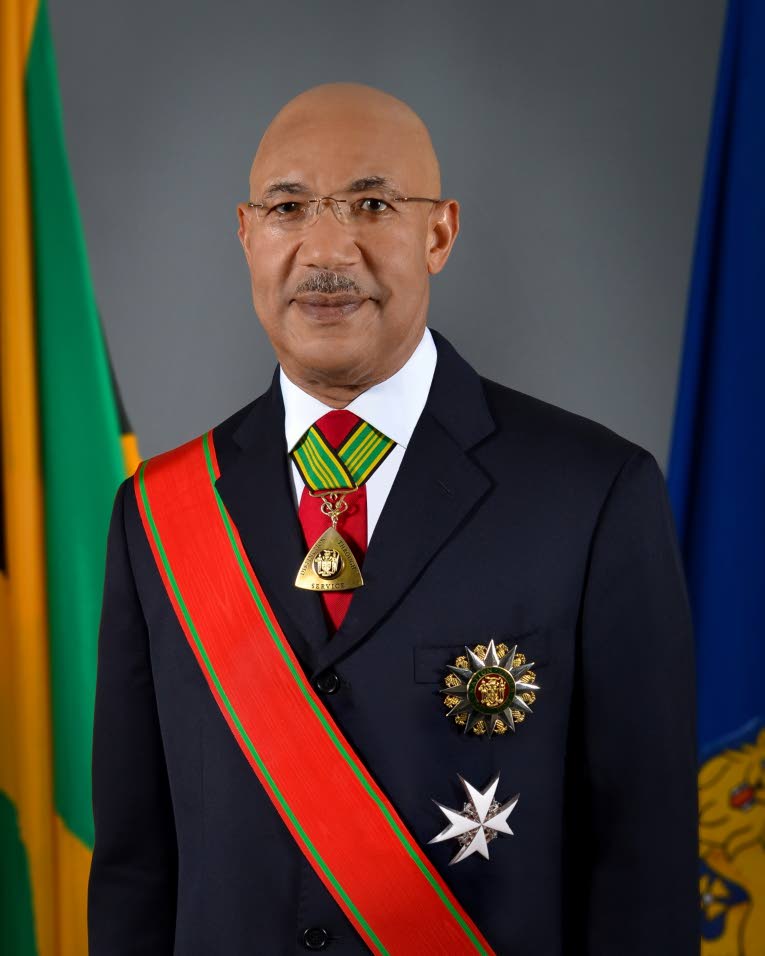
Governor General Sir Patrick Allen