



How small businesses can import duty-free
FOR many entrepreneurs, the leap from managing personal finances to running a business comes with one rude awakening: the steep cost of importing the very materials or equipment needed to get started. Yet under the Productive Input Relief (PIR) programme, qualifying raw materials and equipment can be brought in customs duty-free.
We often speak of the financial journey in stages: saving, budgeting, investing, and retirement planning, but for those whose next chapter is entrepreneurship, controlling operational costs becomes the new priority. In countless conversations with small business owners, one concern repeats itself: import expenses. And while government voices have championed export growth, the tools to ease import costs have received far less attention. For many, learning about PIR could mean the difference between shelving a business idea and finally making it happen.
“Once you are a qualifying manufacturer, you would be approved for a list of incentives,” said Sheneecia Salmon, Jamaica Manufacturers and Exporters Association (JMEA) research policy and advocacy manager.
The PIR is more commonly mentioned in the manufacturing industry, but not every business automatically qualifies as a ‘manufacturer’. The Ministry of Industry, Investment and Commerce (MIIC) and the Jamaica Customs Agency (JCA) conduct a joint assessment to determine if a company meets the requirements for manufacturing status and can access fiscal incentives. Once approved, eligible businesses can receive various duty exemptions on imported concessionary goods, including import customs duty (ICD) exemption, additional stamp duty (ASD) Exemption, standard compliance fee (SCF) exemption, General Consumption Tax (GCT) Deferment (applicable only to manufacturers), zero-rated GCT (applicable only to producers of primary products), and a 50 per cent discount on the customs administrative fee (CAF), which is currently applicable only to raw materials, intermediate goods, and packaging materials. These concessions cover inputs that go directly into the production process, such as raw materials, intermediate goods, consumables, packaging materials, and machinery and equipment (including parts thereof). While the PIR is more widely promoted among manufacturers, it also benefits other sectors, including tourism, creative industries for cameras and other equipment, agriculture for tools, and health.
“Any size business can benefit from the PIR,” Salmon told the Jamaica Observer. “Different ministries also deal with different areas of the PIR.”
Each business must apply for the PIR through the ministry under which its operations fall, in conjunction with the JCA. The process, however, can be lengthy. Medicanja, which recently benefited from the PIR for the establishment of its biotechnology arm, told the Sunday Finance that the application form is available on the MIIC website. Applicants must submit the company’s tax compliance certificate (TCC), certificate of incorporation, details on the products they manufacture, and their export plans.
“When companies apply, outside of the TCC and so forth, you really have to have a plan for the business and a process flow because when they come for the visit, they will go through those. They want to make sure what you’re going to produce is clearly defined and you have a plan around it,” said Andre McKenzie, CEO of Medicanja, in an interview with the Sunday Finance.
Medicanja’s first approval was for one year, and it has now been renewed for three years. During the first year, the company benefited from PIR concessions for a facility renovation to boost manufacturing, including furniture and equipment upgrades, most of which were scheduled after the approval.
“We are actually resubmitting now under the new approval for additional materials and items that we need for production,” said McKenzie.
He noted that the initial application process can take more than six months and requires joint inspections from the MIIC and Customs. The company received assistance during the process from the JMEA and the Jamaica Promotions Corporation (Jampro). Antoinette Palmer, CEO of Ettenio, said companies like hers that import oils, butters, vitamins, and beauty products must go through the Ministry of Health for PIR approval. She is still operating under her 2016 licence, now due for its third renewal, and is preparing to purchase conveyor belt equipment. Palmer noted that the PIR has saved her company a significant amount of money.
“That saving can be used elsewhere in the business, maybe marketing,” Palmer advised.
She encouraged other business owners to take advantage of the programme despite its challenges, recommending that they know exactly what they plan to import and ensure it is on the list of approved items. Palmer also suggested working with a broker who understands HS Codes, as the application process can be difficult to navigate alone.
“Make sure what you plan to bring in and the amount you plan to bring in are on the form you’re seeking approval for from the Ministry of Health, because if you bring it in and it’s not on the list, they will either hold it while you try to get approval or you’ll have to pay for it,” she cautioned.
She added that the savings from PIR allow businesses to enter the market at competitive prices, which helps them scale locally. Supporting that point, Salmon noted that one company importing just a single raw material was able to save $6 million on one shipment, underscoring the programme’s potential benefits. While some small businesses have been using the PIR to bring in packaging and raw materials, business owners admit, however, that there needs to be a simpler application process for them and others. They suggest creating a single linked form to reduce the need to go through multiple ministries, making the process more seamless for entrepreneurs. Linkages, digitisation, and more guidance for smaller players were also highlighted as priorities. McKenzie noted that some entrepreneurs avoid applying altogether because of the complexity.
“I believe there needs to be some support for persons who don’t have the time or capabilities to go through and navigate it,” he asserts.
He called for “a little more hand-holding” to make the application process easier for smaller business owners. According to the Ministry of Industry, Investment and Commerce (MIIC), the PIR provided $109.29 billion in duty and tax relief to the local manufacturing sector for fiscal year 2021/2022. The programme, part of the government’s Fiscal Incentive Regime, was introduced in January 2014 to simplify and streamline the granting of fiscal incentives to companies and individuals across growth sectors.
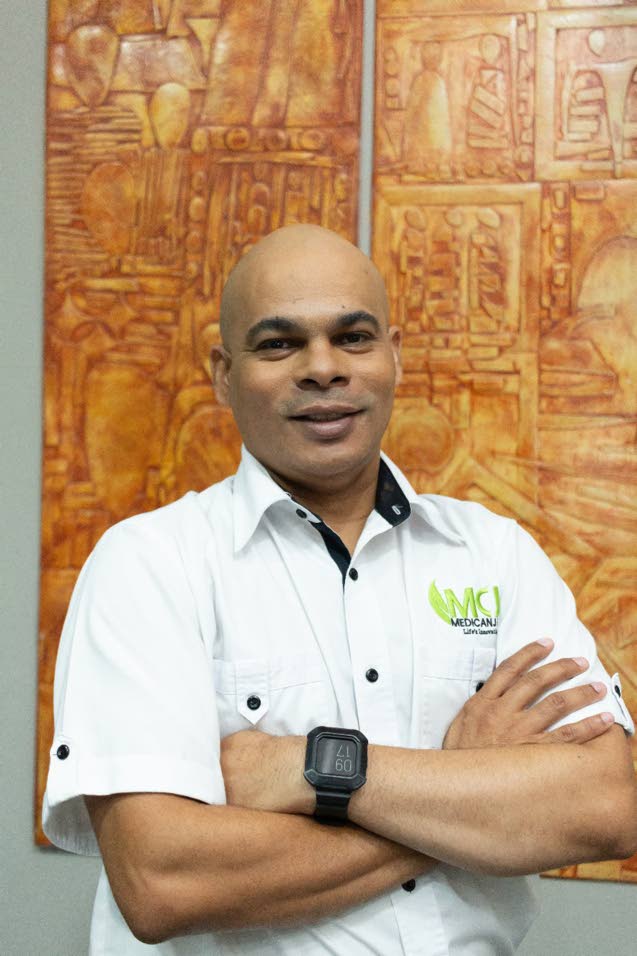
Andre McKenzie, CEO of Medicanja, says a clear business plan and process flow are key to securing PIR approval.

SALMON… any size business can benefit from the PIR.


