



Debate fatigue
PNP edge JLP on social issues, says commentator; others did not watch
THERE are mixed reviews among political commentators as to whether the first of three political debates between the ruling Jamaica Labour Party (JLP) and the Opposition People’s National Party (PNP) on Saturday passed muster with Professor Canute Thompson — educational leadership academic at The University of the West Indies — giving the edge to the PNP’s team while others questioned the usefulness of the forum.
The Jamaica Debates Commission (JDC), for its part, however, has expressed satisfaction with the first debate in the 2025 General Election series, which focused on social issues.
Meanwhile, both the JLP and the PNP have congratulated their respective teams, declaring them the winner of the debate.
The debate, which featured the PNP’s Damion Crawford, Raymond Pryce and Sophia Frazer-Binns, and the JLP’s Pearnel Charles Jr, Senator Kamina Johnson Smith and Matthew Samuda, was, according to the JDC, intended to assist in identifying, clarifying, and understanding the social issues being presented in the present general election campaign.
Professor Thompson, pro-vice-chancellor for undergraduate studies, professor of educational policy, planning and leadership at The UWI, Mona and political commentator, speaking with the Jamaica Observer on Sunday, said the objectives of the debates were met, to some extent, notwithstanding some gaps.
“I think that to some degree the questions identified issues of relevance and the answers provided some insight into what the parties were thinking about various policy issues, about the plans that they have, to some degree, but I believe that much more could be done in terms of defining some of the more concrete plans and proposals,” the former chair of the PNP’s Policy Commission, told the Observer.
As to which team had the edge, the professor said: “…In my assessment, the clarifications offered by the PNP representatives were more helpful than those offered by JLP representatives, and I think that part of the challenge the JLP might have faced is that not having had a reference book, aka manifesto, to which they could point in specific terms, limited their ability to communicate.
“So, they would say things and, from the sound of it, you could say this sounds like a manifesto position, but you can’t be clear because there was no reference point to it. I could also say that, for the PNP, although they spoke to specific ideas, they did not take us through the manifesto, for example, to say under this particular provision in the manifesto this is what we plan to do, so there was not that clear articulation of the relationship with what was being asserted in the debate and the manifesto itself,” he said.
The PNP’s team was better at handling questions asking for clarifications during the debate, according to Professor Thompson.
“We could start, for example, with the issue related to beach access, issues related to the National Environment and Planning Agency (NEPA) and the environment, broadly speaking, I think those were very clear explanations. The rural school bus system, some indication was made that the current system would be subject to change, and those following the news would be aware of what those changes are because the manifesto speaks to some aspect of that,” he said.
Commenting on the education issues identified by the PNP’s Crawford, Thompson said: “In addition to Mr Crawford indicating that there were issues with education, I think Mrs Johnson Smith conceded. I think there is bipartisan agreement that our education sector is faced with challenges and, yes, the numbers speak for themselves in terms of what were the number of passes last year in mathematics, for example, what was the performance in literacy say 10 years ago versus now.”
As to the statistics quoted by Crawford, the educator said, “I think those numbers are credible, but what I think is most important is that whilst the JLP concession on those issues were tacit and, perhaps, less assertive, there is consensus that our education system is facing challenges and there are layers of evidence that indicate that and the incremental improvements we have seen between pre-COVID and now are not that great, so we still have a lot of work left to do.”
In the professor’s opinion, individual members of both teams acquitted themselves well.
“I would side with a fairly strong body of opinion that suggested that Mr Samuda was the strongest person for the JLP’s team; I believe that Mr Pearnel Charles Jr didn’t have a good night and Mrs Kamina Johnson Smith was not her usual self, she struggled to find her place. But I think that, overall, the People’s National Party representatives were more effective in communicating and, bear in mind that political debates consist of content, style, snappy meaning sharp rebuttals, and clarity about what your intentions are,” he told the Observer.
“In terms of the behaviours which placed the other side on the defensive and the subtext of communication with which an audience might connect, I think the PNP was better at those kinds of things. Jabs are part of the landscape of political debate, and I think the PNP, in addition to its content, was better in that area. Part of Mr Samuda’s strength was exactly that, content and acerbic rebuttals,” he said, adding that some of Frazer-Binns’ answers “at the outset sounded scripted”.
In the meantime, Thompson said some aspects of the debate, which were outside of the control of the participants, were disappointing.
“If you speak about setting and, for example, the absence of fact-checking in real time is something I believe the debates should have, the moderator should be able to respond by saying, ‘Actually, the data shows so and so.’ You don’t need to fact-check the truth, but inaccuracies should be fact-checked,” he said.
He also described the absence of a sign language interpreter from the set as “unfortunate”.
“In a society where that segment of the population is already excluded in so much of what we do, that was a disappointment; that was a failing on the part of whoever are the people who make those decisions. That was a failing,” he said.
Political scientist Dr Paul Ashley, when contacted on Sunday, said he did not watch the debate at all.
“It was of no interest to me whatsoever, neither the speakers nor the proposed substance. Having been exposed to a number of so-called political debates, we notice that neither party seemed bound by the utterances thereof. In fact, it is not government policy; many promises have been made within manifestos and without manifestos and these promises have not been kept,” Ashley said.
According to Ashley, who is widely respected for his incisive commentary, he was not alone in this view.
“I canvassed the views of certain of my colleagues in the political commentary space and I have not found one who has watched the debate. What is even more informative is that they don’t expect to watch the others. It’s very cynical; I think what has happened is that all that has to be said has been said already, and we have been in election season for quite a long time; we tired, Christmas a come,” he stated.
“Documents of achievement, manifesto and ‘Manifesto Lite’, are good for the archives of Jamaican politics, but the political landscape has changed beyond this, so has the media landscape. Both political parties have to find a way to communicate more effectively and to use personalities with some amount of credibility,” Ashley said, declaring that “having been convinced to come out of a self-imposed retirement to political commentary”, those were his thoughts.
Other key political watchers with whom the Observer spoke on Sunday, including Lloyd B Smith and Shalman Scott, said they did not watch the debates for varying reasons.
Meanwhile, JDC Chairman Brian Schmidt said the commission is looking forward to the presentation of the remaining debates.
“These are The Economy on Tuesday, August 26 and The Leaders, Thursday, August 28. Both debates will begin at 9 pm and can be accessed by local TV and radio as well as in the digital space. We were also pleased that we enjoyed a very high level of public engagement and continued to receive questions from the public after the debate,” he was quoted in a release Sunday.

The Jamaica Labour Party has congratulated its team, declaring the members the winner of the first of three political debates ahead of the September 3 General Election.
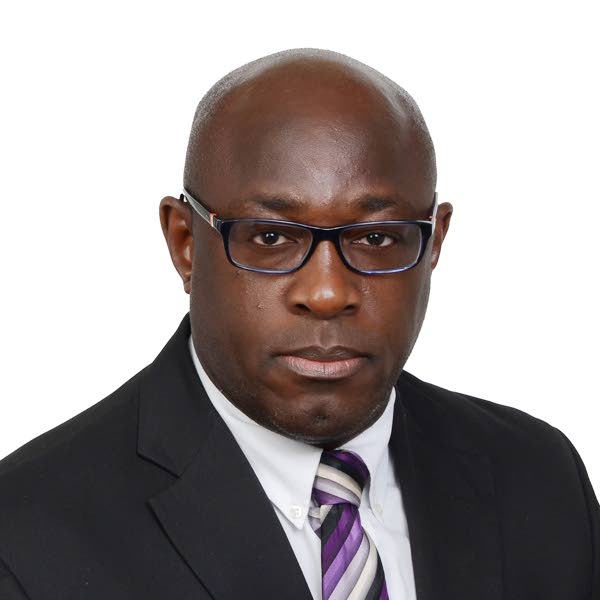
THOMPSON…I would side with a fairly strong body of opinion that suggested that Mr Samuda was the strongest person for the JLP’s team
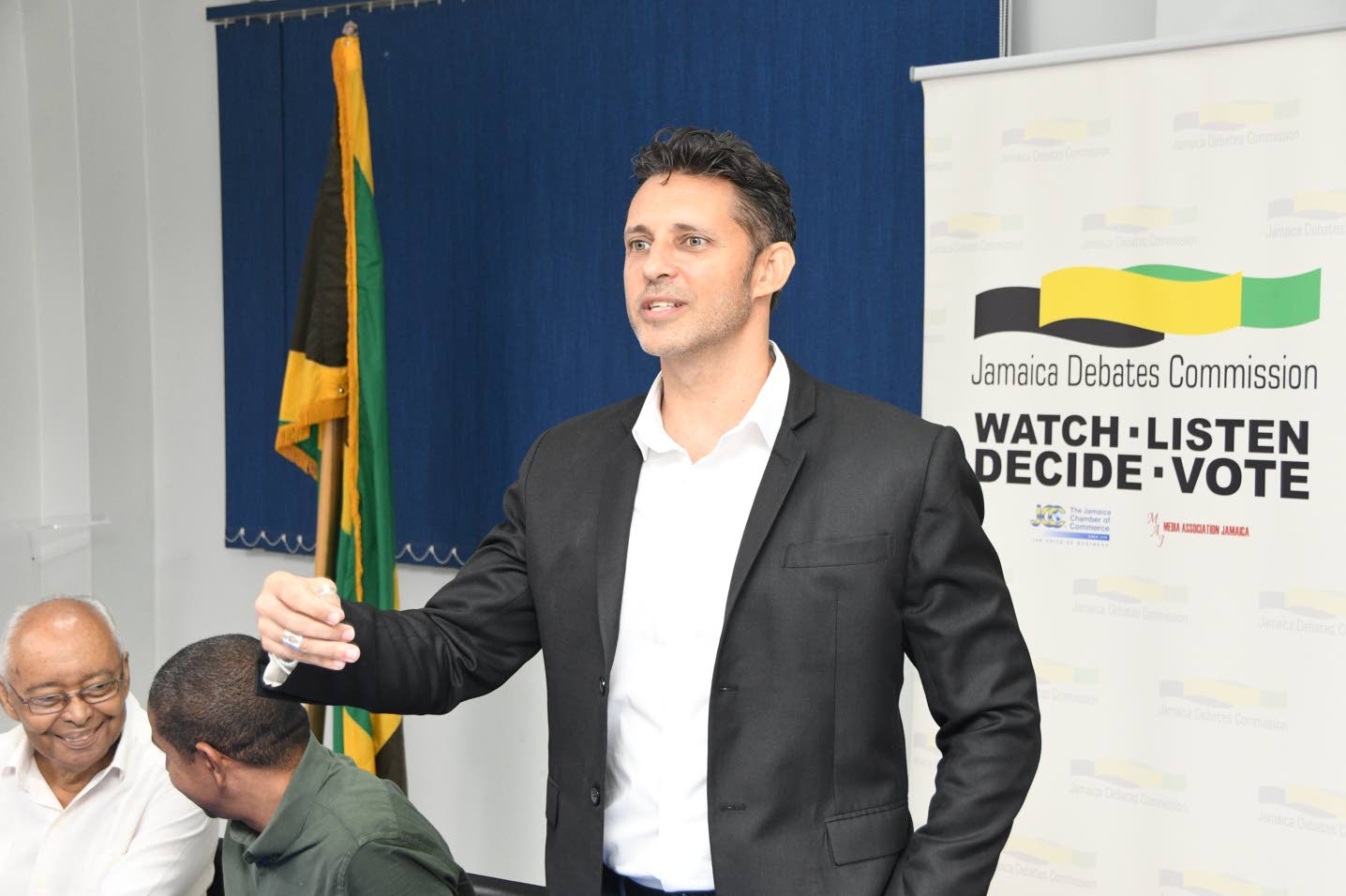
SCHMIDT…we were also pleased that we enjoyed a very high level of public engagement and continued to receive questions from the public after the debate (Photo: Joseph Wellington)

The People’s National Party has congratulated its team, declaring the members the winner of the first of three political debates ahead of the September 3 General Election.


