



MORE POWER TO SPORT
Calls return for stand-alone ministry and council for sporting affairs
Renowned economist Keenan Falconer believes the Government needs to significantly invest in sports development, and suggests that establishing a dedicated sports ministry and national sports council could go a long way in making sure that happens.
Though not a major talking point during the election campaign trail, the Jamaica Labour Party and the People’s National Party have both outlined their vision for sports on the island in their respective manifestos.
There’s been a long-standing view that successive governments do not prioritise sports sufficiently, which has led to issues such as a lack of modern infrastructure, athletes choosing to represent other countries, failure to host major sporting events including the ICC T20 World Cup in 2024, and the loss of the Caribbean Premier League franchise.
Falconer believes that the economic impact of sports would be greater than it currently is if proper foresight and analysis were applied.
“When you make a significant investment in something like sports, the lag time will always be considerable before you can start to reap those benefits and, suffice to say, had we started in a more focused and coordinated way, say, 20 to 30 years ago, we’d be reaping the benefits now,” he told the Jamaica Observer.
“So we sort of have this stop-start, you know, taking one step forward, two steps back approach to it. And it’s not really seen as a very viable and profitable business in the long term.”
Falconer added, “If you make an investment in infrastructure, for example, and we are announcing that a major sporting event is coming to Jamaica, and you see all of these infrastructure upgrades, that has a direct impact on GDP.”
“So you see that in numbers, but you don’t see that necessarily affecting people’s direct everyday lives (like) what are the sort of money figures that go directly into people’s pocket? And yet, that is something that does happen so the velocity of money, meaning the rate at which it changes hands, is very high when you consider the fact that initiatives in tourism, entertainment and culture that are allied with sports.”
Currently, the Sports Ministry, overseen by Olivia “Babsy” Grange, is combined with the ministries of Culture, Gender and Entertainment. But Falconer believes making sports a stand-alone ministry could improve the industry’s fortunes locally.
“I think a dedicated sports ministry would signal the Government’s intention to treat this area more seriously and in a more focused manner. They will probably cite capacity constraints, resource challenges and the like but at the end of the day, if we take sports as seriously as we do, for example, tourism, then I don’t see any reason why it doesn’t deserve that specific treatment,” he said.
“It’s not very common that you will find, for example, a single ministry dedicated to an industry unless you think it’s important and we have thought that tourism is so important, for example, that it deserves its own ministry. The only way the current arrangement continues to make economic sense is if you are able to get the synergies between all of the sub-components of that super ministry but right now, there’s no indication tangibly that that is what’s happening.”
Jamaica Olympic Association President Christopher Samuda believes the reintroduction of the National Sports Council, which has been inactive since 2016, would be a great boost for sporting development locally.
“You have to have a policymaking body that is going to supervise the national plan, that is composed of competence and expertise and will be able to attract the capital,” he told the Observer.
“You have to have a body that is going to be able to drive those national endeavours, which are critical to any development of a sporting industry, which we don’t have. Some entity has to drive the process and it has to be a committee or commission where you have the sporting expertise represented, where you have the Government represented, where you have the Jamaica Olympic Association represented, so that we can have a global perspective of how that plan should be rolled out and what will be the deliverables after a particular period of time.”
Samuda also says the sports council would significantly ease the various burdens that local associations have been facing for decades.
“A lot of them can’t survive in this macro environment, so how are we going to assist them? Yes the [JOA] have been giving equipment grants, we have introduced a lot of activations that have been able to help our associations cover day-to-day expenses and we continue to fund their overseas endeavours in order to qualify for their respective games. But if you want to have the exponential development of those associations, it has to be a collaborative approach,” Samuda said.
“It is a very deep dive perspective that we have to have of sport development, which does not come overnight but comes with the requisite competencies and expertise at the table, sitting regularly, planning and ensuring that the outcomes are correct and there are deliverables that are being met.”
Falconer, who agrees with Samuda, believes that other ministries and government agencies also have a part to play in ensuring that sports remain a sustainable and viable endeavour.
“I think greater collaboration, maybe with the ministries responsible for finance as well as industry, investment and commerce, would be a worthwhile partnership because as a revenue-generating activity, it has implications for national income and perhaps the fiscal accounts so it is always in the best interest to see that everybody is on the same page,” he said.
“So a technical group or committee or council that is tasked with making those decisions and is responsible for, you know, investment-related outcomes as it pertains to sports would be a forward step.”
Falconer added, “Sports is big business, and we have to treat it like it or else we’ll continue to meander and wonder what if, or those sorts of hypotheticals, but we want to be able to make more concrete decisions. If private entities can treat sports as seriously — as it is a business — then I don’t see any reason why the Government shouldn’t be able to do the same.”
Economist Keenan Falconer.
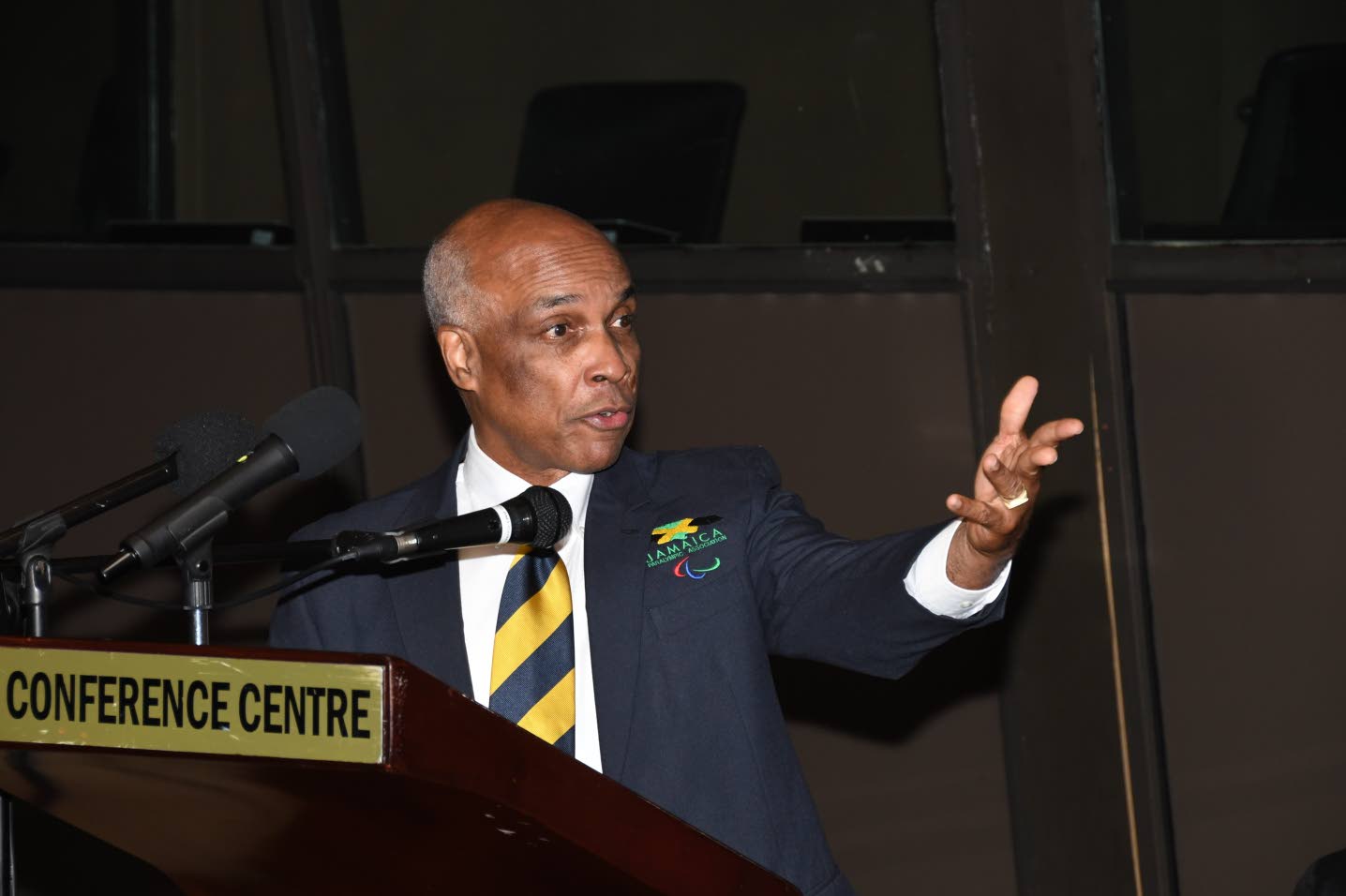
Jamaica Olympic Association President Christopher Samuda (Photo: Joseph Wellington)
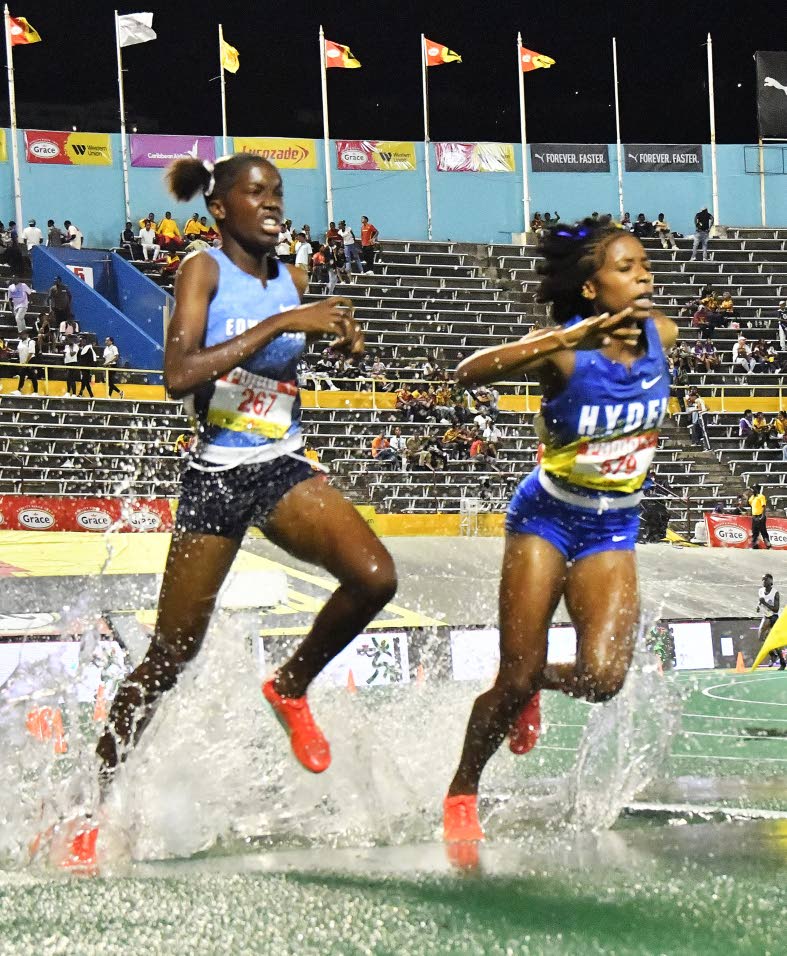
Defending champion Taiefa Gowe (right) of Hydel High motors away from Sushana Johnson of Edwin Allen High to win the 2000m steeplechase during the ISSA/GraceKennedy Boys’ and Girls’ Athletics Championships at the National Stadium on Friday, March 28, 2025. Gowe (6:52.82) and Johnson (6:55.69) both smashed the 13-year-old record of 7:01.07. (Photo: Naphtali Junior)


