



$5-b boost
Dream Weekend promises big impact as festival shifts from Negril to MoBay
MONTEGO Bay is poised to receive a massive economic boost of over $5 billion, promoters say, as the famed Dream Weekend music festival announces it will relocate from Negril to the city for its 2026 edition.
The projection was presented by Scott Dunn, managing director of promoters Dream Entertainment Limited, during the Dream Weekend 2026 launch event at Pier One recently. Dunn told the city’s business community that the figure is derived from Jamaica Tourist Board surveys and the COVID Economic Impact Report commissioned by then-Finance Minister Nigel Clarke in 2020.
In an interview with the Jamaica Observer, Dunn cited the report, which found that music festivals contribute over $20 billion to the national economy. “The largest [contributors] of that are Carnival in Jamaica and Dream Weekend, at $4.7 billion and $4.3 billion, respectively,” Dunn said. “And just for comparative purposes, let’s just say that those festivals are larger than Reggae Sumfest, Rebel Salute, Boys’ and Girls’ Champs, so you know, the impact is quite significant,” he told Sunday Finance.
Looking ahead to the 2026 relocation, Dunn projected an even greater windfall for the festival’s new home. “We project a minimum $5 billion economic impact from Montego Bay by 2026,” he said. “So that’s gonna be felt in the hotels, the restaurants, the attractions, transportation operators, vendors, barbers, hairdressers, clothes stores. Everybody will effectively benefit in Montego Bay.”
He expressed confidence that the city is the ideal host, given its historical understanding of large-scale events. “And we know Montego Bay understands that, because they have Reggae Sumfest as a significant economic driver. But in the past they’ve also had Reggae Sunsplash as well as Jazz and Blues. So people in Montego Bay get it, they understand what a big festival does for their city.”
Dunn said Montego Bay’s business community was highly welcoming of the festival’s relocation, anticipating the significant impact it will have during its usual five days in August.
FORCED OUT BY NEGRIL’S LIMITATIONS
Dunn revealed that the move was less a choice and more a necessity driven by Negril’s infrastructural decline and inability to scale. While expressing fondness for the town, Dunn detailed its critical limitations.
“So 16 years in Negril, it’s been a wonderful journey. We’ve built a lot of friends with people who are like family in Negril. But, Montego Bay is just a much better opportunity,” he stated, framing the move as a difficult but necessary business decision.
The core issue, he explained, is that Negril’s tourism product no longer aligns with the demands of the modern festival-goer. “Our patrons have been asking for…more diversity in terms of accommodations…Negril has very little Airbnb type rooms, very few villas. And we have a lot of people coming from all around the world in groups who want to stay in a villa…and MoBay helps provide those opportunities.”
Beyond lodging, Dunn pointed to Negril’s stagnant entertainment and dining scene as a major constraint. “[Montego Bay] also has a more diverse entertainment landscape…Negril has very little to offer for people who are young and looking for a good time in terms of partying,” he said. “Negril is the capital of casual…It’s a great place to go and rest and relax, but not necessarily a great place to go and party unless Dream Weekend is happening.”
He contrasted this with Montego Bay’s vibrant nightlife, naming venues like Pier One and Margaritaville that the festival plans to partner with. The lack of late-night amenities is also a problem. “For food, there are a lot of places open 24 hours in Montego Bay. In Negril, again, there’s very little late-night food spots.”
Furthermore, Dunn highlighted the critical inability to grow a domestic fanbase. “So, again, Montego Bay is just a big opportunity, a bigger local audience as well…In Negril we’re basically totally reliant on international guests to fill the events…but there’s really no opportunity for growth.”
The final and most decisive catalyst for the move was the closing of Cool Runnings Water Park, which was once the festival’s flagship venue capable of holding over 10,000 people.
“We’ve lost all our big venues in Negril…There’s really no venue in Negril that can hold more than 7,000 patrons and in years gone by, it would be common place for Dream to attract up to 11,000 people,” Dunn stated.
This capacity crisis forced a painful strategy: “We’ve had to increase prices basically to cut down on demand. We’ve kind of forced down our own demand which is not something we want to do. We want our festival to be inclusive…The average man on the streets should be able to come out to at least one Dream Weekend event.”
Dunn expressed deep frustration that despite being deeply embedded in the community — having served on a stakeholder committee with the JHTA, local chambers of commerce, and police and health departments from both Hanover and Westmoreland parishes for 16 years — the response from most hoteliers was indifference. Negril extends across the two western parishes.
“The reality is, the venues aren’t there and a lot of the hoteliers have been stubborn about prices as well…So while we still manage to fill those hotels in Negril every year, we’ve only been able to fill them primarily from foreigners.”
He revealed that the pricing structures and five-night minimums enacted by hotels effectively locked out local Jamaican patrons. In a final effort, he approached hotels warning that their policies could force the event out of the town, but only four were willing to hold accommodation prices.
With this impasse, the decision became clear. Dunn emphasised that the move to Montego Bay’s larger venues will reverse this trend, making the festival more accessible.
“We want that to be more accessible so you see our prices actually going down in 2026 because, again, we had the opportunity to be in bigger venues.”
A GLOBAL JAMAICAN BRAND
The relocation is part of a broader global expansion strategy for Dream Entertainment, which owns carnivals and stages events worldwide.
“We just did a Dream Weekend event in collaboration with City Splash in London…a sold-out Notting Hill Carnival event. We just completed Crop Over in Barbados…sold out. We have two costume sections coming up in Miami Carnival,” Dunn said, listing a relentless schedule of international events under their Exodus Carnival and Renegade Masque brands.
The global push is directly tied to bringing more visitors to Jamaica. Dunn recently returned from The Bahamas, a partner market with direct flights to Montego Bay, and is travelling to Kenya next week at the invitation of the government to explore “Dream Weekend Kenya.”
“The opportunities are endless, we believe, in entertainment tourism. That’s really our niche…and we’re trying to do everything we can to build brand Jamaica all around the world,” Dunn said.
The new $5-billion forecast for Montego Bay is not just a projection of growth, but a signal that after 16 years of constraints, one of Jamaica’s largest home-grown entertainment brands is finally able to fully unleash its potential on a global stage, with its home island set to be the biggest beneficiary.
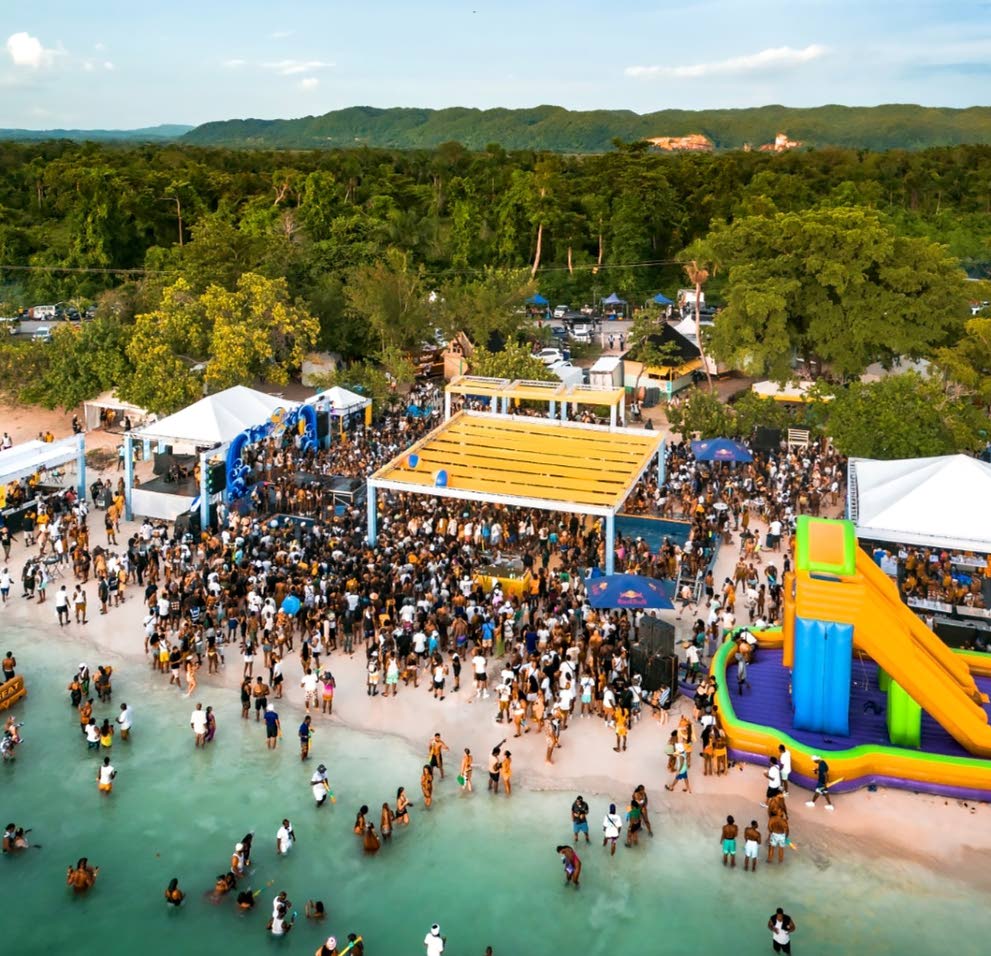
Patrons enjoying themselves at Dream Weekend in Negril. The music festival, which has been in the resort town for the past 16 years, will move to Montego Bay as of 2026.
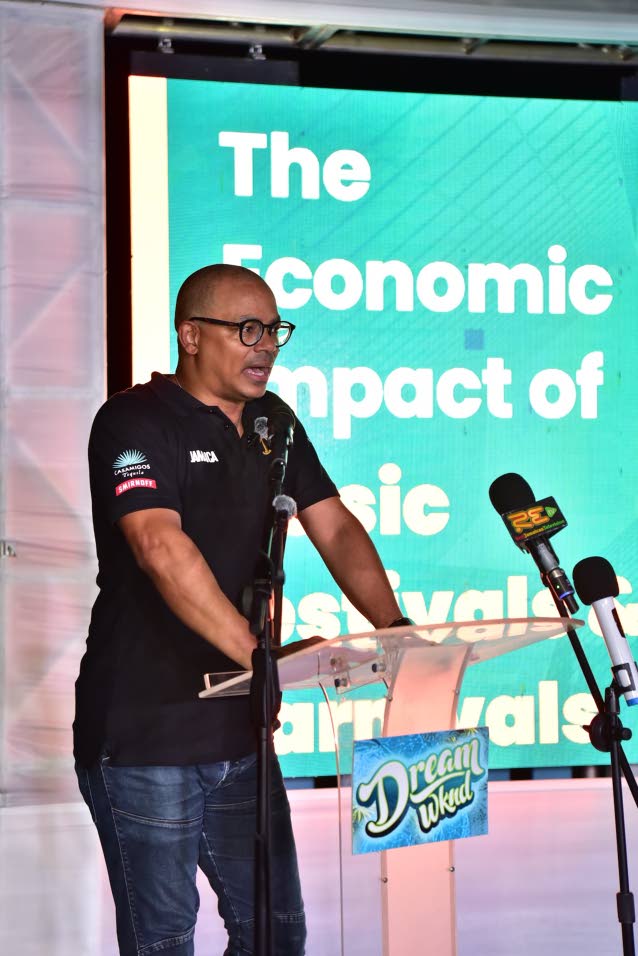
Scott Dunn, managing director, Dream Entertainment Ltd, explains the economic impact of Dream Weekend. (Photo: Aceion Cunningham)


