



Goffe inspires women to plan for retirement
JAMAICAN women are being reminded to take pension planning more seriously. Leading that charge is Sanya Goffe, president of the Pension Industry Association of Jamaica (PIAJ), who says too many women are leaving themselves financially vulnerable in retirement.
At the We Inspire Women Brunch held at the Jamaica Pegasus hotel in St Andrew on Sunday, Goffe stressed that pension planning is not a luxury but a necessity, one that determines financial independence later in life.
“The truth is, women are particularly vulnerable when it comes to retirement. On average, we spend about 10 years outside the workforce caring for families. We are paid less. We are promoted less. Yet we live longer,” said Goffe as she gave her presentation to a room filled with women dressed in pink.
Pension experts worldwide stress the same message: a pension is about more than just covering expenses when you are older or unable to work. It is also about creating the freedom to enjoy life without constantly worrying about making ends meet. Goffe underscored her message by sharing the story of an elderly woman who, after years of public service, struggled to access her pension benefits. It took nearly three years of persistent advocacy before she finally received her first payment along with a lump sum of arrears.
“With the lump sum payment, she was able to get cataract surgery. She said to me, she no longer had to rely on someone to dial the numbers on her phone when she needed to make a call. It also allowed her to pay the necessary fees to get a visa to visit her family in the US and then invest the rest,” Goffe shared,
She then highlighted a recent article in the
Actuarial Post which revealed that women in the UK would need to work an additional 18 years in full-time employment to save the same amount of money into their pension as a working man. Put another way, women would need to work until age 83 to close the gender pension gap. The article also noted that women live on average four years longer than men, which means they must save more during their working years to achieve the same level of retirement security. In Jamaica, a 2023 World Bank gender assessment found that while financial access gaps have narrowed compared to other Caribbean nations, disparities persist.
“As of 2014, 79 per cent of men and 78 per cent of women aged 15 and older held an account with a financial institution. Yet only 54 per cent of women reported having emergency savings, compared to 66 per cent of men,” the assessment noted.
The gender assessment suggests that women still lag in consistent saving habits. Additionally, data from the Global Findex 2017 shows that only 27 per cent of Jamaican women reported saving for retirement, compared to 38 per cent of men. But according to Goffe, there’s another layer, the cultural belief that “Mi pickney ah mi pension.” She stated that too many people are still depending on their children to provide in their later years. But when that happens, she says, it creates financial strain not only for the elderly parents but for their children as well.
“It keeps whole families trapped in a cycle of intergenerational pressure and sometimes even intergenerational poverty,” she stressed.
Currently, Jamaica’s retirement income typically comes from three sources, which pension experts call the “three pillars”. These are the National Insurance Scheme (NIS); a private pension plan, usually through your employer; and then one’s own personal savings and investments.
“Think of these like legs of a stool. The more solid and balanced each leg is, the more stable your retirement will be,” she told the audience.
While planning for the future can be difficult for some, Goffe pointed to key advantages of pension plans. Contributions are made before income is taxed, and the investment returns are also tax-free, which means employed individuals contributing to a pension plan pay less income tax, as money would have been deducted for their pension contribution before tax is assessed. She added that in a typical defined contribution employer pension plan, employees also benefit from matching contributions made by their employer.
“This is basically free money added to your pension pot,” Goffe said.
Goffe also noted that pensions offer other advantages, including the ease with which beneficiaries can access benefits in the event of death, as well as protection from creditors. Though she leads the pensions industry, Goffe said her purpose extends beyond meeting targets. She views the work as nation-building, with a mission to encourage women in particular to see pensions not as a luxury but as a necessity.
“When women are financially secure, families are secure. And when families are secure, society is stronger,” she said.
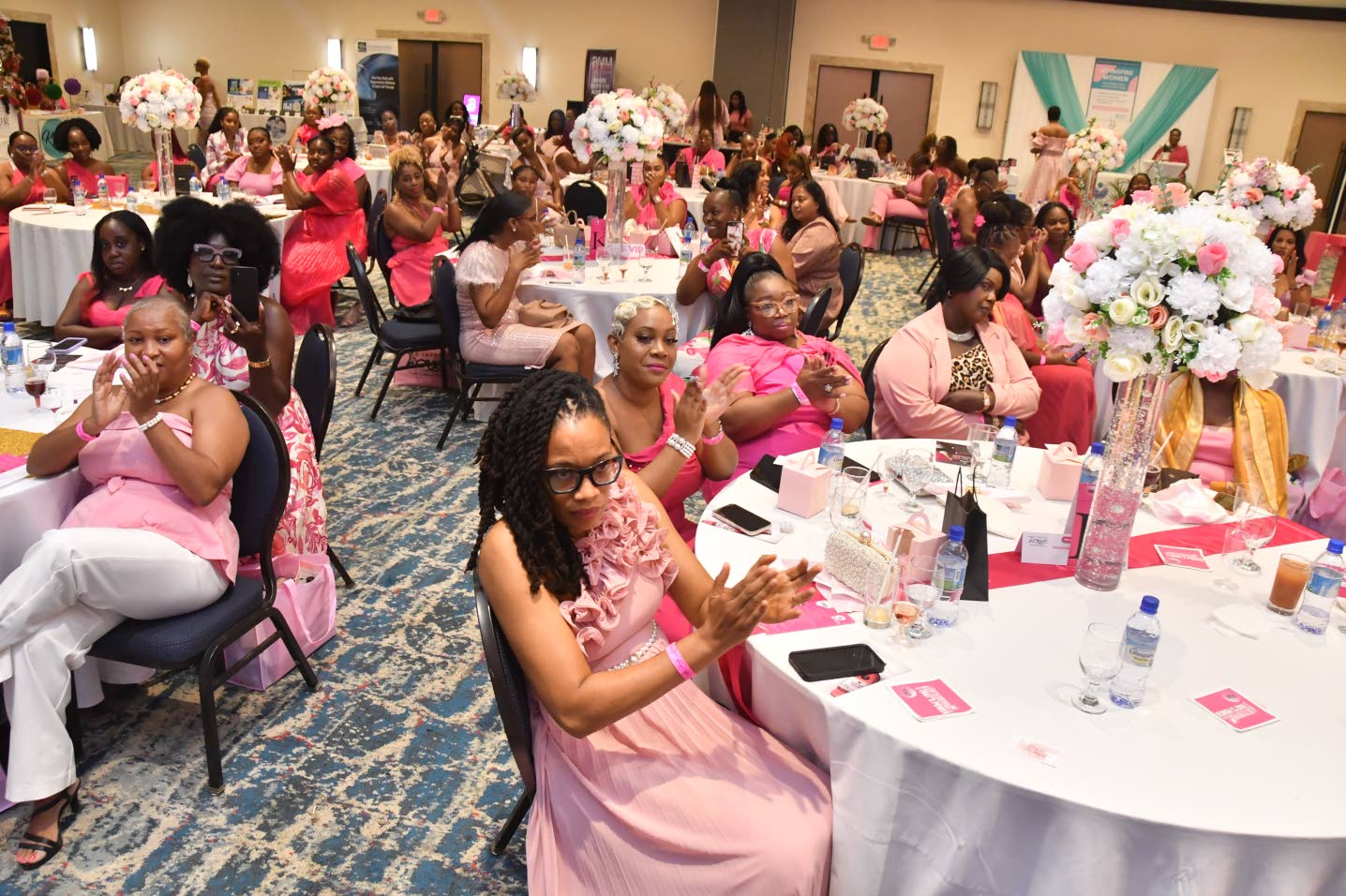
Guests at the We Inspire Women Brunch held at the Jamaica Pegasus hotel in Kingston on Sunday.Junior


