Businesses report minimal disruption on election day
Jamaica’s private sector operated with minimal disruption on Wednesday as most firms opened for half-day trading before allowing staff to vote. It was one of the most “smooth sailing” election days in recent memory, according to business leaders interviewed.
Their assessment came as the Jamaica Labour Party (JLP) clinched a third-consecutive term, winning 34 of the 63 seats, with the People’s National Party (PNP) taking 29, on turnout of roughly 39 per cent.
In a brief interview with the Jamaica Observer on Thursday, president of the Private Sector Organisation of Jamaica Metry Seaga said the impact on commerce was “really minimal”.
“From a reporting position, I would say that we had the calmest, most relaxed election day that I have seen in my history for sure. Certainly, the least disruption that I’ve seen,” Seaga said.
Many retailers, agencies and financial institutions published early-closure notices ahead of time — Tax Administration Jamaica closed at noon, banks such as Scotiabank and JMMB announced midday or shortly after-midday branch closures, and the Jamaica Stock Exchange also shortened hours — moves aligned with the legal requirement to give workers time off to vote.
That time-off requirement, grounded in the Representation of the People (Leave and Symbols) Regulations, entitles employees to three hours’ leave to cast their ballots. The Electoral Commission and the Government reiterated the rule ahead of polling day, which helped companies schedule around it instead of shuttering entirely, Seaga said.
The Bank of Jamaica also compressed public-facing teller hours to a two-hour window to accommodate staff voting, resuming normal hours yesterday, another indicator that the financial system largely stayed open, just on shorter clocks.
For micro and small businesses, election day losses appear to have been offset by weeks of campaign-period spending.
“It wasn’t a big deal,” said Cordell Williams-Graham, who leads the Young Entrepreneurs Association. “Printers, merch vendors and the little people on the street side benefited from the long campaign period — that helped make up for the half-day.”
“Wednesday’s election had very little impact on small businesses. Many owners saw it coming and made preparations ahead of time, so things ran fairly smoothly. Some adjusted their hours, but for the most part, business went on as usual. It really shows how resilient and adaptable our small business community is — always finding a way to keep going, even during moments of uncertainty,” she continued.
Markets and boardrooms will now pivot to policy promises from the returning administration.
During the campaign, Prime Minister Andrew Holness pledged to double the minimum wage over time and floated aggressive tax-cut targets, including lowering the personal income tax rate to 15 per cent — promises that delight some consumers but which segments of business have cautioned should be paced to protect competitiveness and the fiscal balance.
Meanwhile, the vote in favour of the Holness administration signals policy continuity for some investors, especially on crime reduction and macroeconomic stability; two areas businesses consistently identify as critical for growth.
Holness campaigned on sustaining those gains, positioning his party as a safe pair of hands.
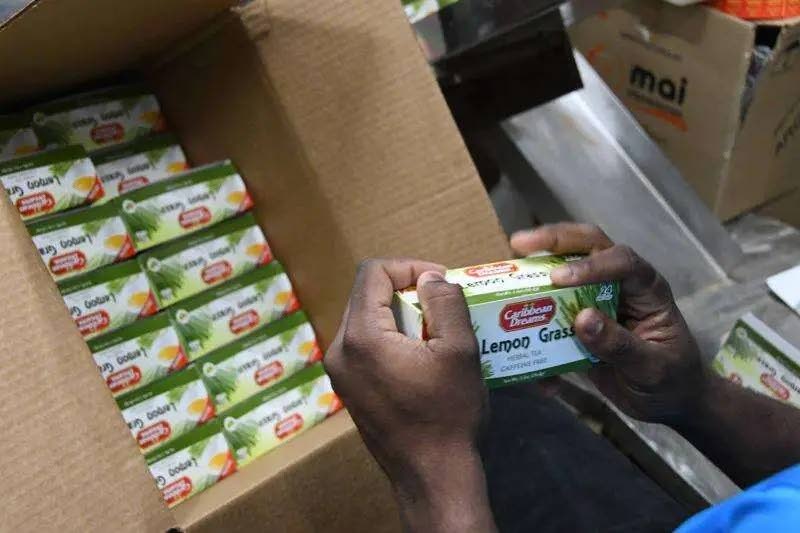
A production worker packages Caribbean Dreams Teas ahead of Election Day. Some manufacturers introduced shift adjustments and extended hours earlier in the week to maintain output before the midday closures.