



Not our fault
JAAA addresses Sanique Walker gene-testing issue
TOKYO, Japan — Former president of the Jamaica Athletics Administrative Association (JAAA) and chairman of its Medical and Anti-Doping Committee Dr Warren Blake has pushed back against suggestions from 400m hurdler Sanique Walker that poor communication cost her the chance to compete at the World Athletics Championships in Tokyo.
Walker, who was named as an alternate for the injured Rushell Clayton, told the Jamaica Observer she was “disappointed” not to have travelled to Tokyo and pointed to what she described as a lack of facilitation by the JAAA regarding the mandatory SRY gene test.
“I am disappointed with how I was treated as the alternate for the women’s 400m hurdles. I was never given the chance or opportunity to take the SRY gene test,” Walker said.
“There was a list of athletes that were chosen to do the test in The Bahamas (at the NACAC Championship) and my name was not a part of that list. Initially, I thought that as an alternate I would have travelled with the team to Tokyo, received the same information, and been properly prepared if needed. Instead, I found out that was not the case,” she said.
However, Blake, who served as medical delegate at the NACAC Championships in The Bahamas — where a large group of athletes, including Jamaicans, completed the test — said Walker’s version of events “does not represent the facts”.
According to Blake, Walker had the same opportunities as her teammates to complete the test during the NACAC meet, where the athlete won a silver medal in the 400m hurdles.
“When we realised that our athletes that were based overseas were struggling to find labs that could do the test, we arranged for our lab in Jamaica, CARIGEN, to send a technician to the NACAC Championships to facilitate the athletes there. Jamaicans in Jamaica had it easier, as we had set up an arrangement with UWI (University of the West Indies) to handle testing, but overseas-based athletes were facing challenges,” Blake explained.
“We informed everybody — athletes, managers and agents — that they needed to get the test done. At NACAC, the team manager, Ms [Julette] Parkes, reminded all Jamaican athletes to take the test. This young lady did not come and get the test done, although it was made available to her. To now suggest nobody communicated with her is totally dishonest,” added Blake.
He revealed that 16 Jamaicans were tested in The Bahamas, alongside 34 athletes from other countries, including Canada, which used the opportunity after experiencing issues with their own laboratory.
He stressed that communication was not limited to official channels but was also shared directly with athletes through WhatsApp groups.
The JAAA had also released communication in August 2025 announcing testing information for athletes based locally and overseas.
“The JAAA urges all athletes to complete this process as soon as possible to avoid any last-minute issues,” read the release, which also encouraged athletes to contact its offices for further clarification.
“We had 50 kits available, and even athletes from other territories lined up to be tested. The resources were there, the information was shared, but she did not make herself available,” Blake said.
He also underscored the importance of the new testing standard, which has been introduced by World Athletics to ensure fairness in women’s competition.
“Over the years, we’ve had situations where athletes, through no fault of their own, were assigned female at birth but were biologically male due to differences in sexual development,” Blake explained. “Some others may have transitioned legally to female but retain physical advantages from male development.
“The SRY gene test allows us to identify the Y chromosome without invasive procedures. If you carry the Y chromosome, regardless of how many X chromosomes you have, you will produce testosterone and have male characteristics that create an advantage in female competition,” Blake explained.
He noted that from September 1, all athletes competing in elite women’s events — including the World Championships, Diamond League, and national championships — are required to present a negative SRY test result.
“It is a simple swab or blood test, but it is now compulsory,” Blake said. “To be eligible, you must produce a negative result.”

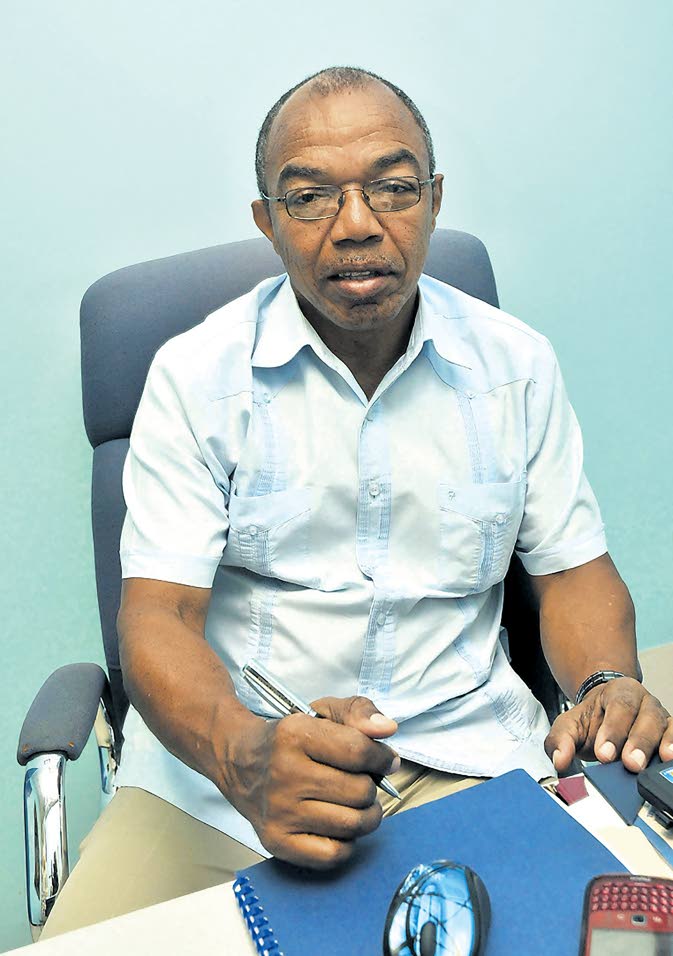
BLAKE… this young lady did not come and get the test done, although it was made available to her


