‘Big guns’
Rifle at centre of Mandeville stand-off not a first-time seizure for JCF
IF last week’s early morning, four-hour gunfight between the police and a now-deceased shooter in Manchester didn’t leave thousands of Jamaicans wide-eyed, learning that the gunman’s likely weapon of choice was a rifle that can discharge different types of bullets definitely raised eyebrows.
But, acting Senior Superintendent of Police (SSP) Patrae Rowe, who is director of the Firearms and Narcotics Investigation Division (FNID), has since confirmed that the type of gun taken from the scene after the smoke cleared last Tuesday — a multi-calibre Omni Hybrid rifle — does not represent a first-time seizure for local law enforcers.
“Among the firearms seized this year, the JCF [Jamaica Constabulary Force] has seized a number of multi-calibre Omni Hybrid rifles. This weapon can chamber and fire the 5.56 and .223 cartridges, which are the same in size [and] can be fired through this barrel.
“We have seized rifles with significant effective range, as [well as] firearm parts such as noise suppressors and scopes,” acting SSP Rowe told the Jamaica Observer from Italy last Friday.
Security expert and professor of Caribbean Sustainable Development at The University of the West Indies Anthony Clayton, in providing insight on the type of rifle — which the police said had 28, 5.56 rounds and was found beside the shooter and murder suspect Dave Wilson — said the current retail price is about US$600.
“The Omni Hybrid Maxx AR-15 rifle is manufactured by a firm called American Tactical, which is based in South Carolina, [USA]…American Tactical markets it as a sporting rifle or for use in home defence, but it can take a 60-round magazine,” Professor Clayton told the Sunday Observer last Friday.
Police said a Pietro Beretta 9mm pistol with an affixed magazine containing 17 rounds was also found beside Wilson, who had reportedly shot dead 31-year-old Adrian Bernard before he was fatally shot at his apartment on Caledonia Road in Mandeville, which is where the four-hour stand-off with the security forces took place.
The presence of the American-manufactured rifle in the island raises the issue of firearms trafficking yet again. Despite numerous campaigns to rid the country of illegal guns, including a gun amnesty that encouraged individuals to surrender illegal or unauthorised firearms and ammunition without fear of prosecution, the problem persists in the Caribbean island where almost 80 per cent of homicides involve the use of firearms.
The FNID director is, however, reporting that up to last Friday the police have this year seized a record 894 firearms — 17 per cent of which have been rifles — and his team is projecting that the JCF will seize approximately 1,000 guns by the end of 2025, which will be the largest number of weapons seized in one year in Jamaica for 30 years or more.
In addition to the record seizure of firearms, Rowe pointed out that the police have also achieved a 43 per cent reduction in murders since the start of the year, and almost 40 per cent reduction in shootings.
“Importantly, over 50 per cent less persons are injured in shooting incidents this year,” he said, adding that the conversation on firearms in Jamaica can’t be had without also talking about drugs, because the drugs-for-guns trade — primarily ganja for guns — contributes significantly to the number of firearms entering the island.
“We know that the currency in this trade is 50 pounds of ganja traded for one handgun, and 100 pounds of ganja is traded for one rifle,” the acting SSP said, adding that the JCF has potentially disrupted the trade of 1,175 handguns or 588 rifles with the FNID’s seizure of 58,799.3 pounds of ganja since the start of this year, which represents 95 per cent of the total seizure by the JCF. The confiscated ganja had an estimated value of more than $176 million.
Additionally, the FNID has seized an estimated $411 million worth of cocaine since this year.
“The FNID has seized over half a billion Jamaican dollars in drugs since 2025, and has significantly disrupted the drug trade with a net effect of disruption in the firearms trade,” Rowe said.
The senior lawman is of the view that the JCF is winning the fight against firearms trafficking to and through Jamaica.
However, he did admit to the Sunday Observer that there is “clearly a gun problem in Jamaica”.
“This is primarily due to the viability of the gun trade. A handgun is being sold for an average $300,000 and can go up to $700,000, and a rifle is being sold for upwards of $1 million. The sale of firearms offers significant profit for firearms dealers,” Rowe said.
He was quick to add that FNID — which was restructured by Police Commissioner Dr Kevin Blake on May 2, 2024, by adding the interdiction of firearms to its mandate, having focused on drug interdiction since 1974 — and by extension the JCF, has been aggressive in these interdictions using strategies and partnerships that have been largely successful and effective.
Meanwhile, Professor Clayton agreed that the police have made tremendous progress in both increasing the number of firearms seizures and in reducing the number of homicides in Jamaica.
“I attribute both achievements to the intelligence-led policing strategy designed by the current Commissioner of Police Dr Kevin Blake. Dr Blake and I co-authored the first Intelligence-led Policing Strategy for Jamaica in 2011, but it is Dr Blake that has now perfected and implemented the strategy,” said the security expert, who has served as an advisor on the development of Caricom’s crime and security strategy titled ‘Securing the Region’.
“It is important not to celebrate too soon, but on the current trajectory we could get to the end of 2025 with perhaps 600-700 homicides in Jamaica, which would be about half the number of killings in 2023,” Clayton said.
On the projection of 1,000 firearm seizures by the end of this year, Professor Clayton said: “This might be a more modest gain than it looks, as the JCF have estimated that some 150 to 200 firearms are brought in from Haiti alone each month, and Haiti is not the largest source — about 67 per cent of all the weapons seized in Jamaica and submitted to the ATF (Bureau of Alcohol, Tobacco, Firearms and Explosives within the United States Department of Justice) for tracing in 2020 came from the USA.”
He underscored that it is “a very difficult problem to solve”.
“The proximity to the United States; the large volumes of trade, migration and tourism flows between the USA and the Caribbean; and the largely unregulated movement of weapons within the USA mean that there is always a high risk of leakage of weapons from the USA into the Caribbean.
“In recent years, the volume of trafficked weapons in the Caribbean has increased, the number of trafficking avenues has expanded, and the range of weapons being trafficked has grown,” Professor Clayton told the Sunday Observer.
Highlighting that there has been greater cooperation between the USA and some of the affected countries in recent years, the security expert said the cooperation is subject to changing political priorities.
“There have been no significant improvements with regard to the other producing and transit countries, notably Venezuela and Haiti,” Professor Clayton said.
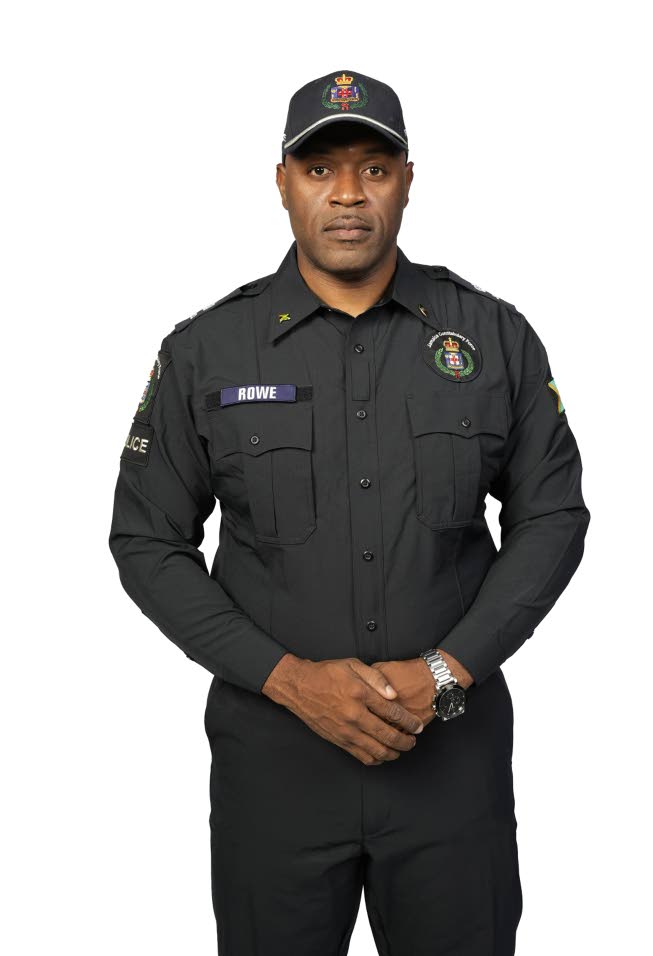
ROWE… the JCF is winning the fight against firearms trafficking to and through Jamaica
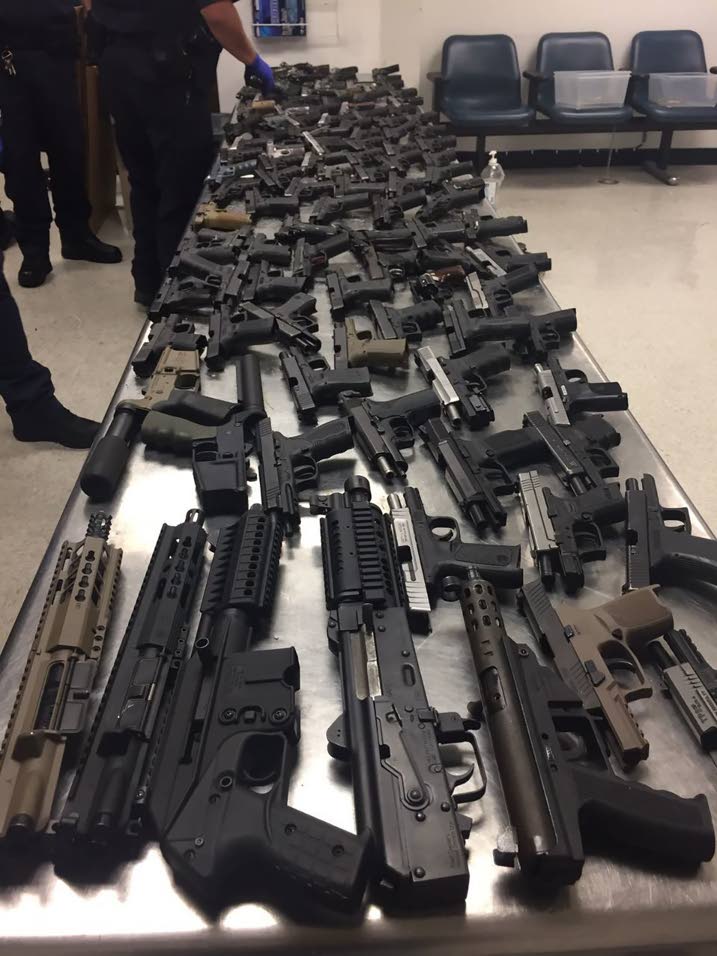
Some of the guns that were destined for Jamaica but which were seized at Miami International Airport in 2017. Security expert Professor Anthony Clayton says about 67 per cent of all the weapons seized in Jamaica and submitted to the Bureau of Alcohol, Tobacco, Firearms and Explosives within the United States Department of Justice for tracing in 2020 came from the USA.
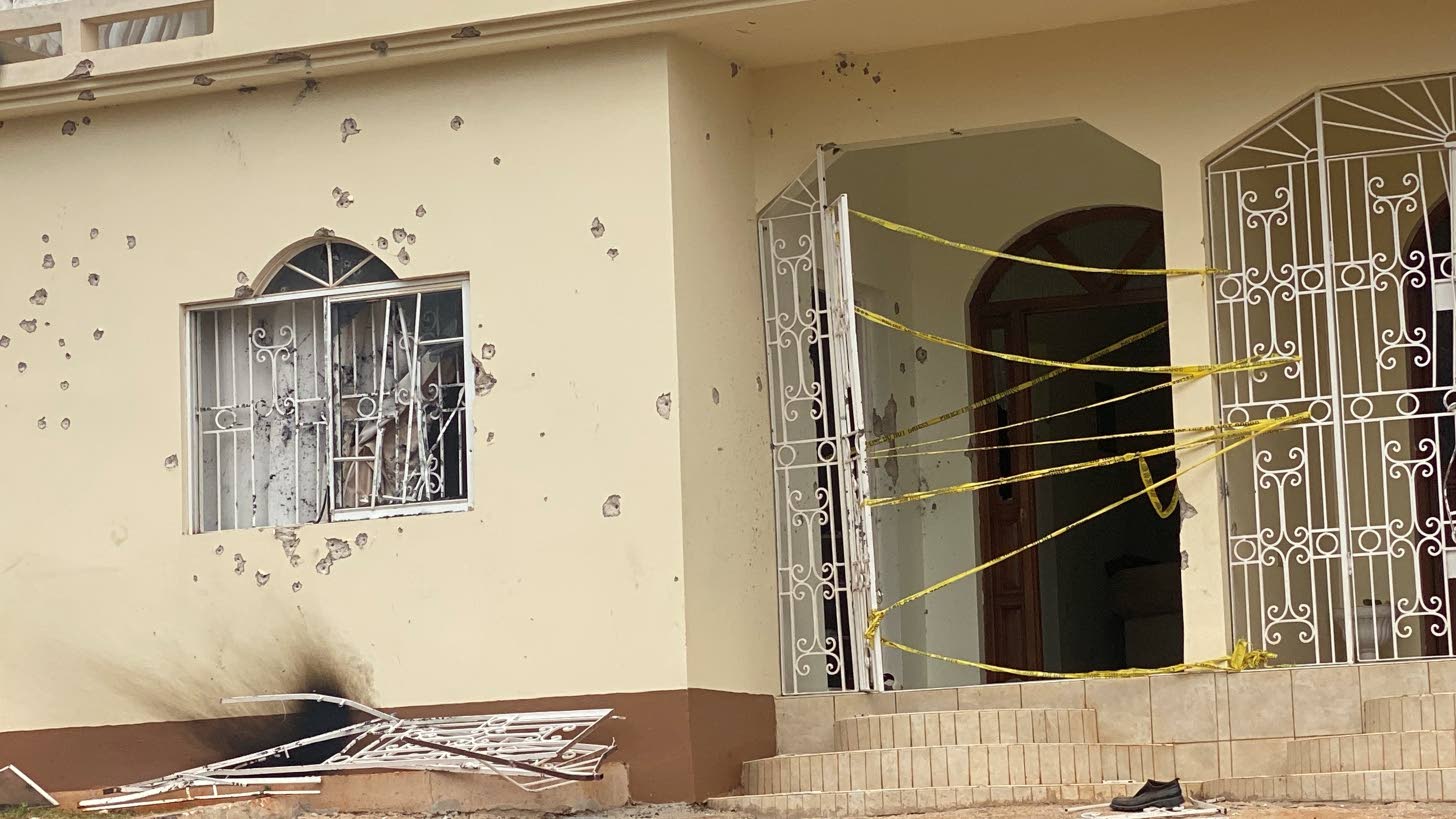
The front view of the apartment on Caledonia Road in Mandeville, Manchester, from which armed murder suspect Dave Wilson was reportedly firing at the security forces with a high-powered Omni Hybrid Maxx AR-15 rifle. The gun battle lasted four hours before Wilson was fatally shot. (Photo: Kasey Williams)
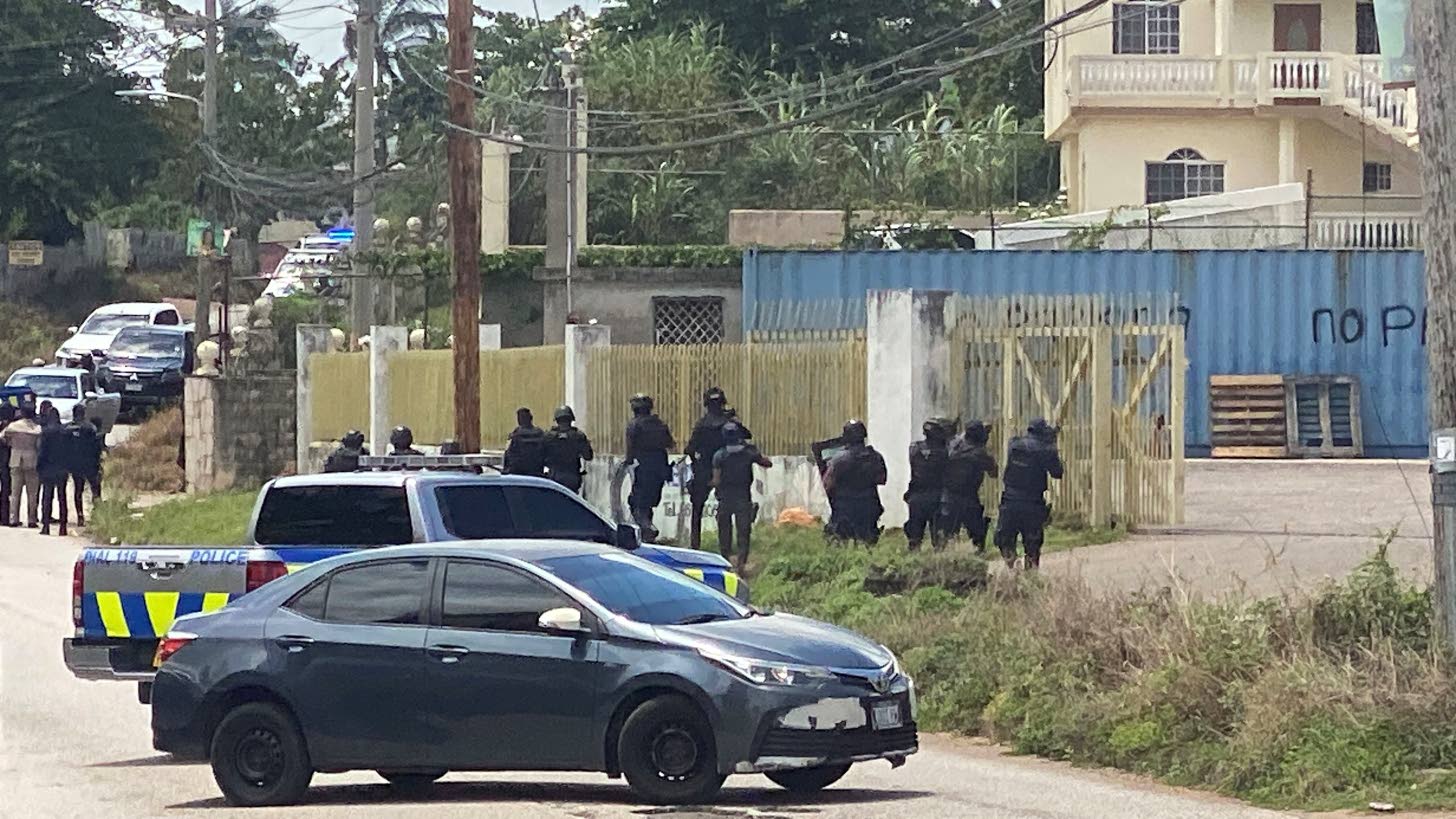
Members of the police’s Specialised Operations team moving towards the Caledonia Road apartment, last Tuesday, which was the scene of a fatal shooting and four-hour stand-off with murder suspect Dave Wilson. (Photo: Kasey Williams)
Commissioner of Police Dr Kevin Blake (left) in conversation with security expert and Professor of Caribbean Sustainable Development at The University of the West Indies Anthony Clayton at a security conference earlier this year. Photo: Karl Mclarty