



Unity appeal
Holness extends hand to Opposition for cooperation in nation’s interest
Prime Minister Dr Andrew Holness on Tuesday took the oath of office and immediately urged the country to unite after the fiercely fought September 3 General Election that opened sharp divisions between supporters of his Jamaica Labour Party (PNP) and the Opposition People’s National Party (PNP).
Holness, Jamaica’s ninth prime minister who is now serving his third-consecutive term as chief executive, and his fourth tenure in the job, also extended an invitation to Opposition Leader Mark Golding to collaborate on critical national issues, including the push to complete Jamaica’s transition to a republic as he pledged to lead an “inclusive and consultative Government”, stressing that the nation’s progress depends on bridging political divides.
“The elections are over. We must reunite and refocus on the business of the nation. Regardless of the outcome, we must choose Jamaica. The time has come where we must get over the thrill of victory and the agony of defeat, put aside haughtiness and bitterness, unfold our arms, unclench our fist, retract accusatory fingers and embrace each other,” Holness said during his swearing-in ceremony at King’s House, St Andrew.
“I extend my hand to the Opposition to create a space for the national interest; let us partner together to complete the work we started on making Jamaica a republic. I look forward to continuing the work with all stakeholders, the National Partnership Council, the church, unions, youth, the business community, and civil society generally. Let us all work hand in hand to build the progressive and prosperous Jamaica we all want,” said Holness whose party won 35 seats to the PNP’s 28 in the 63-member Parliament.
Jamaica’s push to become a republic has been debated for decades, with successive governments promising constitutional reform to replace the British monarch as head of state. The issue gained momentum after Holness, in April 2023, named a Constitutional Reform Committee to, among other things, assess how the passage of time has impacted the recommendations of the 1995 Joint Select Committee on the Constitutional and Electoral Reform Report, with the work being done in three phases.
According to the JLP Administration, the first phase of reform will involve replacing the British monarch as head of State with a Jamaican president. The Opposition, however, is insisting that a decision on the country’s final court must also be made in tandem.
In December last year the Constitution (Amendment) (Republic) Bill, 2024 to amend the Jamaican Constitution to transition the country towards a republic was tabled in the House of Representatives and placed before a joint select committee for review. Opposition members, however, have, since January, boycotted those talks, saying they will not return until the Government explains why it has not yet chosen to accede to the Caribbean Court of Justice as its final appellate jurisdiction, over the United Kingdom Privy Council.
On Tuesday, Holness also reminded Jamaicans of the progress made under his Administration since 2016, highlighting the reduction of the national debt from 120 per cent of gross domestic product to 62 per cent, the lowering of unemployment to record lows, and significant cuts in crime.
However, he stressed that these achievements were not the end point.
“What we have achieved so far has simply been to repair the breach and correct decades of mismanagement and misadventure, and undo the consequences of reckless policies that nearly broke this country. We have stabilised the ship, set the destination, and laid the foundation upon which we must now build a greater vision. We have only begun to scratch the surface of Jamaica’s immense potential. We are destined for more. Our people are too talented, our culture too rich, our geography too strategic, and our history too proud for us to stop short of greatness,” he said.
The prime minister outlined a vision for inclusive growth, improved social services, and a modernised government bureaucracy through the SPEED (Streamlining Processes for Efficiency and Economic Development) Task Force — aimed at making public services more efficient.
“A modern economy demands a modern Government. Jamaica cannot afford to be slow when the world is moving fast… Through SPEED, permits will be faster, licences simpler, and services more transparent. By digitising transactions, streamlining approvals, and using technology to eliminate delays we will unleash productivity across the economy. This will also peel away the layers of inefficiency and lack of networking that hampers anti-corruption efforts,” he explained.
But he cautioned that lasting change would only be possible if Jamaica addressed deep-rooted issues of social violence and inequality.
“Economic progress alone will mean little if our society is torn apart by violence. Yes, we have brought homicides down to levels not seen in decades, but too many of our children still grow up in communities where violence is normalised. Too many families are scarred by domestic abuse. Too many young men are recruited into gangs. Too many women live in fear,” said Holness.
“We must go beyond fighting crime to fighting the culture of violence itself. That means strengthening families, rebuilding respect for authority, restoring civility, and teaching our children discipline and responsibility. It means our education system must not just impart knowledge but also values. However, it’s not only our schools, our churches, the business community, our security forces; indeed, this requires a partnership of the whole society to prevent violence and move Jamaica towards true and sustained peace. We will mobilise this effort and I believe the challenge of social violence should be taken out of the political space and treated as a national interest imperative,” he added.
Holness also pointed to Jamaica’s global reputation in sports, entertainment, and culture, saying that the Government will do more to elevate the country economically, enabling it to compete with some of the world’s largest nations.
“Economic strength must be matched by diplomatic strength. Jamaica cannot be a silent actor on the world stage. Our history, our moral standing, and our record of democratic governance demand that we speak boldly and clearly in an increasingly complex and dangerous world… By being a respected global voice, Jamaica attracts investment, builds partnerships, and strengthens trust. We must be a nation that not only consumes ideas from the world, but shapes them — whether in trade, technology, climate, or culture,” he said.
The ceremony marked a historic moment in Jamaica’s parliamentary democracy. Holness, who first became prime minister in 2011 following the resignation of Bruce Golding, is now the only leader of the JLP to have secured three consecutive electoral victories, cementing his place as one of the country’s longest-serving heads of Government. The JLP itself has alternated power with the PNP since Independence in 1962, with Holness’s successive wins signalling a period of rare continuity for the governing party.
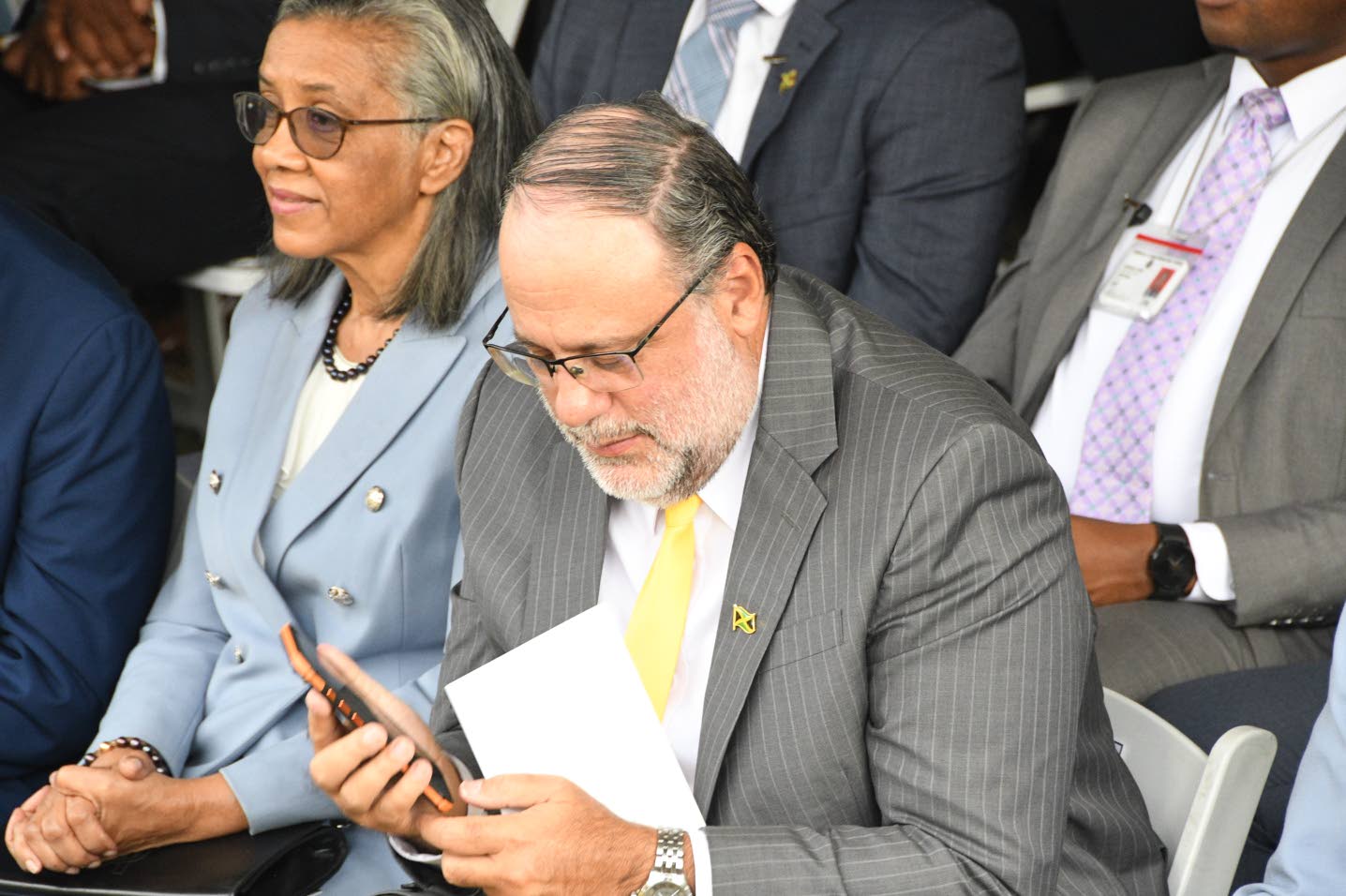
Opposition Leader Mark Golding appears to be checking his messages before the start of the swaering-in ceremony for Prime Minister Dr Andrew Holness at King’s House in St Andrew on Tuesday. (Photo: Joseph Wellington)
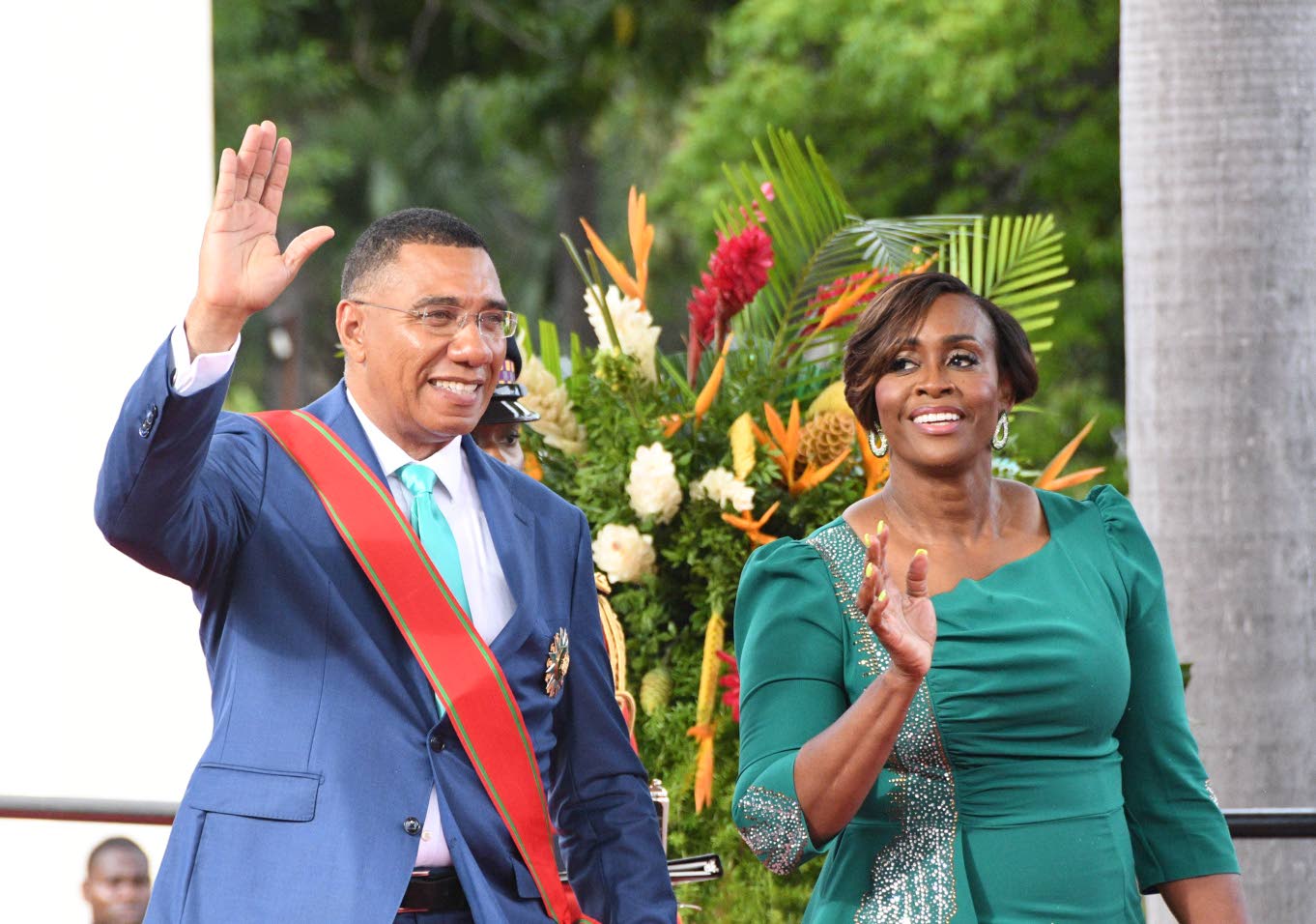
Prime Minister Dr Andrew Holness and wife Juliet wave to guests as they arrive for his swearing-in cermony on Tuesday at King’s House in St Andrew. (Photo: Joseph Wellington)
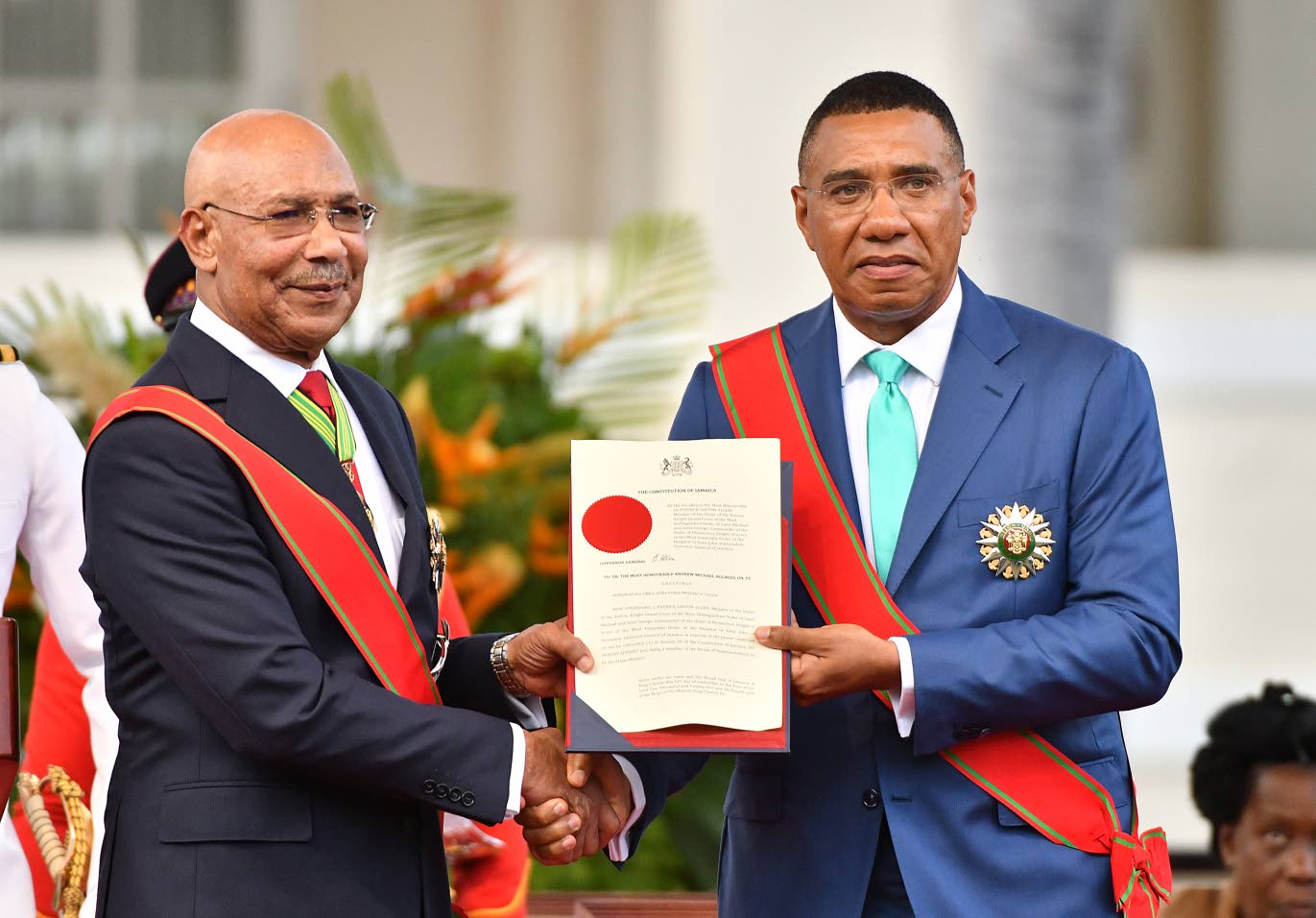
Governor General Sir Patrick Allen (left) presents the Instrument of Appointment to Prime Minister Dr Andrew Holness on Tuesday at King’s House. (Photo: Naphtali Junior)
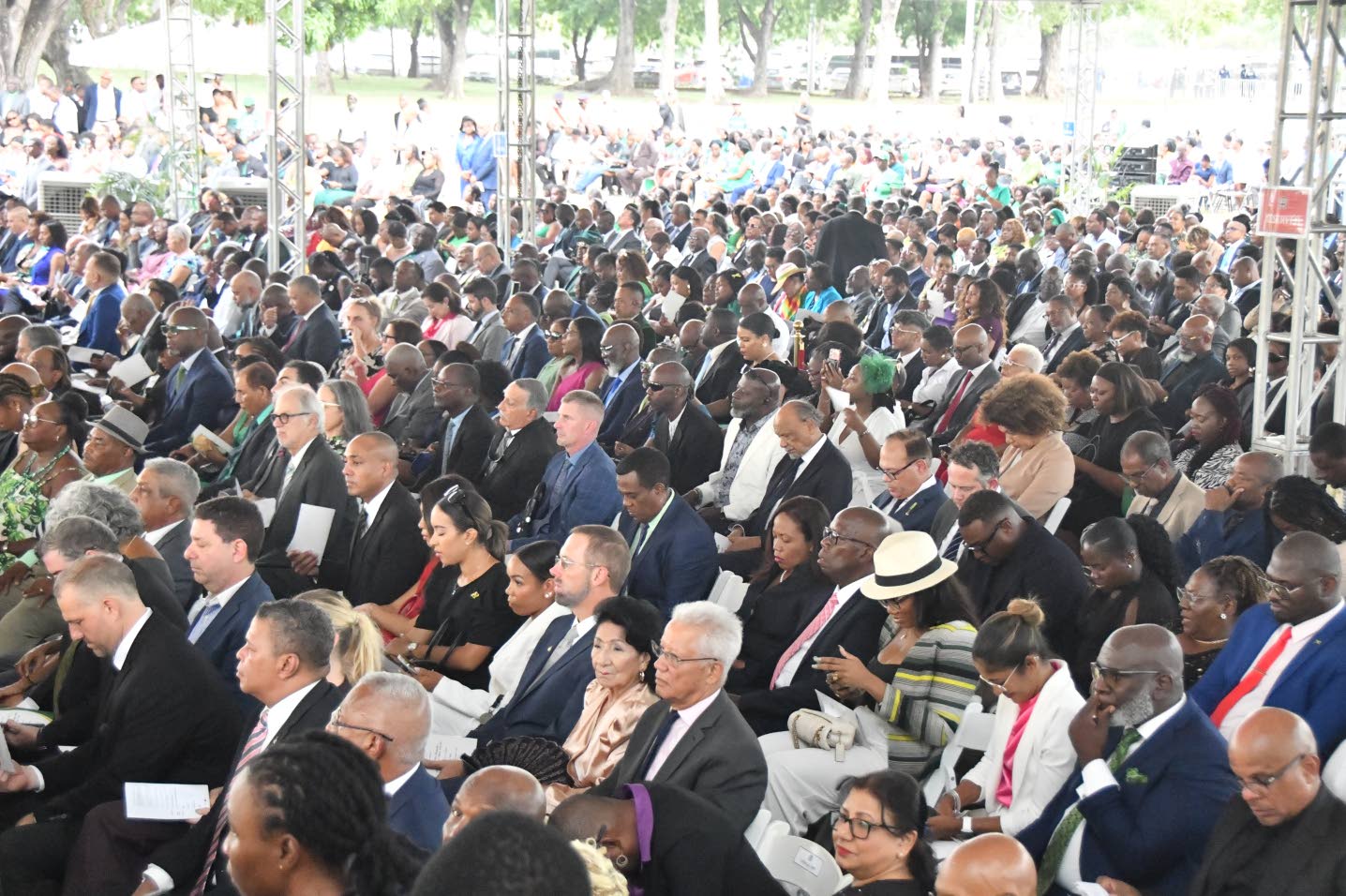
A section of the guests attending Dr Andrew Holness’s swearing-in ceremony at King’s House in St Andrew on Tuesday. (Photo: Naphtali Junior)
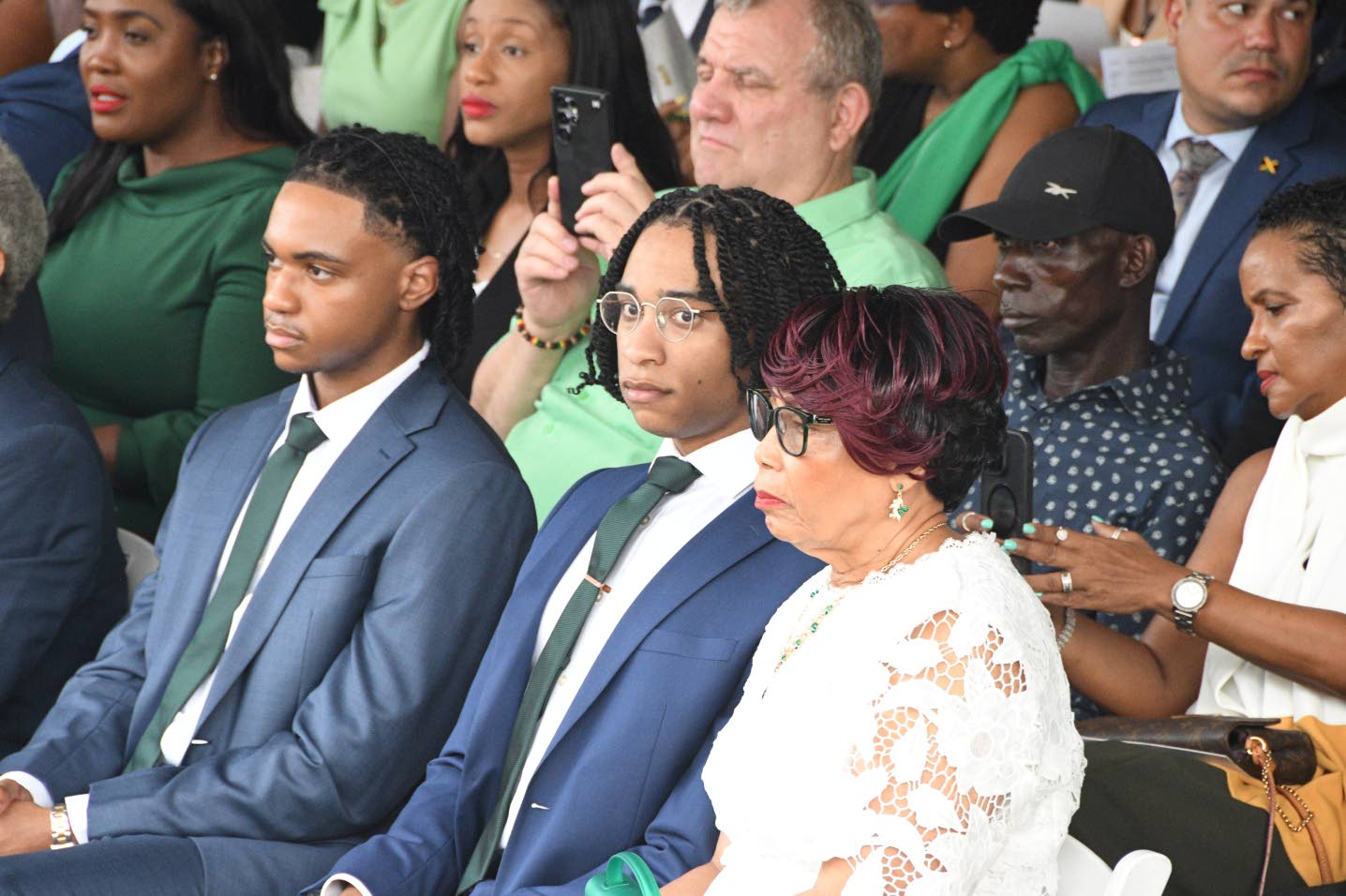
Prime Minister Dr Andrew Holness’s sons Andrew (left) and Adam sit with their grandmother Sonia at the head of Government’s swaering-in ceremony at King’s House on Tuesday. (Photo: Joseph Wellington)
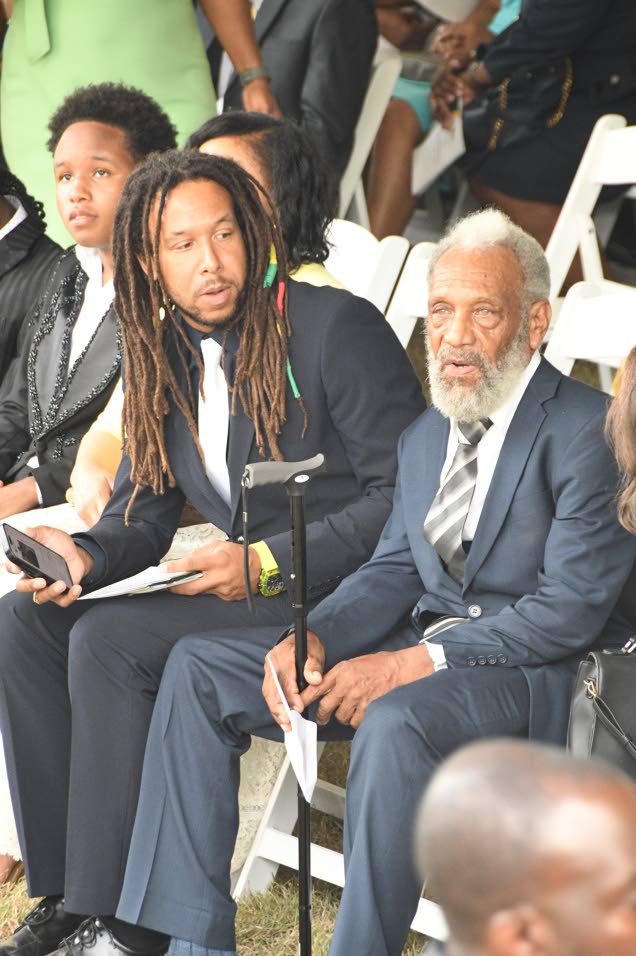
Prime Minister Dr Andrew Holness’s brother Kevin (left) and father Morris await the start of the swearing-in ceremony at King’s House in St Andrew on Tuesday. (Photo: Joseph Wellington)
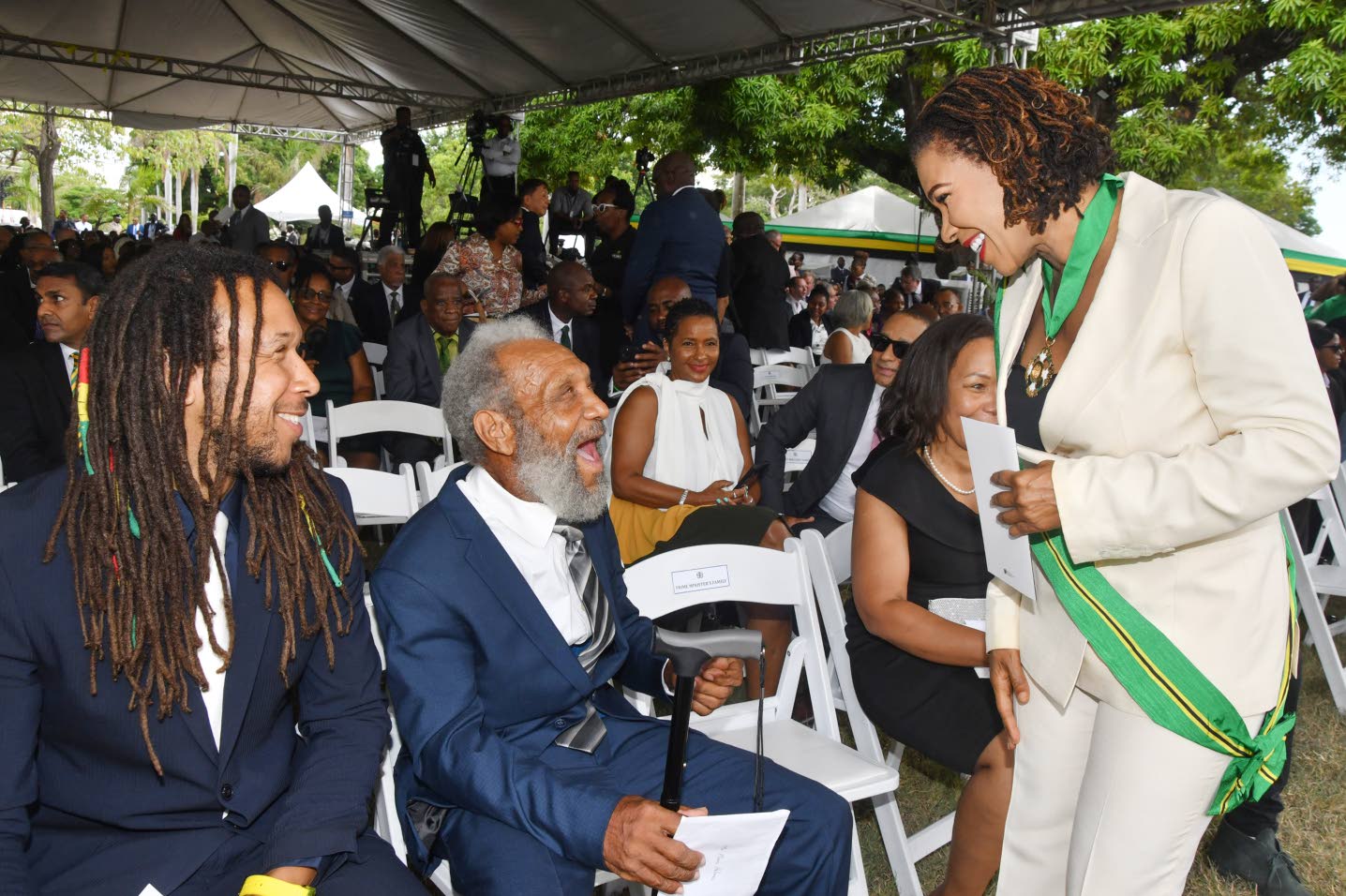
Ambassador Audrey Marks, the member of parliament-elect fot Manchester North Eastern, has a laugh with Prime Minister Dr Andrew Holness’s brother Kevin (left) and father Morris before the start of the swearing-in ceremony at King’s House on Tuesday. (Photo: Naphtali Junior)
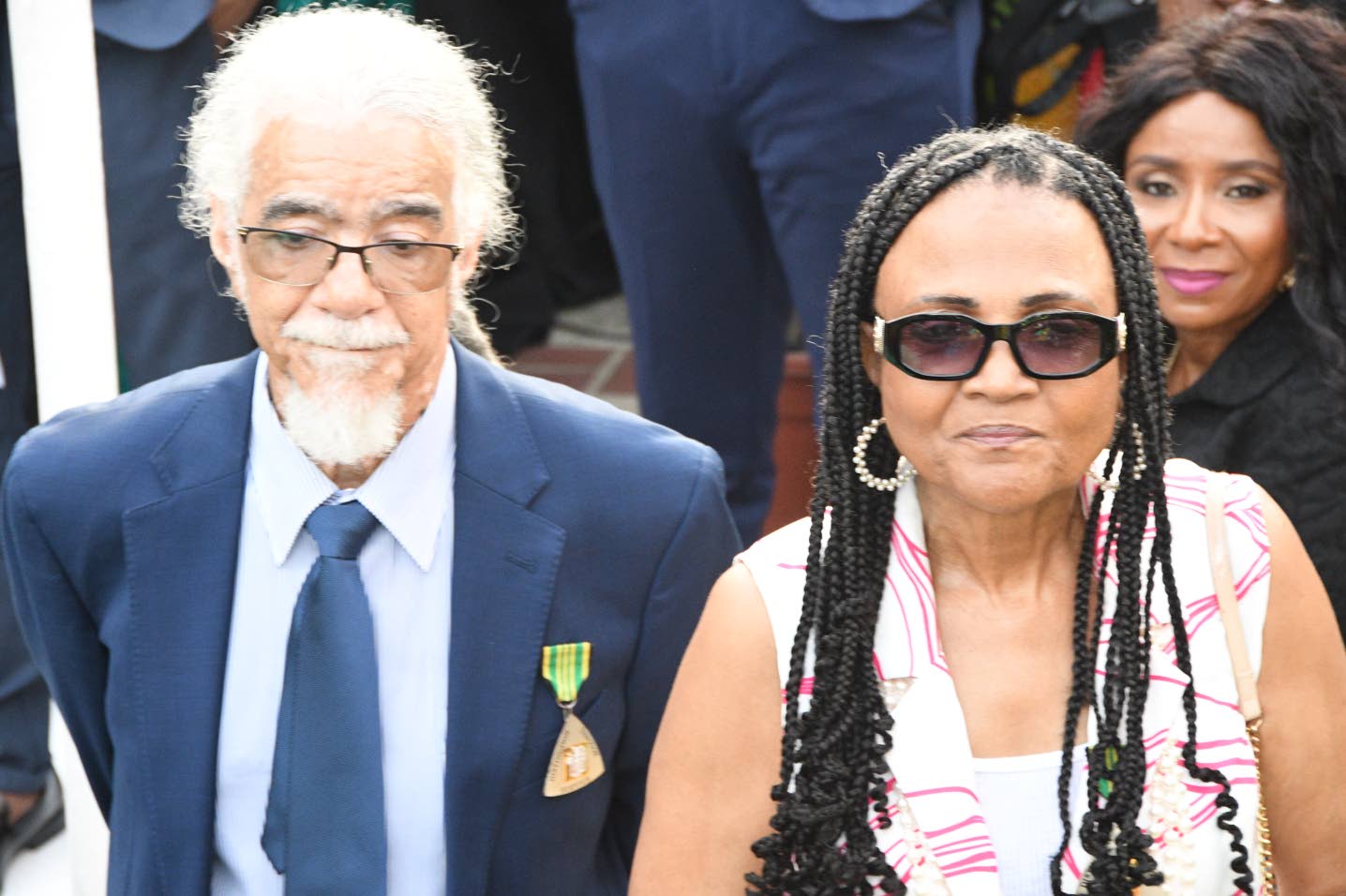
Veteran entertainer Tommy Cowan and his wife Carlene Davis in attendance at the swearing-in ceremony of Prime Minister Dr Andrew Holness at King’s House in St Andrew on Tuesday. (Photo: Joseph Wellington)


