



Leadership and professional ethics
Leadership and professional ethics are centre stage globally at this moment. The daily news cycle, from TVJ to the British Broadcasting Corporation, makes one thing clear — the world is in crisis. Better leadership and strong professional ethics are needed to rescue all of us!
My mission in this article is to highlight a groundbreaking degree programme recently developed at The University of the West Indies (The UWI), Mona campus, offered by the Faculty of Humanities and Education. The leadership and professional ethics degree caught my attention due to my ongoing work as a justice of the peace (JP). I immediately saw how such a programme could amplify the service commitment and delivery of JPs for those who would be able to do it.
Why does this programme matter? Why am I promoting it? I want to set the stage further by declaring this is an independent perspective, not a promotional article veiled as something purpose-driven. This programme matters, and I am promoting it because I think this can change national and regional trajectories. We are under threat and exposure due to poor leadership and a lack of professional ethics. This programme is not the only solution required, but it sure can get us some strong frequent flier miles in that direction.
The Bachelor of Arts in Leadership and Professional Ethics is an interdisciplinary degree, combining a core of philosophy courses with subjects from multiple faculties, including the Mona School of Business and Management, the Department of Government, and the Institute of Caribbean Studies. Therefore, it is one of the most comprehensive degrees on offer and can help to shift paradigms.
History shows that a single individual with strong leadership skills and the right ethics can change the world. A cornerstone of the programme is a year-long research in philosophy course in which students are advised to engage in qualitative research that offers a solution to any leadership problem identified, either in the public or private sector, using ethics as a guide. Former South African president and freedom fighter Nelson Mandela’s name evokes reverence and deep respect, and his example shows what a programme like this can one day achieve.
The UWI is a formidable institution with a strong legacy, but it’s time for it to reach its full potential. Against global standards, The UWI has not been innovating fast enough in terms of the future becoming the present. It faces challenges in training students to tackle shoulder-to-shoulder the ever-evolving shifts in the international labour market. The new leadership and professional ethics programme proves it is capable of bold, relevant change. This is my humble opinion based on closely observing The UWI for the past five years from a good vantage point.
Although not a teaching institute, moulding students through course delivery and training, honourable mention goes to the International Centre for Environmental and Nuclear Sciences (ICENS), which permanently resides on the cutting edge, in no small part due to the leadership and professional ethics of its leader, Professor Charles Grant. This is what progress looks like vis-à-vis the right kind of leadership.
The leadership and professional ethics degree is on time and on point for where we are locally, regionally, and globally with the rise in conflicts, reports of fraud, political dishonesty, and leadership that is out of touch, off base, and, in some cases, downright dangerous! The curriculum tackles a range of critical, modern challenges. Students take core courses like ethics and applied ethics and critical and ethical thinking, while also engaging with specific fields such as media ethics and legal issues, sports ethics, environmental ethics, and biomedical ethics.
The UWI has the opportunity to help with course correcting in an impact-driven way. This is not just for our students within the region, but should be promoted further afield and truly electrify the exponential potential of The UWI as a global institution. All we need to do to change the world is to properly develop one leader at a time. I am advising that this programme be adopted as a go-to course for JPs, government ministries and agencies, public-serving and facing institutions, and more.
For professionals who may not be able to commit to a full degree, a minor in leadership and professional ethics is also available once enrolled in almost any degree track. This requires a prerequisite course in either ethics and applied ethics or introduction to leadership, and then includes a range of ethics-focused subjects.
The leadership and professional ethics programme also needs to go a step further and develop a professional certificate in conjunction with The UWI STAR (Short Term Academic Resources). The UWI STAR is another notable recent, very relevant development that will help to shift the region’s axis regarding upskilling, again in no small part due to the leadership and professional ethics of its leader, Dr Olivene Burke. Again, here, the right kind of leadership will be the catalyst for institutional progress.
The need for ethical leadership is becoming more urgent as technology and artificial intelligence (AI) become intertwined with daily life. In Jamaica governance transparency and corruption remain challenges, while across the Caribbean Community (Caricom) there are efforts to integrate ethical standards into emerging technologies. Globally, the debate over AI ethics has intensified, with organisations like UNESCO and the World Economic Forum advocating for responsible AI development. To meet these complex challenges, human resource departments, especially within the government, need to give education grants to employees who want to pursue this course. Similarly, the private sector must offer financial support to employees on aligned trajectories to complete this programme.
The UWI programme, under the stewardship of Dr Rotimi Omosulu, can provide the ethical foundation we need to build a more just and responsible future.
Nicholas McDavid is a Guyanese Jamaican consultant in creativity and innovation, advising clients on impact-driven strategies and managing diverse creative projects. He is also a justice of the peace (JP) and passionate about local, regional, and global existential challenges. Send comments to the Jamaica Observer or nicholas.mcdavid@gmail.com.
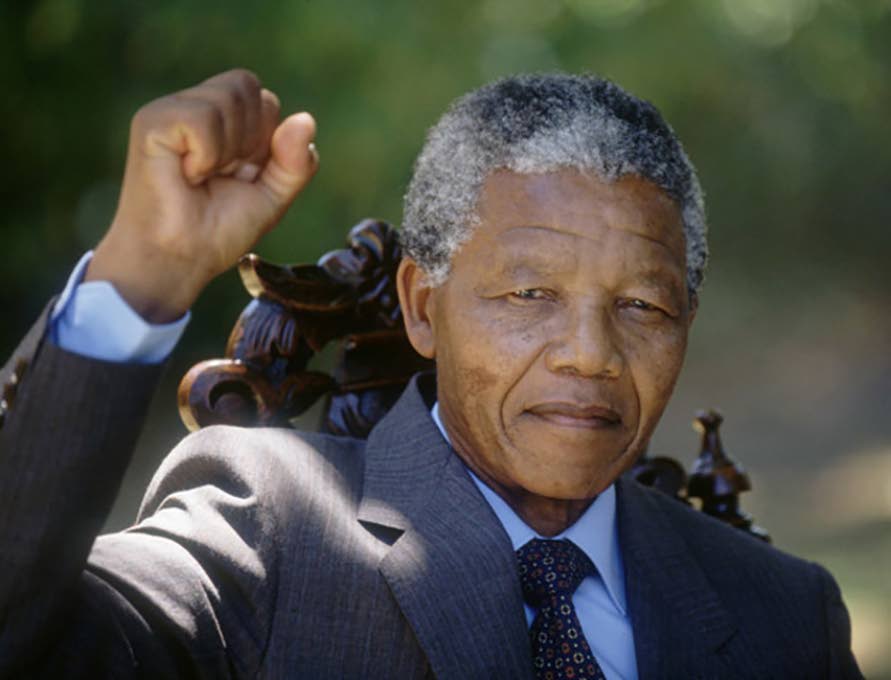
Nelson Mandela.

The leadership and professional ethics programme offered at The University of the West Indies should be a go-to course for those who work in government.
Nicholas McDavid


