



Obeah pushback
Church leaders cry against any attempt to legalise spiritual practice
A move by the Africana spiritualist non-profit Unuchi Foundation, which is campaigning for the repeal of the Obeah Act, has caused Christian groups to push back, worried that a flood of demonic forces would be unleashed in Jamaica if the folk practice is legalised.
It is for this reason that scores of representatives and the leadership of various church groups gathered in Spanish Town, St Catherine, on Wednesday to pray away any such plans. They are imploring Jamaicans to take heed of the dangers of the practice, and guard themselves against attempts to decriminalise it.
Bishop Dr Alvin Bailey, president of the Jamaica Evangelical Alliance and project director for the Jamaica Umbrella Groups of Churches, said that even through Obeah is currently illegal in Jamaica, it is still prevalent and creating great damage in the society.
He told the Jamaica Observer that Christian groups and friends in Haiti where Voodoo — a similar practice — is widely carried out, have been recommending that Jamaica steers clear of legalising Obeah.
“It would be the worst and most disastrous decision that this country would ever come to if they decide to legalise Obeah, in addition to the devious kinds of behaviour we have been seeing recently, and the destruction that we have seen. We believe devils and demons are behind much of these and that is why you have been hearing of men in authority being out of control and asking for divine intervention,“ he said.
“To legalise obeah is to create a kind of confusion that is unprecedented. We are totally against it as a church. As pastors, this is part of our responsibilities. The kind of deviance we have been seeing due to the evil actions of men, that would be more enabled by the legalisation of obeah. Men [would then be able to] unashamedly practise without any kind of restriction…,” a seriously concerned Bailey told the Observer.
Jamaica’s Obeah Act of 1898 defines an obeah practitioner as any person who pretends to use any occult means or pretends to possess any supernatural power or knowledge and uses any instrument of obeah in their practice. This person is liable for prosecution and imprisonment if accused and convicted. There is also punishment for anyone who consults a person practising obeah, a person reputed to be an obeahman, or any person convicted of same.
In a flyer shared by the Unuchi Foundation, and making the rounds in church circles, interested parties were invited to a candlelight vigil last evening in St Andrew, “for spiritual resistance, to honour ancestors persecuted for obia (obeah), and to uplift living practitioners who have maintained African spiritual traditions despite legal and social risks”.
In another event calendar posted on its website the foundation advertised a virtual vigil, also last evening, to mark the occasion of the first constitutional hearing today, September 25, to decriminalise obia/African religion in Jamaica. The night vigil was being livestreamed on TikTok and Instagram.
Dr Bailey said that the spells cast by practitioners of obeah in low and high places have been known to destroy the lives of people in many ways.
According to him, the illegal practice is so common in Jamaica that people can go on any corner in any parish and know where the neighbourhood obeahman is.
“We see behaviours inconsistent with human tendencies and we have to come against them in the name of Jesus Christ, pleading the blood of Jesus Christ under the power of the Holy Spirit. This is not just talk. We fix it, we handle it, and when we do our evaluation. As professional Christian practitioners we see these behaviours that we know are not normal but are behaviours caused by obeah, demons and devils,” he said.
“These kinds of things take place in a lot of forms, shapes and sizes. I want this nation to know that the undercover, illegal, and wicked institution that is being perpetrated by learned, intelligent and qualified men must not happen. We know that there is spiritual wickedness in high places. People think that these devilish behaviours are only practised by men in common places. Right here in this country, evil is being perpetrated in some of the rooms and halls and corners and communities that we refuse to talk about,” he added.
He highlighted that even intelligent, learned professors support the practice, which is appalling to him.
Meanwhile, pastor of Lighthouse Assembly Ministries and chairman of the 10,000 Men and Families Foundation Bishop Rowan Edwards said the Church has to take a major stance against the legalisation of obeah, as it is dangerous for the nation.
“We realise what voodoo has been doing in Haiti. Haiti legalised Voodoo, which is one of their major religions. We don’t want this Caribbean nation to legalise obeah. We know what voodoo has been doing in Haiti.
“Christians across our nation are crying out against it, this wicked thing that they want to unleash on this nation. That’s why we are here today,” Edwards said.
And Pastor Dalbert Simmonds, chairman of the Spanish Town Ministers’ Fraternal, said for those who have doubts about the powers of obeah, he wants them to know it is real.
“Obeah is real and we are taking a stand against it. A gentleman testified that he was ordered by a don to dig up a skull because he wanted to drink blood out of it. From my studies, I see where people believe that this practice can raise the dead and protect gunmen from their criminal actions. This country has gone through enough of this false hope, where even these young men coming up believe they can offer blood sacrifice, ‘cover’ themselves, and do lottery scamming and murder. The Church is standing against that,” he said.
On the website Unuchi.org, the group, founded on August 1, 2023, lists itself as an “information, education, and advocacy non-profit centred on the empowerment and healing of Africana peoples through obeah and other African knowledge traditions”. Its mission is to empower and heal people through obeah, and to create a world in which people of African descent know themselves.
The foundation, which lists various partner agencies in culture and academia, says it is committed to the positive exploration, exposition, and preservation of this spirituality, and is focused on “addressing the epistemicide caused by slavery, colonialism, and the continued demonisation of Africana cultures”.
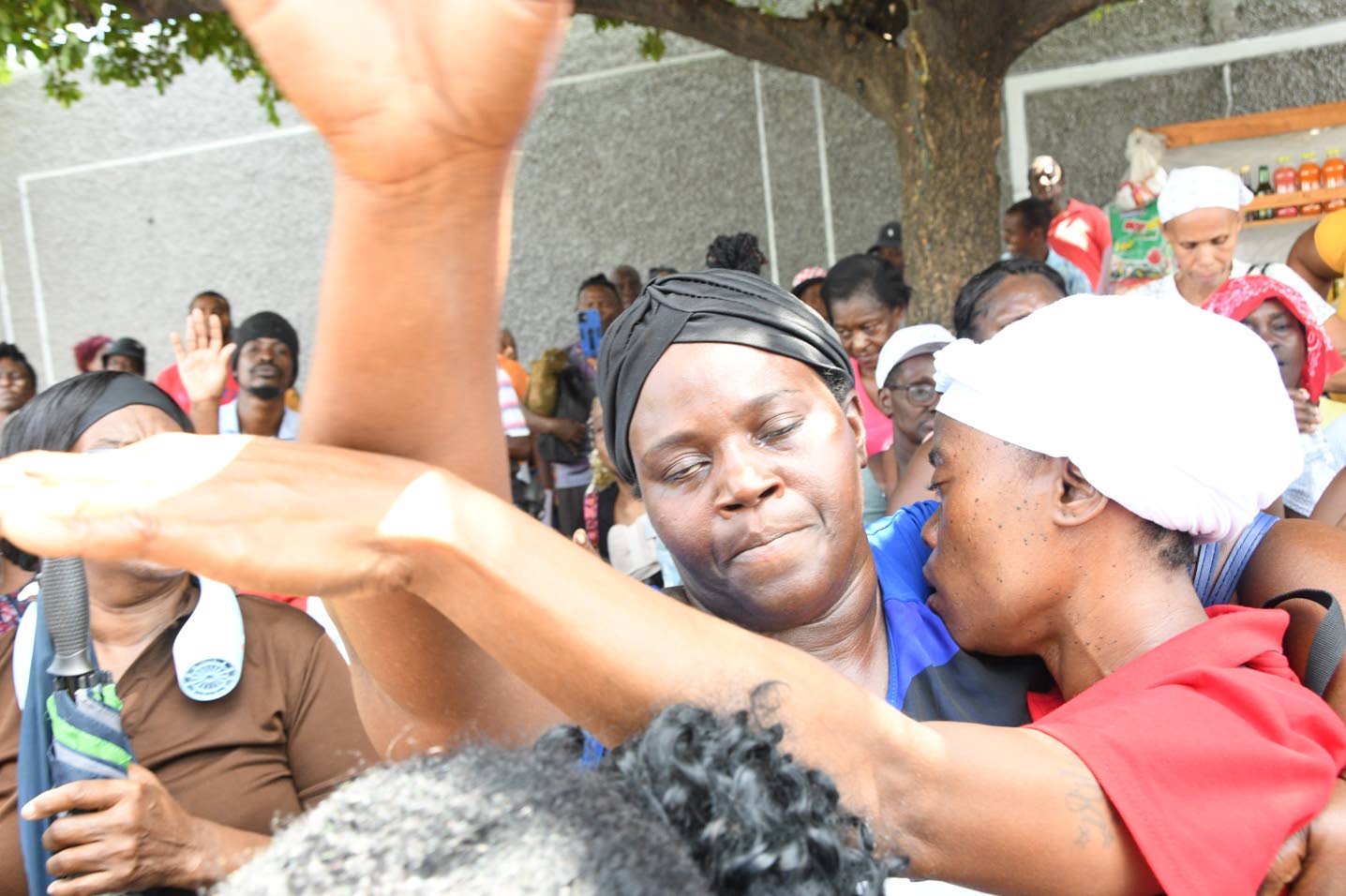
Christians making it clear on Wednesday that they will be pushing back against any plan to repeal the Obeah Act. (Photo: Joseph Wellington)
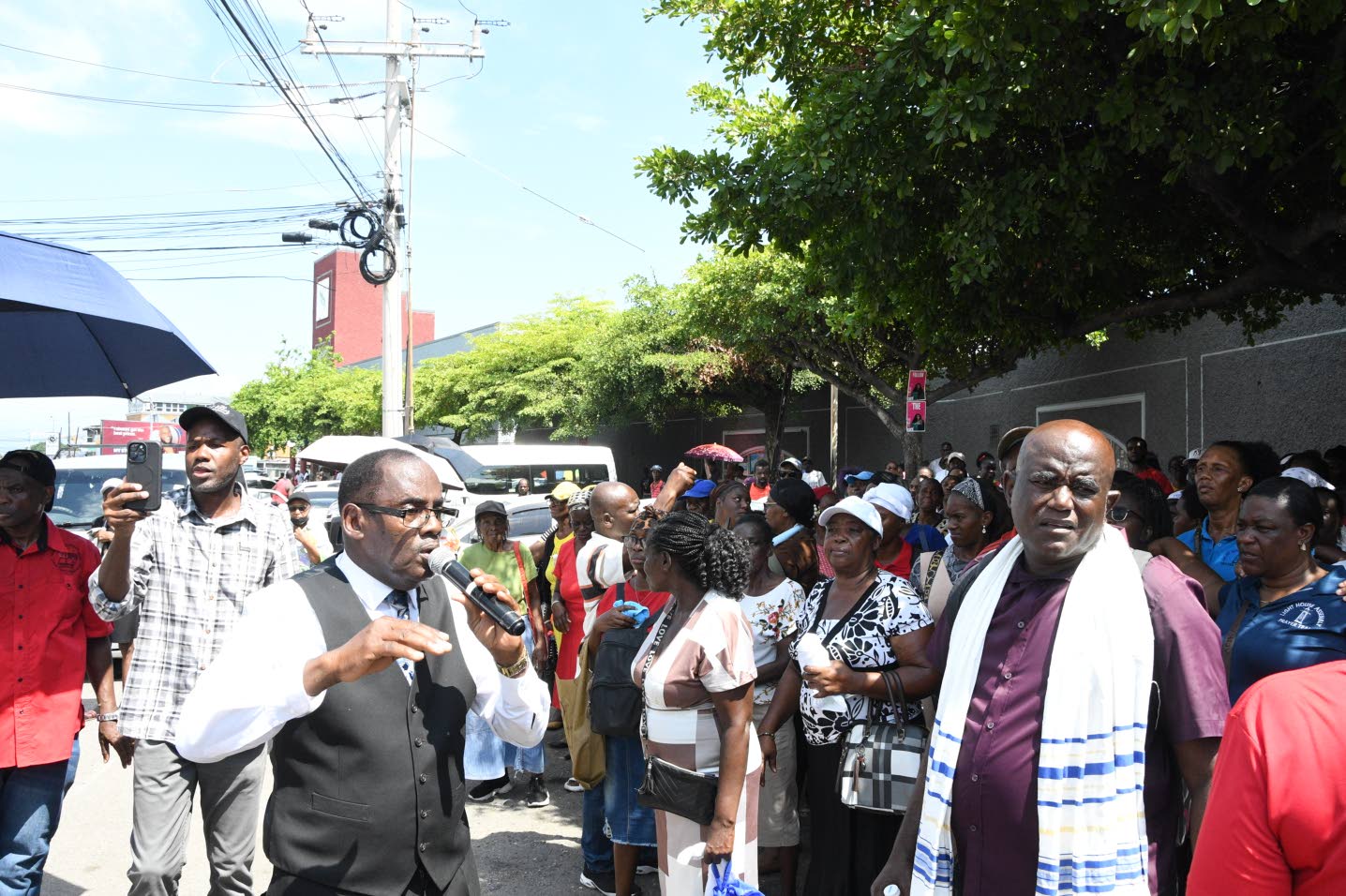
Bishop Dr Rowan Edwards encouraging Jamaicans on Wednesday to push back against any conversation or plans to repeal the Obeah Act. (Photo: Joseph Wellington)


