



‘My car became an ambulance’
Mom of ‘sickler’ who died starts foundation, aims to raise $1 million
PARENTS who each carry the sickle cell trait have a one-in-four chance of having a child with sickle cell anaemia — a painful reality with which Latoya Minott Smikle has had to live.
During her fourth pregnancy, the now mother of five learnt that her four-week-old baby — Aiden-Jon Amir Hall — had sickle cell disease. At the time, she also found out that she, her partner, and their three other children were carriers of the sickle cell trait.
After five-and-a-half years of fighting courageously, Aiden-Jon passed away due to complications with the disease in 2022. Out of that heartache and the battle she waged on his behalf, Smikle established the Aiden-Jon Amir Hall Foundation, which is seeking to raise $1 million this year to provide financial support to six individuals with sickle cell disease. The foundation is also looking to raise awareness about the disease.
Smikle recalled that before Aiden-Jon’s birth, she’d lived next door to a family who also had loved ones with sickle cell disease. She told the Jamaica Observer that she became aware of their late-night hospital runs during a crisis and would hear the anguished cries of pain that echoed through the neighbourhood. Yet, she admitted, she’d never imagined that one day that would also be her reality.
“It was after Aiden was diagnosed with the disease that the Sickle Cell Unit in Kingston, which was the unit that reached out to us, they were the ones that looked up my children’s medical records from birth, and then from there they would have discovered that all of them have the trait.
“Imagine you’re learning that you have a baby with full sickle cell, then you’re finding out that yourself has the trait and all your living children also have the trait. I don’t think I have to tell you how jarring that was. It was very shocking and very jarring, and I think for a moment I became depressed because I would have been four weeks postpartum; that’s not the easiest kind of news to bear at that time,” she told the Sunday Observer.
Smikle said subsequent checks would later reveal that it was likely her mother who had the sickle cell trait.
Sickle cell is a genetic blood disorder that causes red blood cells to become rigid, abnormal cells that block blood flow in small vessels, leading to severe pain. An individual can either have the trait or the full extent of the disease. If an individual is diagnosed with the trait, it means that they inherited one sickle cell gene. The full extent of the disease, sickle cell anaemia, occurs when an individual inherits two sickle cell genes.
September is recognised as Sickle Cell Awareness Month, an annual observance dedicated to raising awareness, understanding, and support for the inherited blood disorder.
Aiden-Jon was diagnosed with sickle cell anaemia, the most common and severe form of the disease that causes red blood cells to become stiff, crescent-shaped, leading to anaemia, painful episodes, and potentially severe organ damage as the sickle cells block blood flow.
Like her neighbours, Smikle said late-night hospital visits soon became the norm as she cradled her baby through multiple painful crises. Hospital stays were rarely fewer than seven days, and balancing finances, work, and caring for her other children alongside her husband proved an overwhelming task.
At times she had no choice but to take Aiden-Jon with her to work, as her spouse served in the Jamaica Constabulary Force. She recounted one particularly difficult moment when she took him with her as she led a work event in St Ann, only for him to suffer a major crisis before it began — one that ended with another hospital admission. She shared that she was living in Clarendon at the time, but wanted her son to be treated at the specialised Sickle Cell Unit in Kingston to receive comprehensive care.
“My car had to become an ambulance. I had to be flying like a mad woman from St Ann to get back into town because when a child is in pain; it’s difficult hearing your child cry all the way from St Ann to Kingston. There is nothing that can soothe that pain but whatever is administered to him; for example, morphine and other drugs through IV [intravenous therapy], plus give him the requisite treatment that he needs at the hospital.
“It’s very challenging. Sickle cell anaemia is a very challenging situation for parents, especially if you’re not somebody who has a job that pays well; it even becomes a greater challenge because, financially, it is a very stressful situation,” said Smikle.
She told the Sunday Observer that her experience has revealed the gaps that exist in the system as well as the lack of empathy in society for individuals living with sickle cell disease and for parents struggling with their children. While the Sickle Cell Unit, which is located at the University of the West Indies, Mona, serves as a vital pillar by providing testing, resources, and some level of support, Smikle does not believe it is adequately funded to deliver holistic care.
She noted, too, that even with assistance from the National Health Fund to cover the cost of medication for loved ones with sickle cell disease, many parents continue to struggle.
In a country where approximately one in every 150 babies is born with sickle cell disease and one in 10 adults carries the trait, she stressed that greater support and resources are urgently needed. She is hoping the Aiden-Jon Amir Hall Foundation, launched last Saturday, will bring about some of that change.
“I believe that God would have known that this would have been my journey and that I would have needed all these life experiences as a tool to help me now to be better able to help other persons, and so, for me, the foundation is to let my son continue to live and continue to impact people, because even though he was five and a half years old, he was such a loving child; people were impacted by him. The testimonies that people shared at his funeral, one would have assumed that he was an adult, but he was just a child and very impactful in such a very small window of time,” she told the Sunday Observer.
“As a Christian, some people would ask me if I don’t ask God why, and why God never healed him, but my faith tells me that God sacrificed his only son through a very brutal death to provide life for me. Whatever my son went through, whatever we all went through as a family with my son, I believe there was purpose behind it to help the forgotten, to help those that are being overlooked, to help those that can’t speak for themselves because they’re in too much pain and because nobody wants to hear anything from them,” she reasoned.
Smikle said she has identified six recipients for a grant — a number that reflects how old her son would have been if he had not passed away a month before his birthday in 2022. One of the recipients is the child of a single father who has to undergo surgery to remove his/her spleen. There will be a fund-raising dinner in October to raise $1 million for the recipients.
“It’s to build a community that can help others who are struggling; for them to understand, ‘You’re not alone.’ For me, most importantly, my child would not have survived, not because there wasn’t effort put forward to making him live the best life he lived, but I want to help someone else’s child to be able to live longer and healthier, and to reach the peak of all that they are able to achieve so that I can smile when I visit my son’s grave; I can smile and say, ‘I did it for him,’ ” said Smikle.

Latoya Minott Smikle and her late son Aiden-Jon Amir Hall
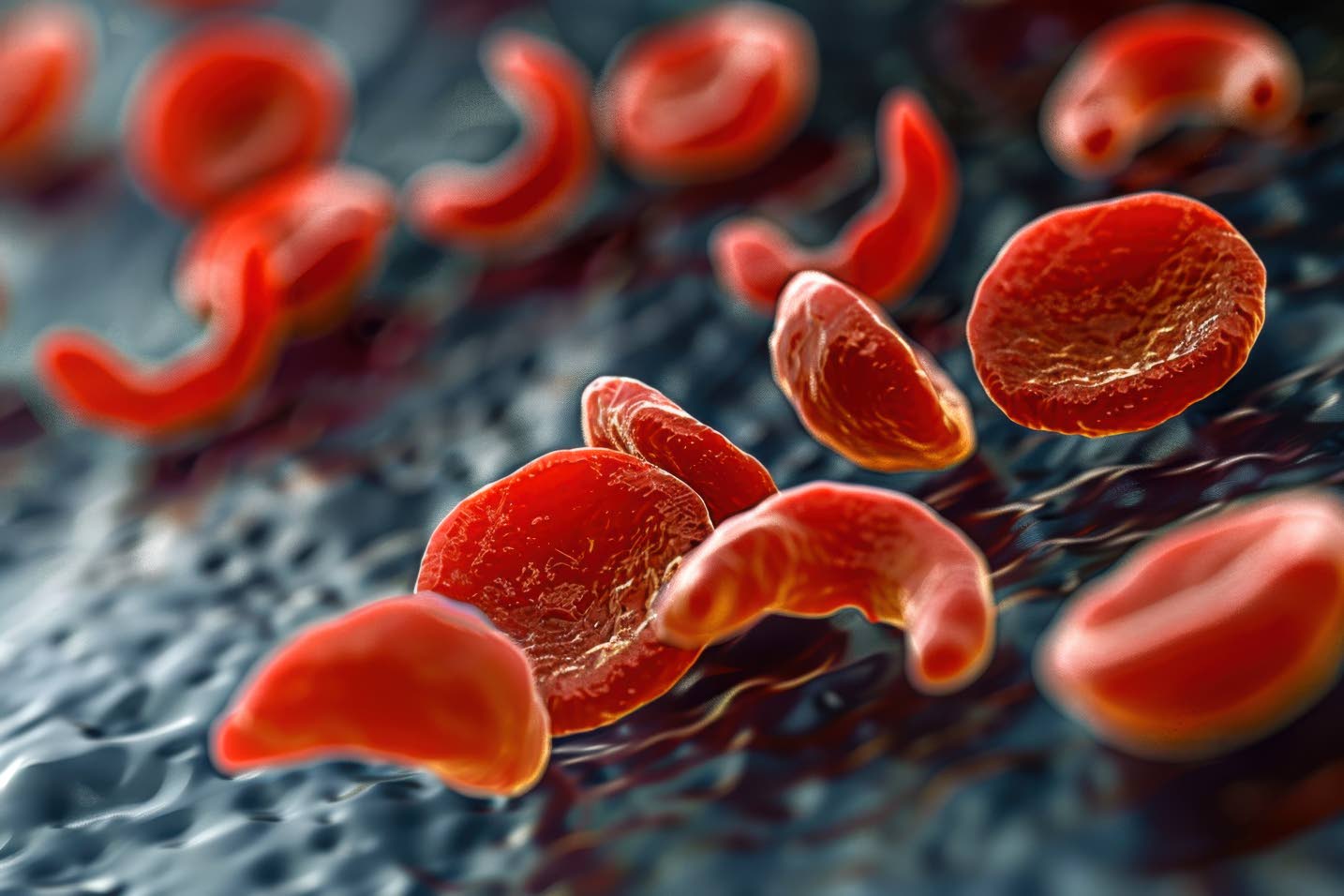
A detailed shot of sickle-shaped red blood cells, illustrating the abnormal shape characteristic of sickle cell anaemia.

The Aiden-Jon Amir Hall Foundation is set to have a fund-raiser in October to assist parents and individuals living with sickle cell disease. The target is $1 million with six beneficiaries identified.


