



A decade of defiance: How Jamaica bucked the trends
For decades Jamaica’s economic story has been told with a familiar rhythm — high debt, International Monetary Fund (IMF) rescues, hurricanes tearing through growth, and resilience tested to its limits.
But every now and then a nation has the opportunity to rewrite its own narrative. That is precisely what Jamaica has done. And the S&P Global Ratings confirmed it with a resounding upgrade of the country’s long-term foreign and local currency sovereign credit ratings to ‘BB’ from ‘BB-’, accompanied by a positive outlook.
This isn’t just a technical tick up on the global credit scoreboard. It is a watershed moment, a declaration that a small island, once drowning under a debt load of over 140 per cent of gross domestic product (GDP), has fought its way into fiscal stardom. For investors, policymakers, and everyday Jamaicans alike, this upgrade marks both vindication and promise — a decade of sacrifice rewarded and a future of new opportunities unveiled.
Picture this: It’s 2013, and Jamaica’s public debt towers at over 140 per cent of GDP, a millstone that has sunk lesser economies into IMF lifelines and lost decades. Fast-forward to 2025 and the island’s net general government debt is poised to dip below 50 per cent of GDP this fiscal year — a staggering 90 percentage point shave in just over a decade.
What alchemy turned lead into gold? The answer lies in an unyielding commitment to primary fiscal surpluses averaging above 3 per cent of GDP annually, even as COVID-19 clobbered tourism (nearly 10 per cent of GDP) and Hurricane Beryl ravaged crops in 2024. Jamaica stands alone among S&P’s 141 rated sovereigns in sustaining this surplus streak for 10 straight years — a feat that speaks volumes about bipartisan resolve.
The recent general election in September 2025 sealed the deal. The Jamaica Labour Party (JLP), under Prime Minister Dr Andrew Holness, clinched a second term with 35 of 63 parliamentary seats, but the real winner was continuity. Both the JLP and Opposition People’s National Party (PNP) have enshrined fiscal prudence in law, capping debt at 60 per cent of GDP — a target Jamaica is on track to hit two years early. This isn’t partisan theatre, it’s now embedded in Jamaica’s political DNA.
Add to that Bank of Jamaica’s independence and inflation-targeting mandate and you’ve got a monetary policy arsenal that has kept core inflation at 1.2 per cent as of August 2025, well below the 4 per cent to 6 per cent band, with the policy rate steady at 5.75 per cent.
Jamaica’s Fiscal Transformation at a Glance
To put the transformation into perspective: Back in 2013, Jamaica’s net general government debt was around 135 per cent of GDP. By 2025 it is projected to fall below 50 per cent — an extraordinary reduction of roughly 85 percentage points. Over the same period the country shifted from running a primary fiscal deficit of about 1.5 per cent of GDP to averaging primary surpluses above 3 per cent of GDP for 10 consecutive years.
Interest payments, which once swallowed 45 per cent of government revenues, are now projected to average just 15 per cent between 2025 and 2027, freeing up significant fiscal space. Perhaps most importantly Jamaica’s legislated debt ceiling of 60 per cent of GDP is expected to be achieved two years ahead of schedule, underscoring the credibility of its fiscal framework.
These aren’t abstract numbers, they’re lifelines. Lower interest payments — projected to average just over 15 per cent of revenues through 2027 — free up billions of Jamaican dollars for infrastructure, education, and crime reduction.
Tourism’s Triumph and Beyond
Jamaica’s economy — a vibrant mosaic of tourism (11 million visitors in 2024), bauxite mining, agriculture, and remittances (US$4 billion annually) — contracted modestly in 2024 amid weather woes and global headwinds. But 2025 paints a brighter canvas: Real GDP growth is forecast to rebound to 2 per cent, settling into a 1 per cent to two per cent long-term groove by 2026–2028, according to S&P.
The Bank of Jamaica is even more bullish, eyeing 1 per cent to 3 per cent expansion, buoyed by post-hurricane reconstruction and a tourism surge. World Bank projections align at 1.7 per cent, driven by agriculture’s green shoots and construction’s infrastructure push.
Inflation’s doldrums are a boon for consumers and exporters alike, with the IMF noting stabilisation within target bands post-2025/2026 recovery. Yet challenges remain: GDP per capita lingers at US$8,500, well below peers, hampered by low productivity, corruption perception, and climate risks.
Still, Jamaica’s external buffers are sturdy: current account surpluses average 0.6 per cent of GDP through 2029 and remittances and tourism offsetting a 59 per cent foreign currency debt share.
Hurricanes, Politics, and the Global Gamble
No Caribbean story is complete without storms — literal and figurative. Jamaica’s disaster playbook has levelled up, with a contingency fund, catastrophe bonds, and World Bank credit lines ready for shocks. Still, Fitch warns that fiscal slippage or weak growth could slow debt decline to 59 per cent of GDP by 2027.
On the upside, stronger growth could accelerate the next upgrade within 18 months. And geopolitically, Jamaica’s democratic resilience — flawless transitions since independence — acts as insurance against populist pivots, even in turbulent global conditions.
Bonds, Stocks, and Blue-Chip Opportunities
For investors, this upgrade is magnetic. Jamaica’s Eurobonds, trading at tighter spreads post-announcement, now yield 6 per cent to seven per cent on 2030s paper, with momentum in their favour. Local corporates like Air Jamaica Limited snag matching upgrades, unlocking cheaper capital for expansion.
Tourism proxies, airlines, and bauxite firms all stand to benefit from lower borrowing costs. The Jamaica Stock Exchanges’s main index, meanwhile, could soon retest its 2024 highs.
My verdict as an analyst? Allocate 2 per cent to 5 per cent to Jamaican sovereigns in EM fixed-income portfolios. For locals, it’s a green light for business loans at sub-8 per cent rates, priming small and medium-sized enterprises in agrotech and renewables for take-off.
The Road to BBB? A Positive Prognosis
Jamaica’s journey from junk to jewel isn’t over — it’s accelerating. With institutions as sturdy as Blue Mountain coffee and policies as consistent as Usain Bolt’s stride, the positive outlook signals at least a one-in-three shot at another upgrade by mid-2026.
In a region plagued by volatility, Jamaica now shines as the steady hand: resilient, reformed, and ready to rumble. This upgrade isn’t just about numbers, it’s about national triumph, proving that in economics, as in reggae, persistence pays.
One love, indeed. But now with investment-grade swagger.
Janiel McEwan is an economic consultant. Send comments to the Jamaica Observer or janielmcewan17@gmail.com.
Jamaica has fought its way to fiscal stardom.
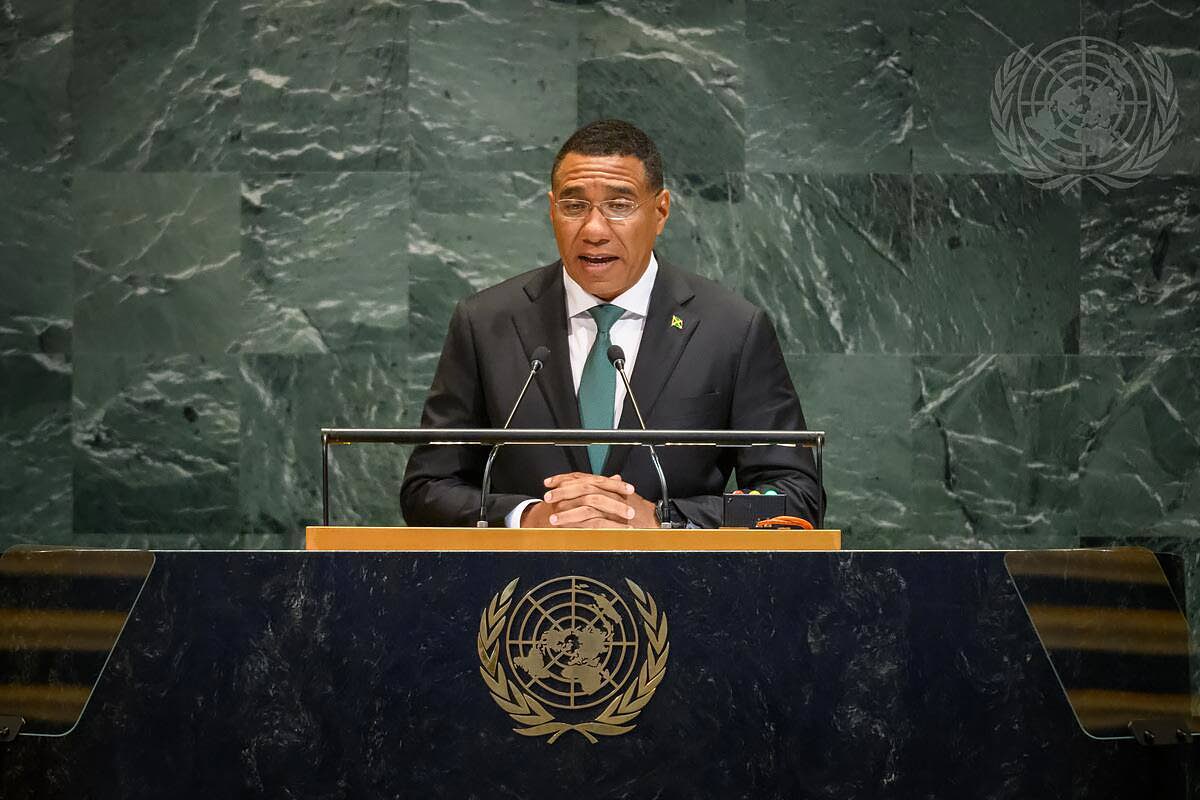
Dr Andrew Holness
Janiel McEwan


