



EVIS for some
...Two decades after its launch, Jamaica’s upgraded voting system still not rolled out islandwide
OVER two decades after the Electronic Voter Identification and Ballot Issuing System (EVIBIS) was first introduced to the country’s electoral process, Jamaica’s upgraded Electronic Voter Identification System (EVIS) still has not been deployed islandwide as many would have hoped for by now, with only seven constituencies benefiting from the system during the recent general election on September 3.
First introduced during the 2003 local government elections, EVIBIS marked Jamaica’s entry into biometric voter verification. It was used in just one constituency at the time, relying on desktop computers, fingerprint scanners, and printers to confirm voters’ identities before ballots were issued. The system was widely seen as a safeguard against multiple registrations and voter impersonation, two of the most persistent risks to electoral integrity.
Following the 2003 pilot in two divisions of South Eastern St Andrew, EVIBIS was considered a success by the Electoral Office of Jamaica (EOJ) and recommended for full-scale implementation across the island.
During the 2007 General Election, EVIBIS was deployed in just over 600 polling stations across 13 marginal constituencies in Kingston, St Andrew, and St James.
In the run-up to the election, then Director of elections Danville Walker acknowledged during a Think Tank session with the Jamaica Information Service (JIS) that there had been calls to expand the system to all of the country’s roughly 7,000 polling stations. However, he explained that the office did not yet have the capacity to implement such a widespread roll-out.
“The constraint for the implementation is more human resource than financial…Where we have a huge challenge with some of the technology that we use is how much we are able to pay the persons who work at the EOJ and the availability of technicians and people who are capable to operate these systems,” he told JIS back in 2007.
However, he noted that there was a solution.
“We have to get to the point where these voting machines are such that you just turn on a switch and they are ready so there is not a heavy reliance on technical personnel,” he said.
Over the following decade, EVIBIS underwent a series of upgrades. The bulky desktop units gave way to laptops connected to fingerprint scanners, and the system underwent several technological upgrades to improve efficiency and reliability. The desktop set-up was replaced by laptops paired with fingerprint scanners, which allowed for slightly more mobile deployment and faster processing at polling stations.
Despite these improvements, the system remained slow and operationally complex, requiring multiple pieces of equipment at each polling station.
The launch of EVIS was billed as the solution and was promoted as a modern, hand-held, all-in-one device, which combined fingerprint scanning, facial recognition, and ballot issuing functions into a single unit.
But during the 2020 General Election that was held in the midst of the COVID pandemic, EVIS now being a more advanced system was only used in seven constituencies: St Andrew Western, St Andrew West Central , Kingston Eastern and Port Royal, St Andrew East Rural; St Catherine Central and St Catherine Eastern on election day.
Leading up to that election, Director of Elections Glasspole Brown during a Get the Facts interview with JIS on August 30, said the ECJ’s vision was to get all the devices into all 7,000 polling stations.
“We have started the process; it is now with the [Public] Procurement Committee, so, hopefully, during the next election cycle we will be able to roll out those gadgets across the entire island,” he said in 2020.
Yet, five years later, the dream of islandwide coverage remains unfulfilled as during the most recent general election, the system was also used in only seven constituencies across the island.
Speaking with the Jamaica Observer recently, Brown did not specify what has hampered the nationwide rollout, but did say that EVIS has come a far way from where it was when it was first introduced.
“The initial EVIBIS launched in 2003 was a desktop computer, a separate fingerprint scanner system and printer; over time that system evolved to a laptop and a fingerprint scanner and now we have an all in one hand-held device. The EOJ continues to evolve and the aim going forward is to continue to familiarise the public with this system as we continue to expand its use given budgetary support,” he said.
He noted that for this year’s election the ECJ acquired 915 upgraded hand-held tablets for the new EVIS system of which 729 were deployed on election day.
However, on election day it was reported that the use of EVIS was temporarily suspended in at least four constituencies: Kingston Central, St Andrew Eastern, St Andrew West Central and St Andrew South Eastern.
According to Brown, these glitches were mainly user related. “There were complaints that the processing at certain locations was too slow, this included a number of locations where it was reported a number of elderly persons were being brought in to vote and given the nature of the print it impacted on the timeliness of the process. In a number of those cases later in the day it was reactivated,” he said.
The challenges came despite a significant investment in the system. Approximately US$1.6 million was spent on acquiring the hand-held devices which Brown said includes software used in continuous registration.
Brown stressed that the issues were not system failures but highlighted the need for stronger training of polling staff.
“…A review of the teaching method will be conducted to enhance user proficiency. These systems are used in many countries across the world and we are confident that over time it will become seamless for the Jamaican electorate. An additional feature of recognition other than finger print, that is facial recognition, is allowed by the system or gadget which will also be used going forward,” he added.
On questions of additional funding or a timeline for full islandwide roll-out, Brown remained cautious. He said any such plans will need to be reviewed and approved by the ECJ before being communicated publicly.
“The EOJ continues to review how best to improve its execution of national elections, including greater use of technology,” he stated, signalling that while the goal remains islandwide deployment, a clear timetable is yet to be set.
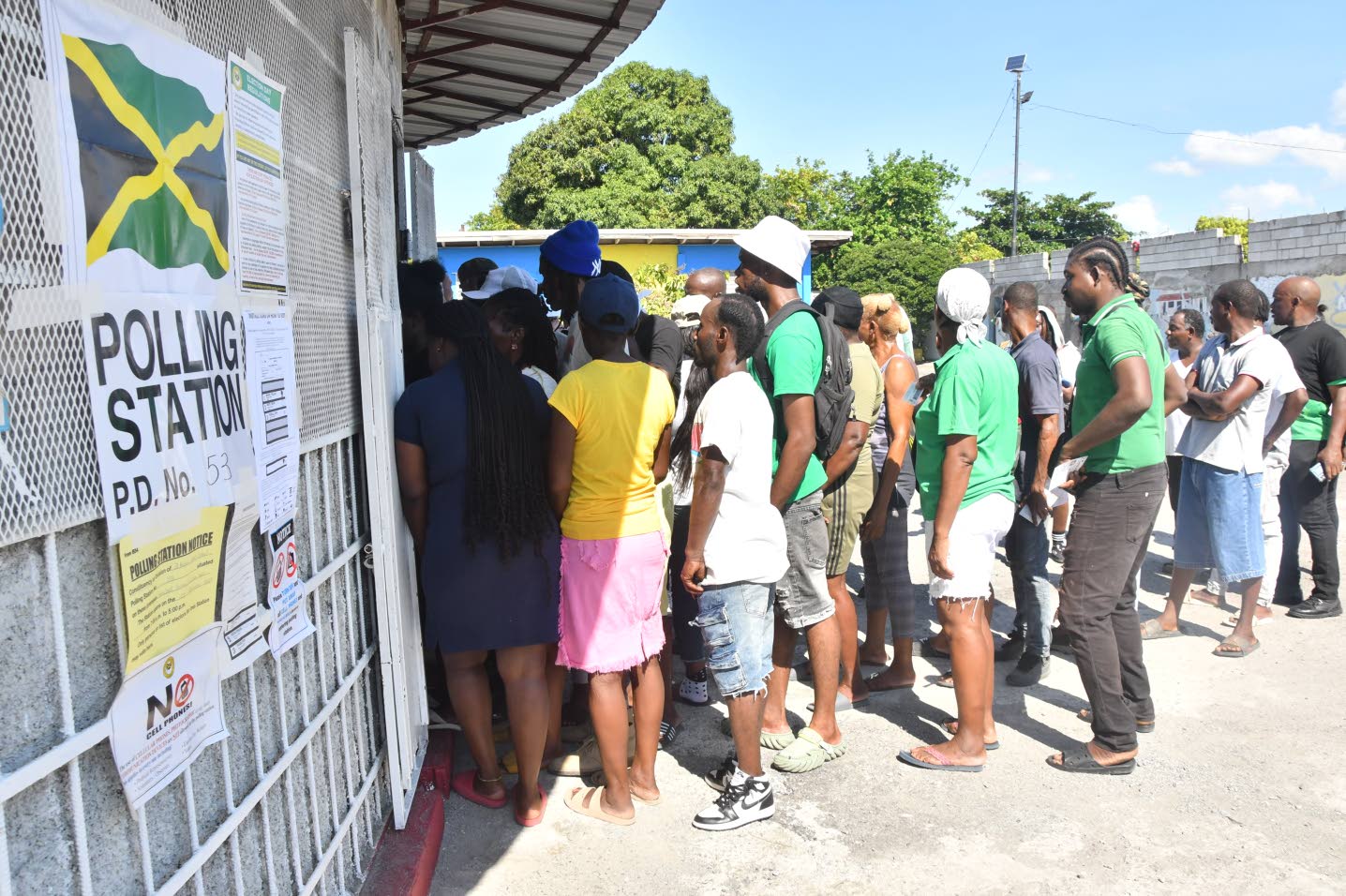
Voters at a polling station at Seaward Primary & Junior High School in St Andrew on election day, September 3, 2025 (Photo: Naphtali Junior)
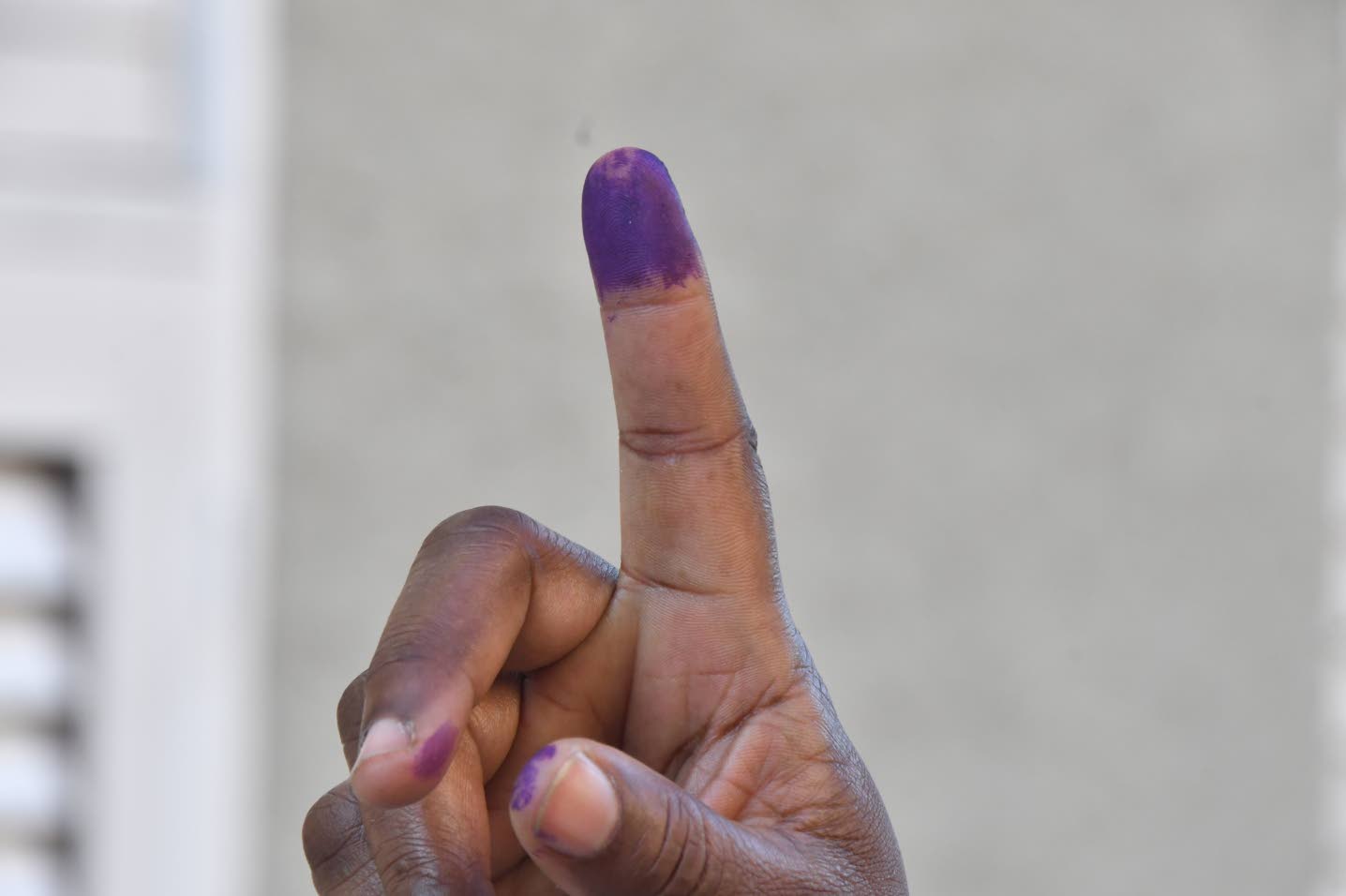
A voter shows evidence of casting his vote on election day, September 3, 2025 at Tarrant Baptist Church in St Andrew.

BROWN… did not specify what has hampered the nationwide roll-out of EVIS.
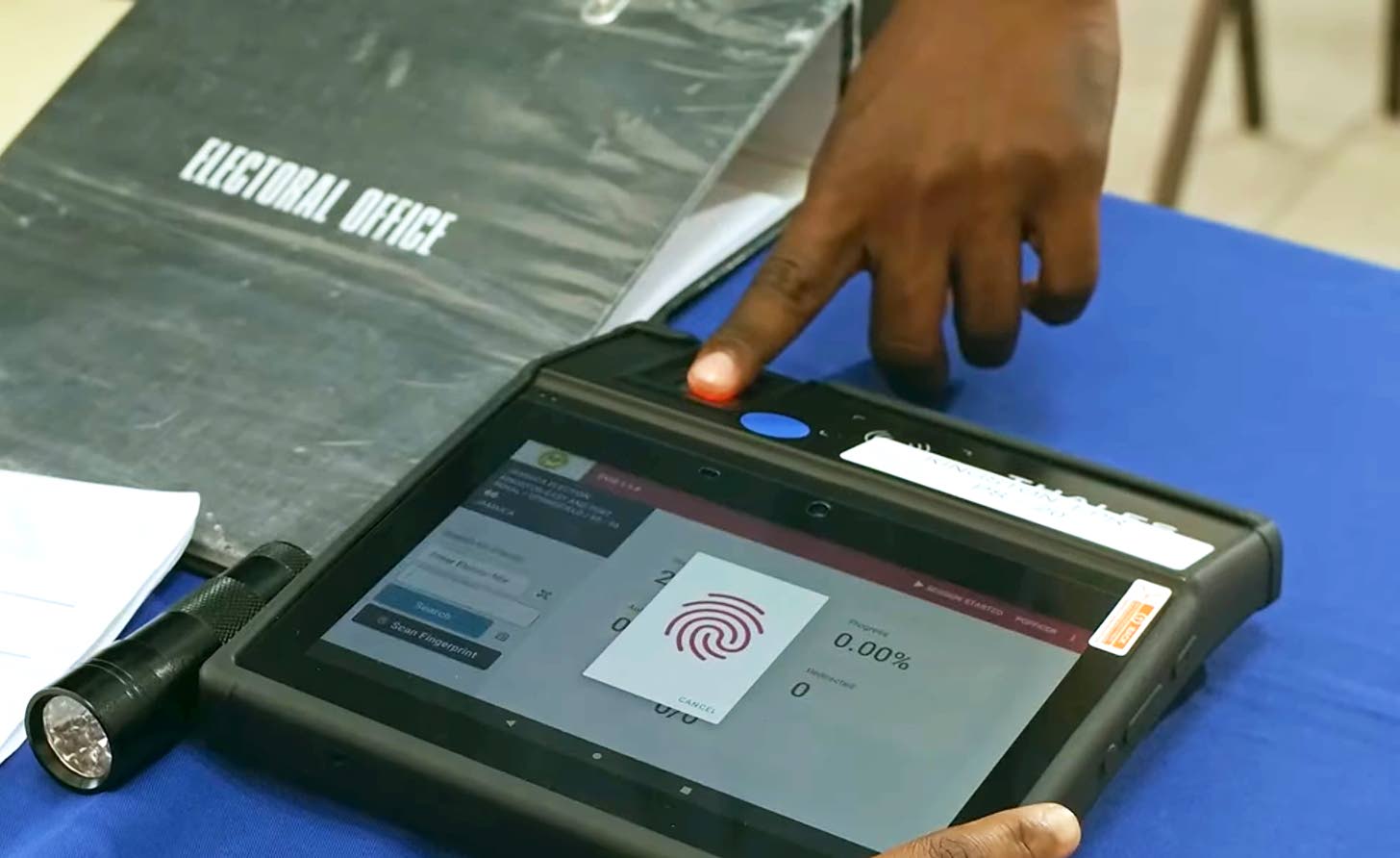
Video grab demonstrating the electronic voter verification system from the Electoral Commission of Jamaica.


