



We are blessed
At the time of our Independence the black, green, and gold of our national flag symbolised our declaration that “hardships there are but the land is green and the sun shineth”. It was amended in 1996 to remove the implied stigma of equating blackness with hardship rather than the strength and creativity of our people. It is that strength and creativity that have sustained us through the hardships we have had to endure from the days when we were enslaved through the many adversities we have overcome.
Our struggles are not over. Despite the progress we have made, too many still have to strive to make ends meet and stare at the gap between their hopes and the realities of their existence. Yet we have so many blessings to count.
I empathise with those who gather daily in Liguanea, St Andrew, hoping to be allowed the opportunity to seek a better life elsewhere even though the “elsewhere” tells them in no uncertain terms that they are not welcome there. I am particularly blessed that I don’t have to join that line.
I wouldn’t want to live in a country where the political party in power can stack the court of appeal with politically aligned judges, so much so that on any politically sensitive issue one can predict well in advance how each of the judges will rule.
I wouldn’t want to live in a country where the prime minister is able to appoint his personal lawyer as the director of public prosecutions and then publicly instruct him or her to lay charges against his political opponents.
I wouldn’t want to live in a Jamaica where hundreds of people who were convicted and sent to prison for violently storming Gordon House in an effort to overturn the results of a free and fair election can be granted pardons, celebrated as patriots, and even appointed to senior government positions.
I wouldn’t want to live in a Jamaica where the prime minister can declare that the number of constituencies in certain parishes will be increased in order to ensure that his party wins the next election.
I wouldn’t want to live in a country where the minister of health, with the full backing of the prime minister, declares war on vaccines that are scientifically proven to have saved millions of lives and where political cronies are placed in charge of critical health surveillance and regulatory agencies.
I wouldn’t want to live in a country where the prime minister proclaims, despite overwhelming evidence to the contrary, that climate change that is increasingly producing unstable, unpredictable, and catastrophic weather events is a hoax and assures the fossil fuel moguls that it is all systems go. He would have to be oblivious to the fate of low-lying countries like Tuvalu, Kiribati, the Maldives, and the Solomon Islands, some of which have seen sections of their countries submerged under rising seawater, and even nearby Bahamas which faces a similar threat. Projections are Tuvalu will be completely submerged in the next 25 years, and several coastal areas, even of the “elsewhere”, will be lost unless strong corrective global actions are taken.
I would hate to have to live in a country where the Government threatens to revoke a television station’s licence because it is offended by comments made by one of its presenters.
I wouldn’t want to live in a country where universities are told that government funding will be withdrawn unless they discontinue teaching programmes that the Government doesn’t like.
I would be tormented to live in a country where statues of white slave owners are remounted and monuments to those who fought for racial equality, like Sam Sharpe, are removed.
It would be unthinkable in Jamaica for the Government to dismiss the head of the Statistical Institute of Jamaica (Statin) because it published data that doesn’t find favour with the Government and then replace her with a political operative intent on cooking the books to make the Government look good.
These are the traits of regimes that “elsewhere” used to condemn so vociferously but from which it is hardly any longer distinguishable.
I would be offended if the prime minister of my country so frequently refers to people he doesn’t like as “sleazebag”, “low life”, “slime”, and “deranged”. I would also be embarrassed if, so obsessed with himself, he were to use his precious time at the podium of the UN General Assembly to ramble about the malfunctioning escalator and teleprompter and how he had offered to build the UN headquarters for US$500 million but it was rejected in favour of a more expensive option.
It would be incomprehensible to me for my Government to slap a tariff of 100 per cent on exports from a country with which it enjoys a huge trade surplus for the sole reason that a political ally there has been charged for seeking to violently overturn the results of an election in which he was duly defeated.
Jamaica may not be paradise, but the “elsewhere” to which we have grown so much affinity is descending closer to Hell. We are blessed, indeed.
During my time as prime minister, in bilateral engagements with “elsewhere”, issues were often raised concerning our rule of law and practice of democracy, our systems of accountability, the independence of our judiciary and other institutions, freedom of the press and gratuitous lectures delivered. My briefs urged me to be prepared to respond to them. “Elsewhere” dares not approach us with that again.
We must count our blessings and give thanks and praise. I love you, Jamaica.
Bruce Golding served as Jamaica’s eighth prime minister from September 11, 2007 to October 23, 2011.
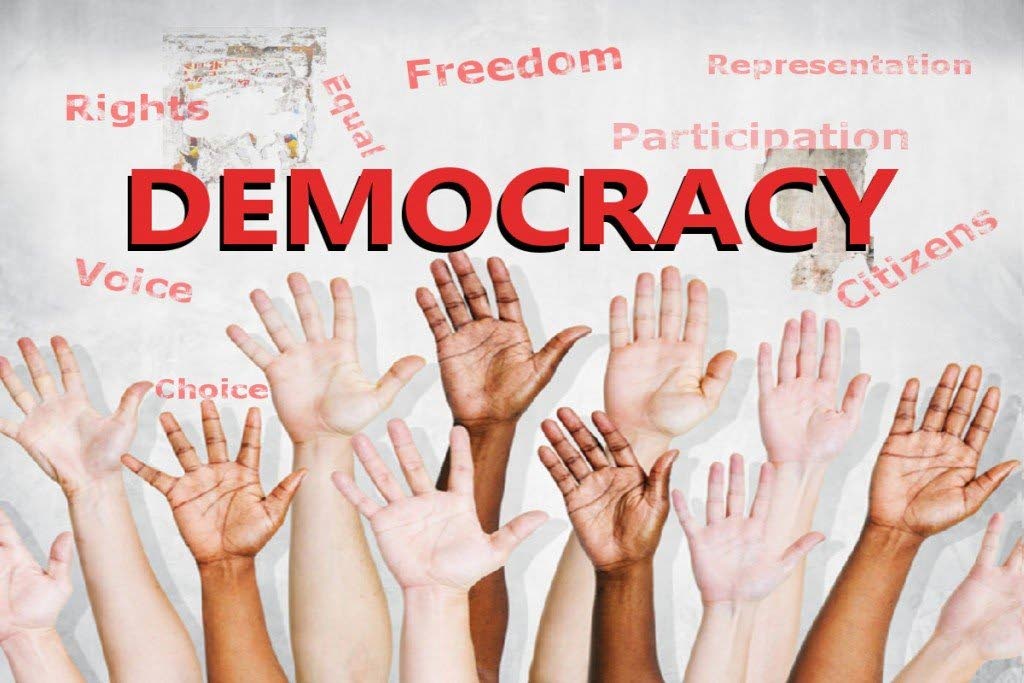
The Jamaican Government continues to uphold democratic principles.l
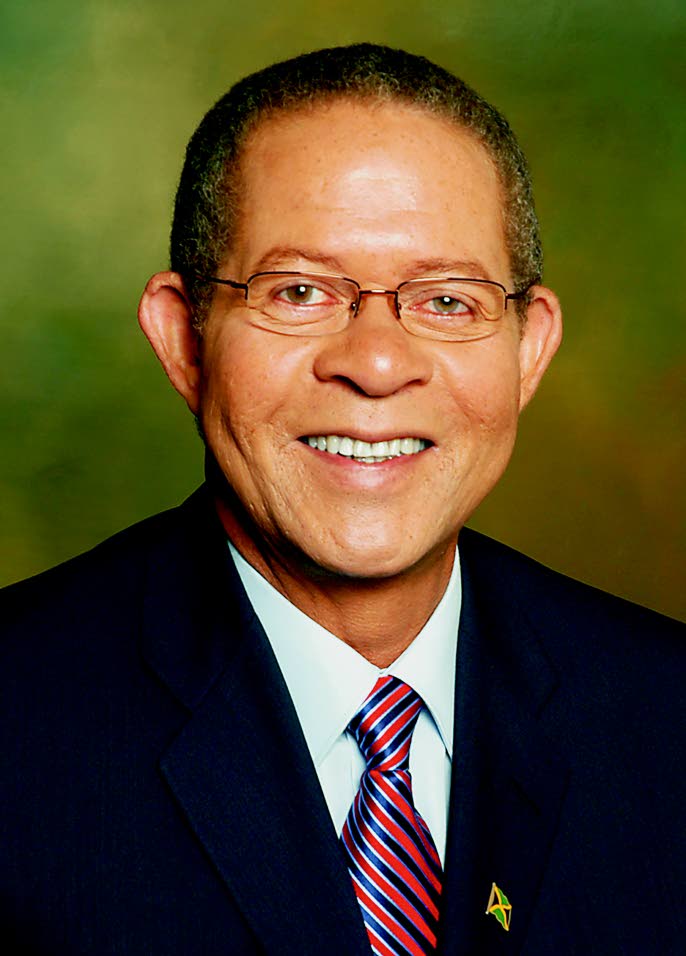
Bruce Golding.


