Grounding Jamaica in the new world order
Just over 25 years ago an advanced team from Digicel arrived in Jamaica following the Phillip Paulwell-driven break-up of the then telecommunications monopoly. Paulwell was then minister of technology.
Digicel was one of the first new foreign-direct investments of that decade and probably the most consequential, being a Jamaican start-up that eventually moved across the Caribbean and Central America and then into the Pacific, becoming one of only two unicorns created from scratch in Jamaica.
The arrival of Digicel at that time, in an economy just recovering from a devastating financial crisis, seemed to inject new entrepreneurial energy into our otherwise stagnant economy. This was followed by other major investments in banking, telecommunications, and subsequently tourism with the arrival of the Spanish. Digicel also supported Jamaica’s Partnership for Progress initiative of 2003, catalysed by the example of the Irish, which was ultimately finalised a decade later under the then new Portia Simpson Miller Administration.
The vision behind the 2003 initiative was that, like Ireland in 1987, Jamaica could finally balance its budget, reduce its debt, and then take advantage of the fact that it spoke English and had an excellent location with a very favourable trade agreement next to one of the largest economies in the world.
Jamaica has some key differences with Ireland. From a starting point extremely similar to Jamaica’s after its independence from the UK in the 1920s, Ireland had started to invest heavily in education in the 1960s so that by the 1980s, during its economic and debt crisis, it already had a large pool of highly educated labour available, but no jobs, with “the last one to leave please turn out the lights” being a common refrain.
Its equivalent of Jamaica Promotions Corporation (Jampro) had also already started a very effective investment promotion strategy, and once properly funded this came to full fruition in the 1990s when Ireland was able to attract large-scale investments in a number of critical new industries from US multinationals through a combination of tapping into its large US Diaspora, marketing heavily the skills created by its investment in universities, and most importantly, taking advantage of a low 10 per cent incentive tax rate. This then became a 12.5 per cent universal corporate tax rate and has now been increased to a still-competitive 15 per cent in response to global pressure.
The end result was that Ireland had an enormous foreign-direct investment-driven boom in the 1990s driven by increases in exports and productivity reaching an average of over 5 per cent growth per annum as the productive capacity of the economy was upgraded at almost every level. In short, the very painful adjustment period of the late 1980s was followed by an economic boom in the 1990s. A clear message from the Irish private sector to the joint Jamaican public-private sector research trip to Dublin in 2003 was that Jamaica needed to look to the Irish 1987 experience only, as even by 2003 Ireland was already starting to experience issues.
In fact, the Irish would have benefited from studying Jamaica’s 1990s’ financial crisis, with which there were some remarkable similarities, maybe allowing them to avoid their own banking and property crisis, triggered but not caused by the global financial crisis as these things often are. However, after a very quick recovery, Ireland once again became one of Europe’s fastest-growing economies, reflecting the advantages of their huge stock of productive foreign-direct investment.
Some in the private sector had hoped that the national planning summit of November 2007 would have been the true beginning of this Irish-style turnaround, meaning both macroeconomic stability and the attraction of much greater foreign investment due, for example, to reducing bureaucracy. This did not happen as multiple crises — more specifically the global financial crisis — ended Jamaica’s already very precarious global financial access necessitating the involvement of the International Monetary Fund. Nevertheless, some of the initiatives at the time provide a good template and should be revisited.
There have been other useful initiatives since. The Growth Inducement Programme designed by the Planning Institute of Jamaica (PIOJ) under the leadership of then-Executive Director Gladstone Hutchinson deserves mention, as does the vision document prepared as part of the Economic Growth Council (EGC) initiative in 2016. As an aside, it is puzzling that many still seem to regard this as a failed initiative, when, like the 2030 vision, it is just a vision.
Michael Lee-Chin’s job as chairman was simply to sell the vision, and the document is quite good, with a lot of useful ideas. However, only the Government, and more specifically the ministries of government, and the State-owned enterprises can put a vision into operation. We now need a new plan to find a way to correct Jamaica’s long-standing implementation deficit.
A start would be to resource properly key areas required to drive economic growth. Former Finance Minister Dr Nigel Clarke had a very conscious strategy of raising public sector wages, which had fallen behind the private sector during the long years of austerity, and making them more transparent so that he had “people to do the work”. There may still be anomalies, but no one can question that the public sector is now much better paid, often above their comparable private sector counterparts. Just one of many key areas to emphasise is to pay what is needed to properly resource the chief parliamentary counsel office responsible for drafting legislation, as relatively cheap legislation and regulation needs to become our key competitive advantage rather than one of our biggest roadblocks.
There was nothing wrong with the vision of 5 per cent economic growth in four years as advocated by the EGC. What was required, however, was the same determination showed by Jamaica in balancing the budget, namely the efforts of the Economic Programme Oversight Committee (EPOC).
Finally, one of first people who arrived in Jamaica in June 2000 on behalf of Digicel was a gentleman called Jim Hogan. He came as commercial director with the job of creating a market for phones and phone credit. Many Jamaican entrepreneurs today, who have moved on to greater things, got their first start with a Digicel store. Jim had kindly lent me a book called the Celtic Tiger about the Irish turnaround in the 1980s, which I had promised to give him back when Jamaica achieved similar success. Needless to say I have seen him many times since, including early last year, but was never able to give it back to him. For those who knew him, and particularly the Jamaican entrepreneurs who Digicel helped here, I note Jim passed away a couple of weeks ago, and his funeral was held in Dublin last week. Walk good, Jim.
Dr Nigel Clarke.

Phillip Paulwell
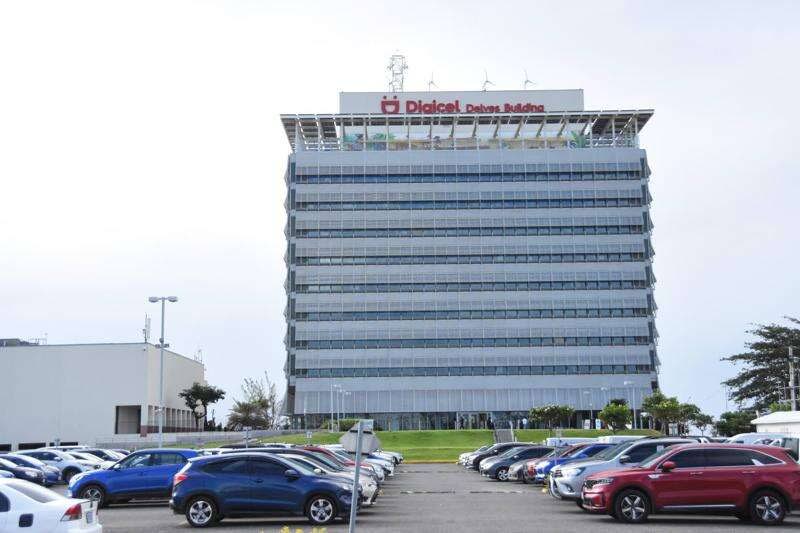
Digicel Jamaica head offices, downtown Kingston.
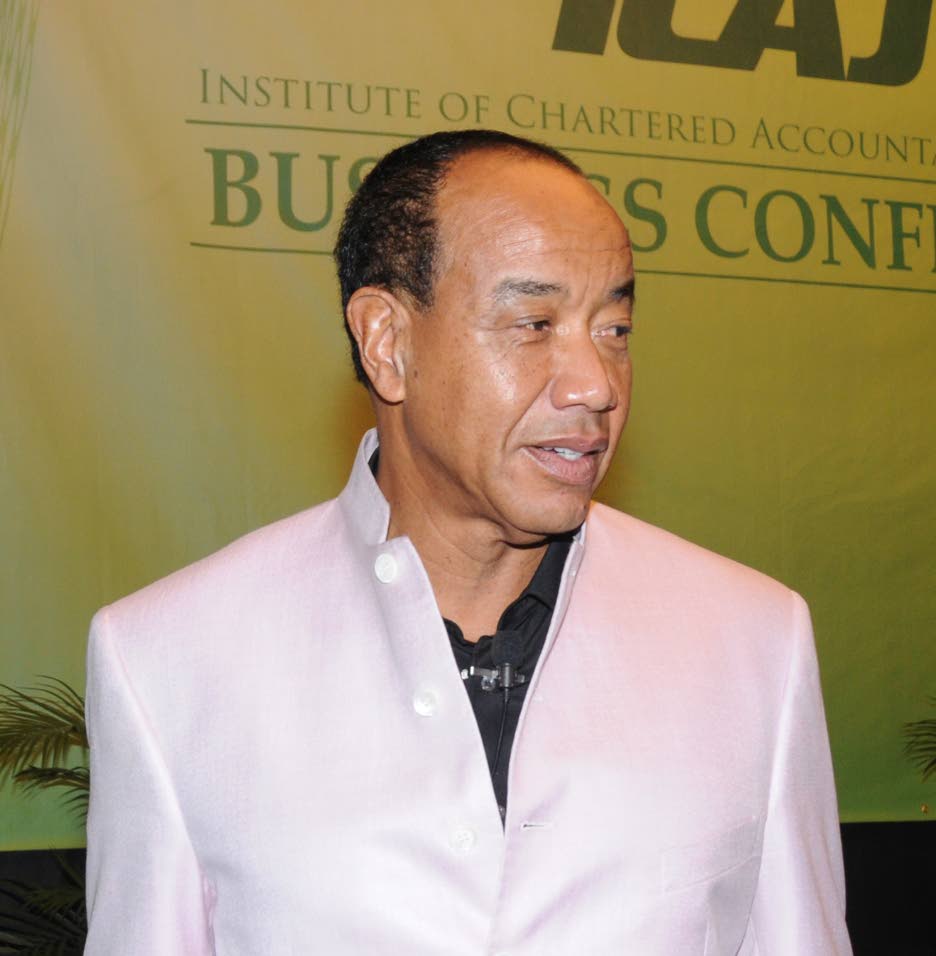
Michael Lee-China

Keith Colliste