‘Apply!’ NHT urges Jamaicans
...reminds options available when property price appears out of reach
OFTEN bashed for offering loan amounts well below the cost of houses they offer for sale, the National Housing Trust (NHT) is reminding prospective homeowners there are ways to get around that challenge.
The advice from NHT’s Corporate Communications & Public Affairs Assistant General Manager Dwayne Berbick is: “Apply!’’
“When you’re selected, then we can have that conversation about what is in the NHT’s toolkit that we can use to make it more affordable for you,” he urged during an interview with the Jamaica Observer’s Real Estate on the Rock.
For houses being sold on the open market, the NHT can lend qualified individuals up to $9 million, while 100 per cent financing is available for houses being sold by the Trust. Using the example of its newly offered 14-unit Vineyard Town development, a qualified individual making at least $24,750 a month would be able to borrow the entire $15 million needed for one of the 430-square-foot studio apartments. After paying the NHT’s standard closing cost of $3,500, there would be monthly payments of $35,750 for the life of the 40-year mortgage. If there are double applicants, the combined monthly payment would be $38,750.
For those daunted by the monthly instalments, Berbick explained how the NHT works with contributors to get them closer to homeownership.
“It’s not just the 100 per cent financing; the NHT also has what we call enablers that we use to work alongside our contributors that boost their affordability, sometimes in the short term, to allow them to purchase the unit,” he said.
“Let’s say the NHT is selling a unit that costs $14 million, and let’s say the person’s affordability is only $12 million after all the calculations are done [to determine the monthly mortgage the individual can afford]. It’s not to say that the NHT will not give the individual the house, but once the individual is selected, then the NHT now engages with the individual to see how we are going to bridge that shortfall,” Berbick added.
A home grant of up to $3.5 million is one of the tools in NHT’s arsenal.
“That’s a free grant amount that goes towards the purchase of the unit once the individual earns less than $30,000 per week and has contributed to the NHT for more than seven years,” said Berbick.
Qualified contributors may also be eligible for deferred financing.
“Once the individual, with his current salary, can afford up to 60 per cent of the cost of the unit, the NHT will provide him with the unit and, over time, we review the circumstances — if the individual gets salary increases, et cetera — and we gradually add the remaining 40 per cent to the loan over the life of the mortgage,” he explained.
There is also the option to share the weight of the purchase via the NHT’s intergenerational mortgage product. This is where a younger relative, for example a child or sibling, helps service the loan if the mortgagor has not paid it off at the time of retirement.
“The point is that individuals should not be discouraged by the prices of the NHT units. NHT sells at cost, [meaning there is no profit added on to the actual price of construction]. However, where we apply what we call our subsidy is in the financing arrangement. In doing that, we ensure that we give it to the individuals who need it the most,” stressed Berbick.
“If the unit costs $14 million, we could discount it and say let’s sell it for $10 million, but then the man who can afford it for $14 million, or could even afford a higher price, ends up benefiting from something he doesn’t need. So we sell the units at cost, and then in our loan financing we apply the different subsidies. That way we ensure that we’re assisting the people who actually need assistance,” he reasoned.
The NHT, he stressed, also works closely with borrowers to help minimise their chances of falling behind on payments.
“It makes no sense that we give you a house that’s above your affordability and in month one and month two, already you’re in default. So we ensure that, through these subsidies and these different financing arrangements, those monthly payments are comfortable for the new mortgagor,” Berbick explained.
But while he urged those longing for a home of their own to apply, the reality is that NHT units — and affordable housing in general — are in high demand.
When the NHT invited applicants for its 14-unit Vineyard Town development in late September, more than 2,000 people applied on the first day alone. For its 245-unit Howard Avenue development, there were more than 2,600 submissions on day one for studio apartments priced at an attractive $9.9 million.
Prospective applicants had days, September 23 to 25, to apply for units in each development. As is the norm for NHT homes, while applications are open to all qualified contributors, preference is given to those who currently live or work near the development for which they are applying. Next in line are those who live or work in adjoining parishes.
In keeping with established guidelines, each development has a number or units reserved for “special groups”, including public sector workers (soldiers, police, nurses, teachers, trade union members, et cetera), young adults, low-income earners, and people who are registered with the Jamaica Council for Persons with Disabilities. For the Howard Avenue development, 184 of the 245 units were allocated to these groups, which left 61 available for other applicants. For Vineyard Town, two of the 14 units were set aside for young adults who wish to apply.
“The units don’t really stay on the market,” acknowledged Berbick.
He explained that when units are near completion — meaning between 85 and 90 per cent of the finishes are in — the NHT begins a two-phased advertising campaign. In the first week it’s all about getting information out there; this may include open houses where prospective buyers are able to view the development and a model unit. The second phase is application intake, and this may last anywhere between two to five days depending on the number of units and the area in which the development is located.
NHT contributors in or around Maxfield Park in St Andrew can look out for upcoming units before the end of this year, according to Berbick. Of the 10,300 houses the NHT now has under construction, Maxfield Park is expected to provide 210. According to the NHT website, these will be a mixture of studios as well as one- and two-bedroom units.
In addition to houses the NHT also offers service lots such as the 27 within the Malvern Housing Development in St Elizabeth which were open for applications between September 30 and 8:00 pm on October 1. Of that number, nine were reserved for special groups. Ranging in size from 835 square metres to 2,150 square metres, the lots were priced between $3.1 million and $5.8 million.
Service lots are parcels of land within a subdivision that already have basic infrastructure in place, such as a road and access to utilities. Buyers are under no obligation to conform to building designs of other units within the scheme but the NHT can make building plans available on request.
“There is no difference in terms of application. Of course, they are cheaper, but the same application process goes and the same 100 per cent financing variable also goes,” said Berbick.
“With the service lots, though, you will ultimately fall under what we call our Build on Own Land facility, which allows you up to $11 million. So, you can use a portion of that $11 million to buy the land, and you can have the remaining amount for construction.
“In the case of the ones that we were selling at Malvern, some cost $3.1 million. A contributor could get 100 per cent financing for that $3.1 million from the NHT and would be able to access the remaining $10.9 million for construction. So it’s offering you the ability to buy the land and also to start construction using your NHT loan allotment,” he added.
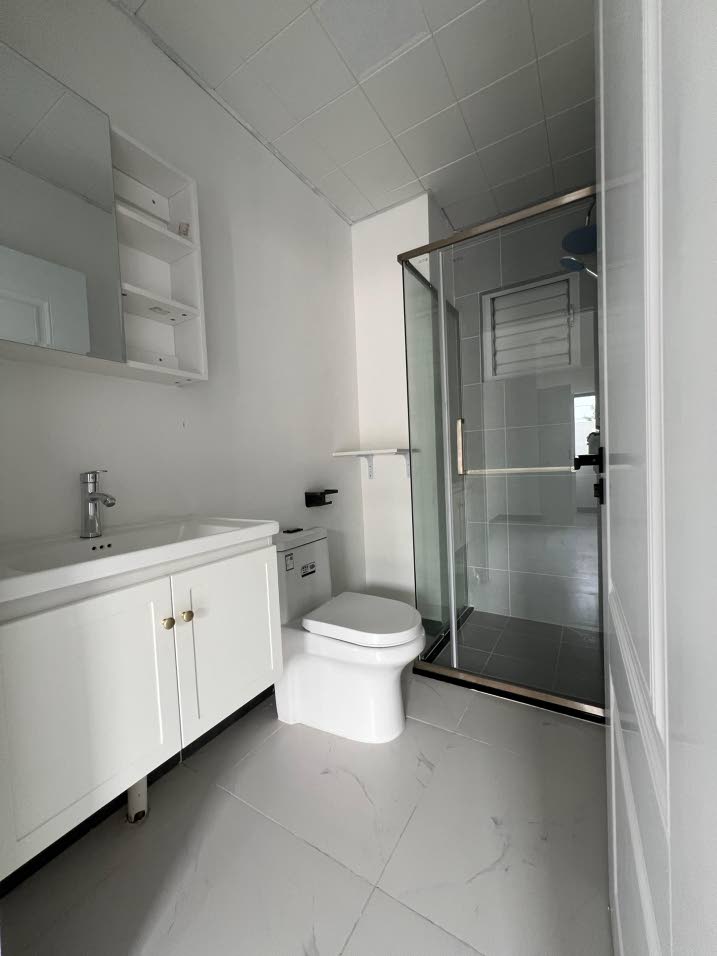
A peek inside the spacious bathroom in one of the apartments that comprise the National Housing Trust’s 245-unit Howard Avenue development.
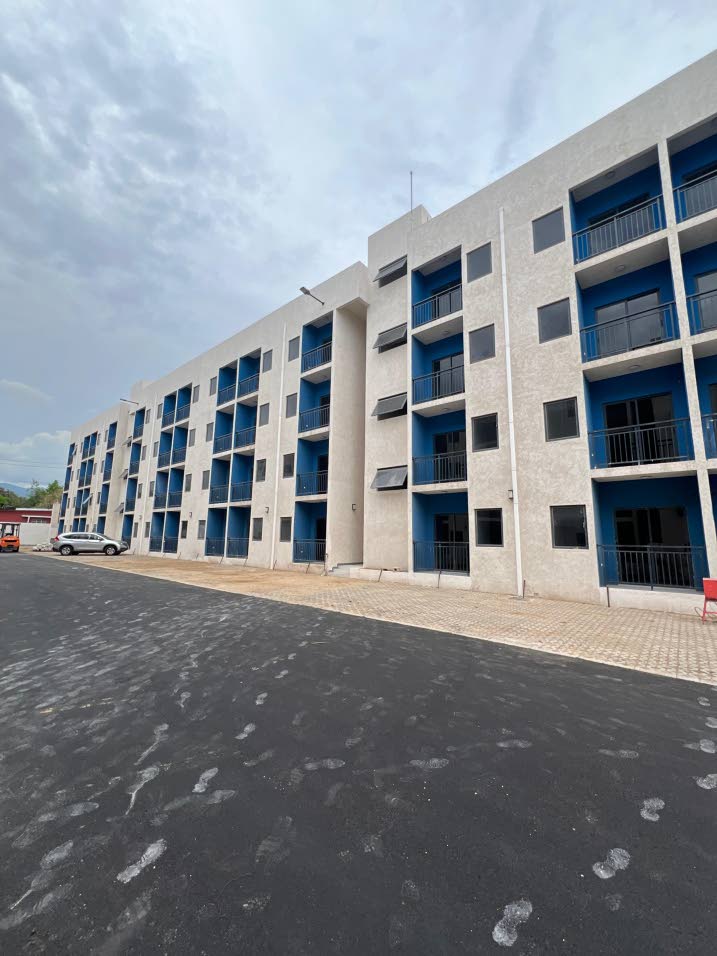
Outside one of the blocks of the National Housing Trust’s Howard Avenue development
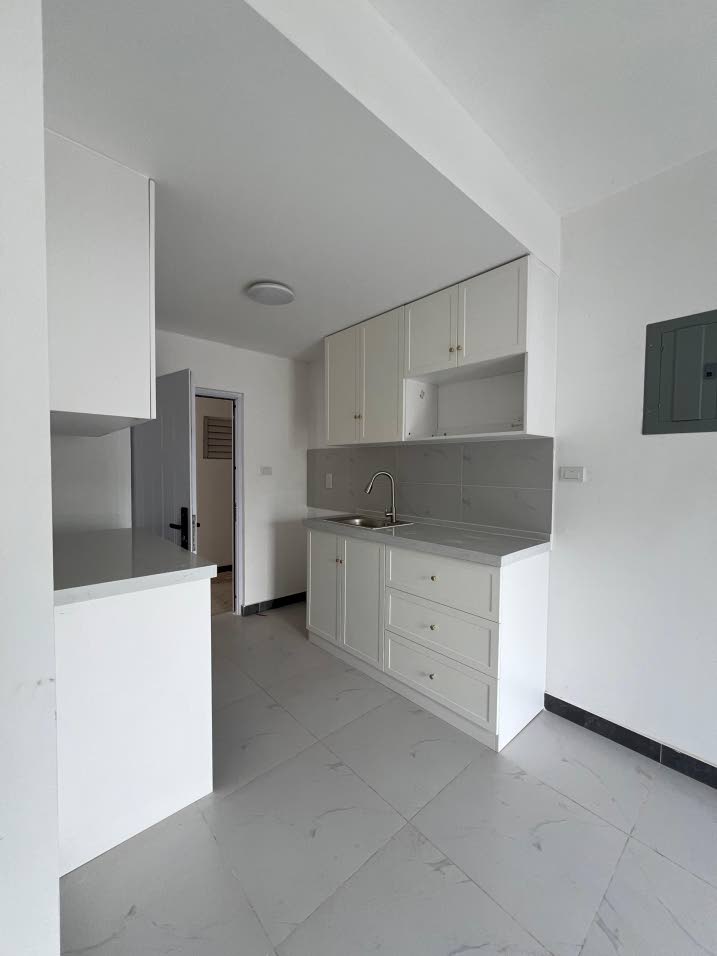
A section of the kitchen area of the open-plan-designed Howard Avenue development offered by the National Housing Trust.