



Get back to business!
Consensus and constitutional reform top expectations as new Parliament convenes
AS Jamaica’s Parliament prepares for its first official sitting this week, political veterans and commentators are urging lawmakers to prioritise unfinished legislation, constitutional reform, and stronger parliamentary accountability, warning that consensus, not confrontation, must define this new term.
The call comes as Members of Parliament (MPs) are expected to return to Gordon House on Tuesday for the start of a new term in the House, following the September 3 General Election. With the swearing in of Cabinet ministers, MPs and senators now completed, and a special orientation session held on September 30 to review the standing orders and remind members of the rules and responsibilities that govern proceedings in the House, attention is now turning to the business of lawmaking — and the task of advancing Jamaica’s development agenda.
The Jamaica Labour Party (JLP) retains control of the House with 35 seats to the Opposition People’s National Party’s (PNP) 28 — a narrower margin than in the last term.
The reduced majority is expected to create a more balanced chamber, potentially setting the stage for livelier debates and greater scrutiny of government policy.
But for former Prime Minister Bruce Golding, one of the main priorities should be to complete legislation left pending from the previous term.
“The last Parliament would have had a number of items on the legislative agenda which have not secured parliamentary approval, so I imagine that those are going to be given priority to see them through,” Golding told the Jamaica Observer during a recent interview.
He added that several policy initiatives promised during the election campaign will also require legislative backing, noting that the Government’s early performance in this Parliament will be judged by how quickly it moves to turn those commitments into policies.
Yet, Golding cautioned that lasting reform — particularly on constitutional matters — will demand cooperation across both sides.
“It has to be conducted in a spirit of mutuality. It can’t be either side taking the position that the other side must be reasonable and do it his way. It requires the leaders, in particular the prime minister and the leader of the Opposition, basically having a framework of agreement on some of the fundamental issues,” he said, stressing that dialogue between the two leaders is essential before wider consensus can be built.
Political commentator Lloyd B Smith also placed constitutional reform at the top of Parliament’s to-do list, describing the slow pace of change as “disappointing”, noting that both the Government and Opposition must move past political differences to resolve Jamaica’s transition to a republic and the issue surrounding the country’s final appellate court.
“The issue of the CCJ [Caribbean Court of Justice], as to whether or not Jamaica should adopt that as its final court of appeal — which has been left hanging for far too long — and I think that is something that would signal to the country that we are serious about becoming a fully independent nation and going into being a republic, so, to me, that would be one aspect of constitutional reform that needs a lot of attention,” he said.
Smith also called for the introduction of a fixed election date and a right of recall mechanism for MPs who fail to perform effectively in their constituencies — measures he believes would strengthen democratic accountability.
Equally important, he said, is the need to reform and empower the Integrity Commission, which is currently restricted by what is referred to as the gag clause under Section 53 of the Integrity Commission Act of 2017, which prevents the commission from commenting publicly on ongoing investigations until a report is tabled in Parliament.
“There’s always this cloud of mystery over the work of the Integrity Commission. It has led to a great level of distrust among the people as to whether our parliamentarians are above board in terms of their levels of honesty, accountability, and transparency,” Smith said.
Furthermore, both Golding and Smith agreed that improved discipline and stronger oversight are crucial if the new Parliament is to win back public confidence. Smith expressed frustration with chronic absenteeism among MPs, saying, “We want value for money.” He argued that parliamentary whips must take their roles more seriously and ensure attendance, even suggesting “naming and shaming” habitual offenders.
“There needs to be a revision, a serious look at the standing orders of the House and the rules and regulations as to how Parliament functions. I think there ought to be sanctions. I think there ought to be some ways and means of bringing to book those parliamentarians who take Parliament for granted, granted that some of them just come there to sleep. But the fact is that we are paying these people a lot of money — they all get very whopping salaries and perks,” Smith added.
Golding noted that in the 1980s, then Prime Minister Edward Seaga tried penalising MPs for missing House or committee meetings by docking their pay, and suggested similar sanctions might be needed again.
“Now, I don’t know to what extent that has proven effective enough, but I think there are two things. I would, first of all, want the party leaders to exert more discipline on their members to ensure that they honour their responsibilities. But secondly, if that doesn’t work, it may be necessary to consider imposing sanctions. Now, you already have a pretty severe sanction where if a member misses six meetings in a row, without having attained the leave of the Speaker, his seat can be declared vacant,“ he suggested.
He continued: “Now we perhaps need to look at that to see whether or not that level of sanction ought to be extended to ensure that Members of Parliament have good and sufficient cause to be absent from a meeting where they are supposed to be present, and the procedure that would have to be followed for that absence to be recognised and accepted.”
The question of who chairs key parliamentary committees is also likely to resurface. Golding reminded that when he was prime minister he allowed the Opposition to lead oversight committees — a practice reversed in the last Parliament.
While acknowledging that government policy committees might need to be chaired by ruling party members who understand the objectives, he believes “that those committees that are designed and intended to be an important check and balance and accountability mechanism on the Government should be chaired by the Opposition”.
Veteran journalist Cliff Hughes echoed that view, saying it would be in the Government’s interest to share control of committees given its reduced majority.
“If good sense prevails the Government may want to give up some of the committee chairs to the Opposition,” he said.
At the same time, Hughes expects the new Parliament to be “a very active, vibrant, robust, and possibly highly cantankerous” one.
With a more balanced composition, he said, Jamaicans can expect livelier debates, stronger scrutiny, and sharper exchanges between Government and Opposition members.
“I think [with] the increased numbers on the parliamentary Opposition benches — and in particular some of those now among the 28 and the fact that it is the third term of the Government — you’re going to have a lot of hostility and issues to contend with, and I think the Opposition feels that it is in a position to tackle the Government in the Parliament with its greater numbers and time on its side,” he said.
Still, he noted that there is room for co-operation on national priorities such as reforming the public procurement system, which both sides have acknowledged needs fixing.
In the meantime, executive chairman of the ATL Pension Fund and columnist Keith Collister said he wants this Parliament to be far more productive than the last.
“There is a need to at least double the parliamentary legislative output. In other words, the amount of legislation passed is way below what it should be. And on top of that, I think there’s a need for greater private sector involvement at an earlier stage in the legislative process in terms of giving thoughts on policy,” he said.
Collister also believes constitutional reform should be handled with patience and public education.
“We have the life of a Parliament to get it done. There’s no need to rush it now. There’s an opportunity to really look at all the issues in a way that, if we’re just trying to do it for a one-year deadline or something, would have been problematic,” he said.
He went further to propose creating a “people’s parliament” — a forum where ordinary citizens can contribute to constitutional discussions — and called for “greater courtesy and good-naturedness” across the aisle to improve the tone of national debate.
“The first thing is, people have to know what is in the constitution, so I think there’s an opportunity to do an education process for the whole country of what is in the constitution. And then the second thing is, we need to think about what is going on globally and understand that we now have to own; we can’t rely on other countries anymore and we have to own our own constitution properly, and so we have to do the reforms that work for us,” he explained.
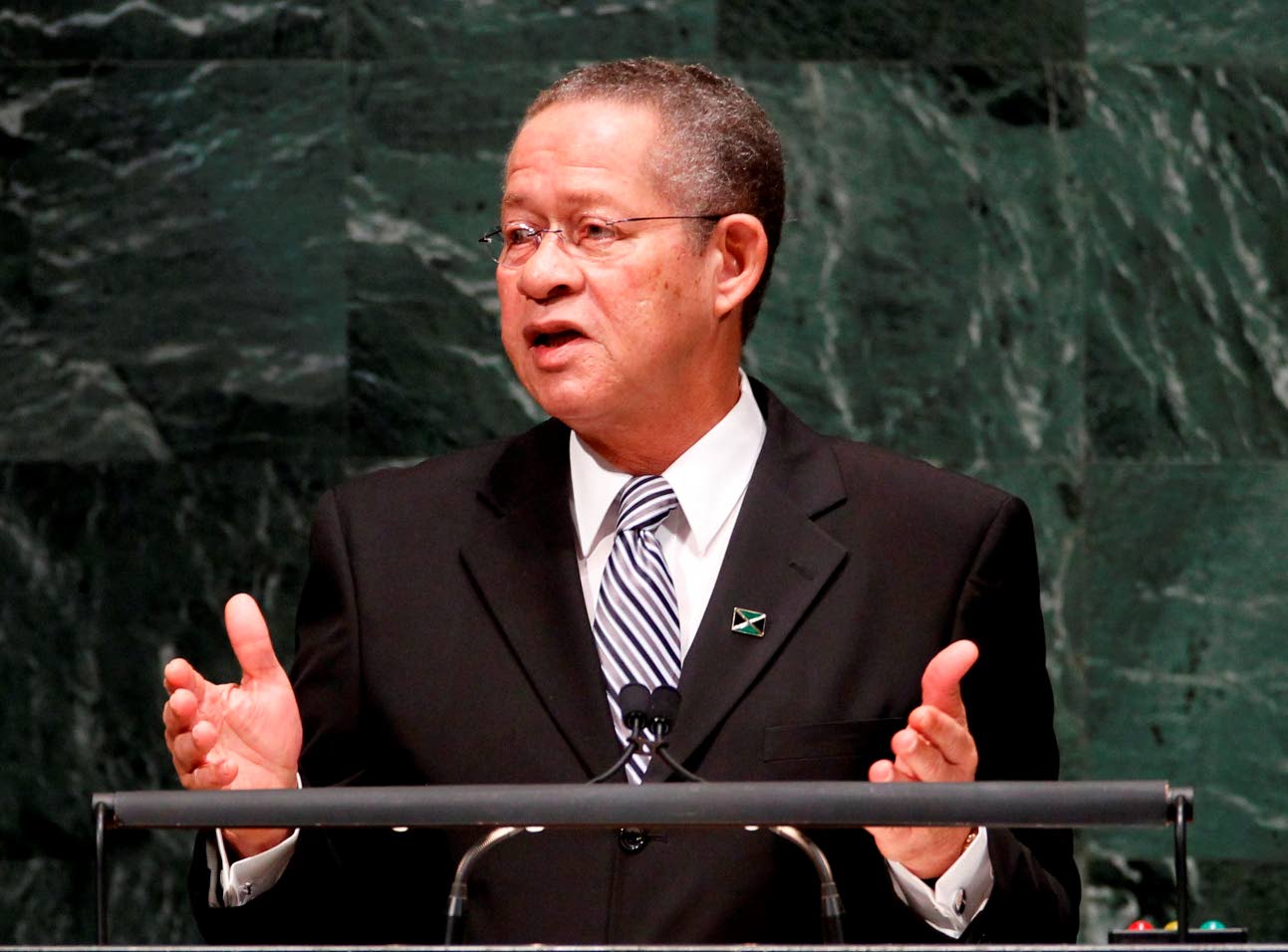
GOLDING… cautioned that lasting reform — particularly on constitutional matters — will demand cooperation across both sides
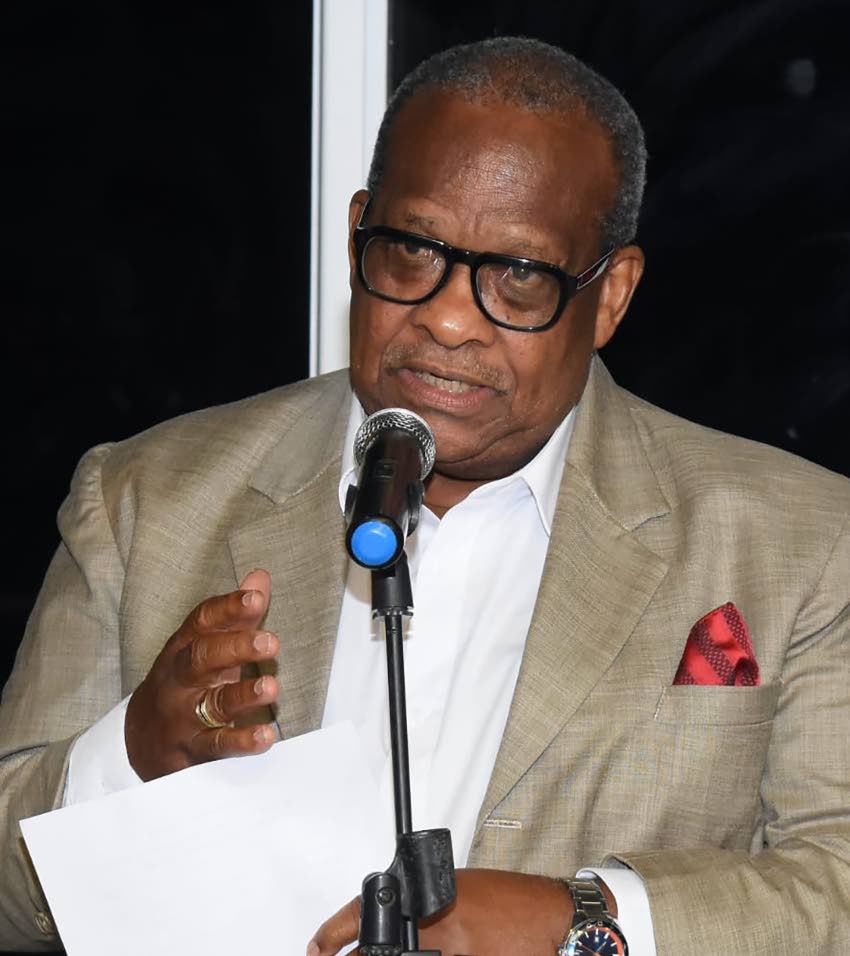
SMITH… expressed frustration with chronic absenteeism among MPs, saying, “We want value for money”.
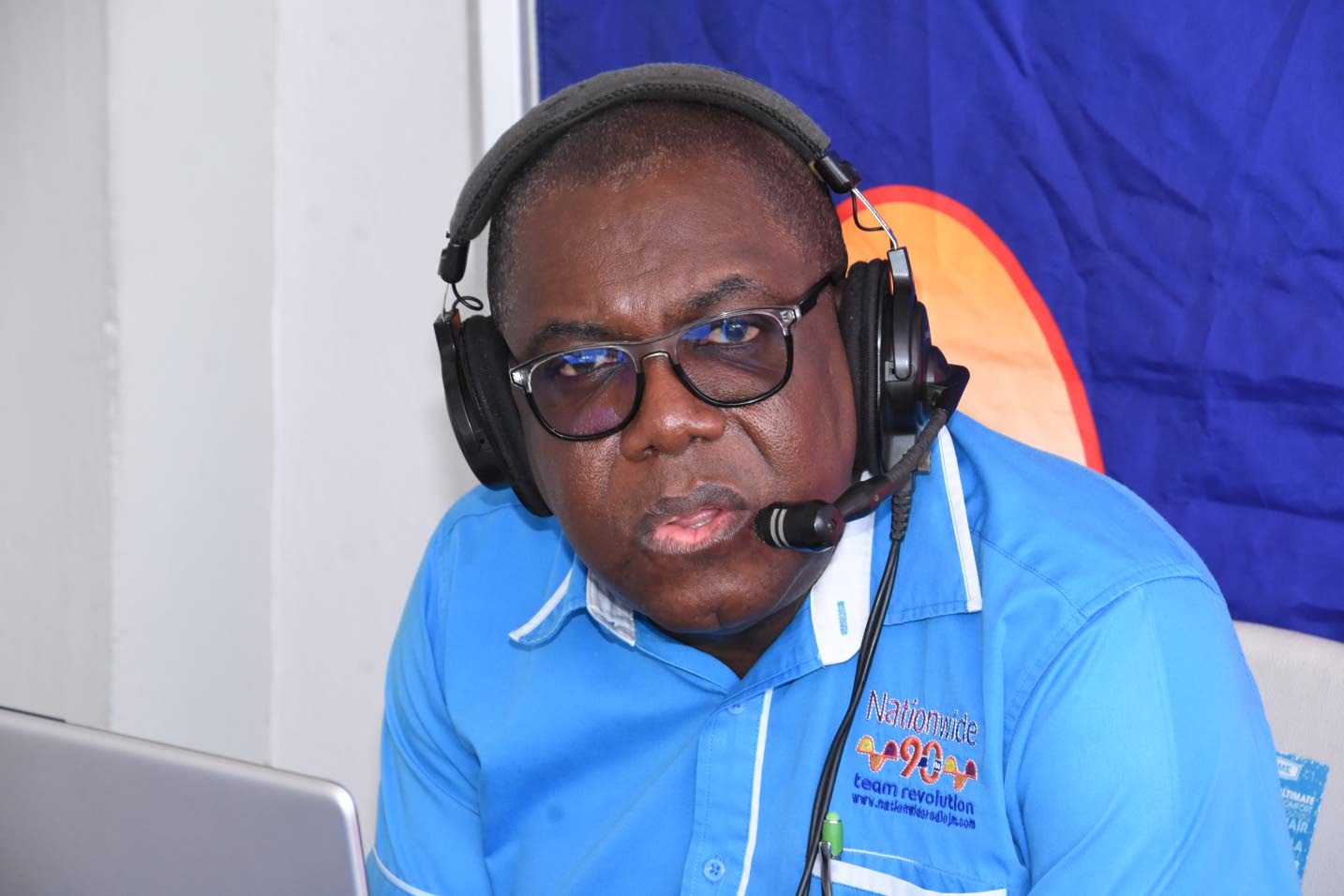
HUGHES…expects the new Parliament to be “a very active, vibrant, robust and possibly highly cantankerous” one.
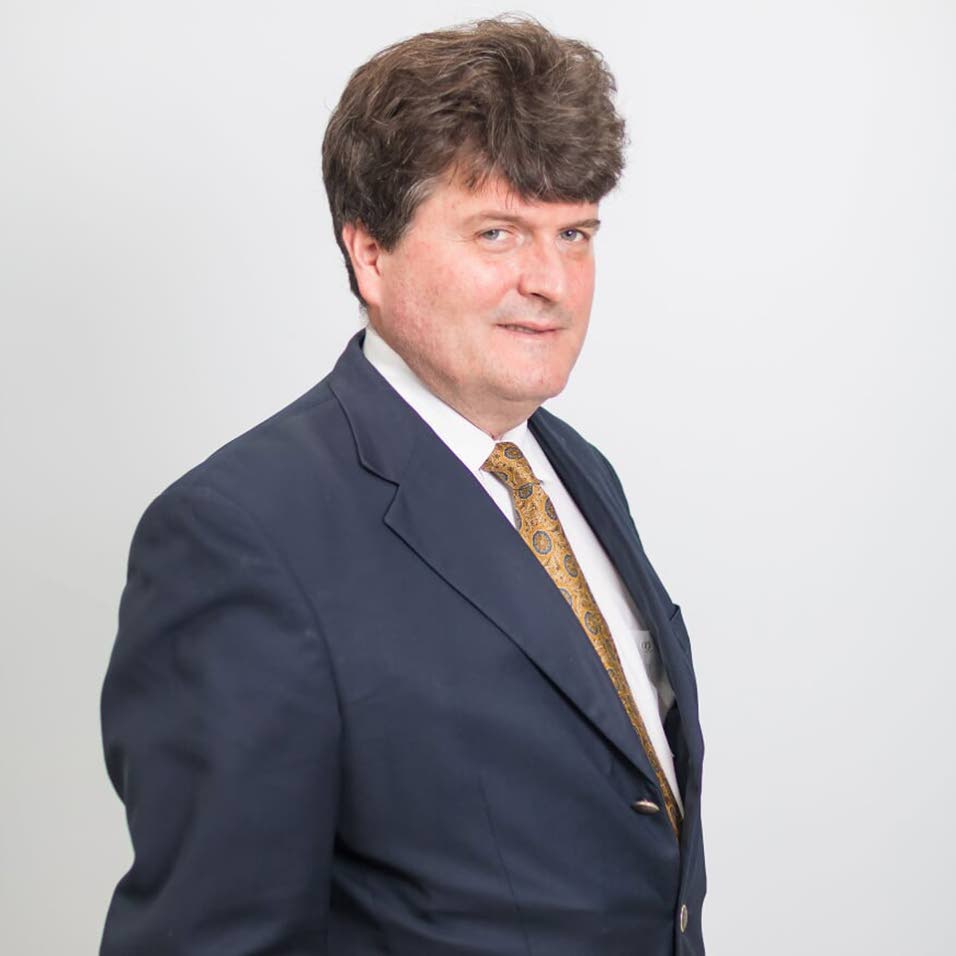
COLLISTER..there’s a need for greater private sector involvement at an earlier stage in the legislative process in terms of giving thoughts on policys
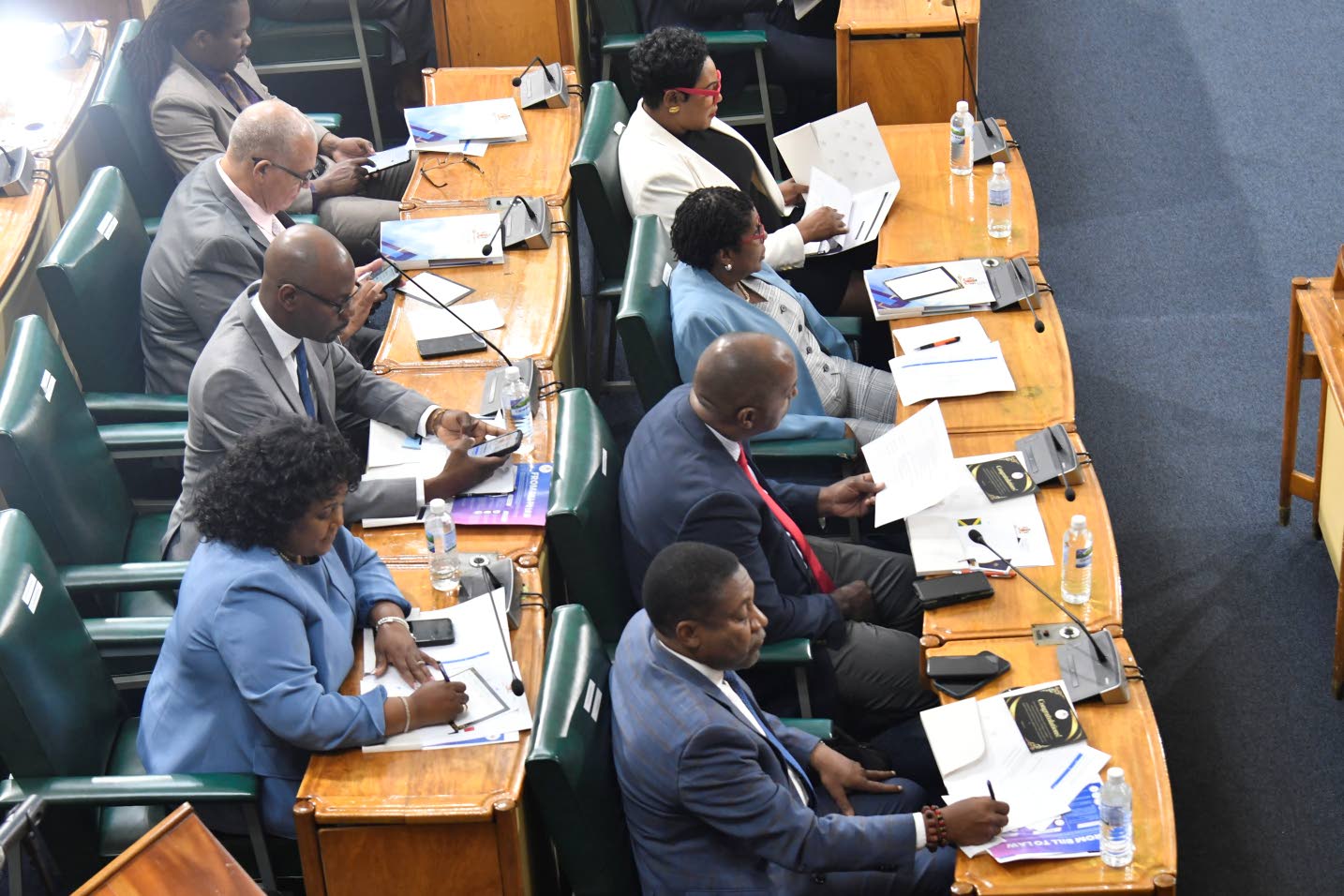
Opposition Members of Parliament (MPs) at the recent orientation session for MPs at Gordon House. (Photo: Karl Mclarty)


