



CCJ president touts value of regional court
NEWLY installed Caribbean Court of Justice (CCJ) President Justice Winston Anderson on Monday pointed out that even while seven states have continued to take their appeals in criminal and civil matters to the United Kingdom Privy Council, they have increasingly cited and relied on judgments handed down by the regional court.
Speaking during a Special Sitting at the Seat of the Court in Port-of-Spain, Trinidad, to commemorate his elevation to the office of CCJ president, Justice Anderson said whilst the accession of the seven remaining jurisdictions is anticipated, this “important phenomenon should not go unnoticed”.
“CCJ decisions in the appellate jurisdiction are given favourable treatment and are increasingly being cited and relied upon by judiciaries in countries which have not yet acceded to the appellate jurisdiction,” Justice Anderson stated.
He said a recent study indicates that there are at least 450 instances in which courts in non-appellate jurisdiction countries have accepted and relied upon CCJ decisions in numerous areas such as constitutional and statutory interpretation, criminal law and sentencing, enforcement of foreign judgments and awards, commercial law, and adverse possession.
“This trend is an encouraging sign for the development of a body of jurisprudence applicable across the entire region,” he told the sitting, which also marked the beginning of the 2025/2026 court year.
The CCJ was established in 2005 as an appellate jurisdiction and an original jurisdiction. All 12 Caricom member states have signed the agreement establishing the CCJ in its original jurisdiction as the court of first instance which applies rules of international law in respect of the interpretation and application of the Revised Treaty of Chaguaramas. However, in its appellate jurisdiction the CCJ serves as the final court of appeal in civil and criminal matters for only five countries — Barbados, Belize, Dominica, Guyana, and Saint Lucia.
On Monday, Justice Anderson said, “the existence of the CCJ has significantly increased the access by Caribbean citizens to final appellate justice”.
“For example, there were 19 appeals from Barbados to the Privy Council in the 20 years immediately before 2005. In the 20 years since then there have been 105 appeals from Barbados to the CCJ, an increase of over 450 per cent. In the case of Belize there were 33 appeals to the Privy Council in the 15 years before accession to the CCJ’s appellate jurisdiction in 2010. Since then, there have been 56 appeals from Belize to the CCJ, an increase of over 69 per cent,” he said.
Justice Anderson said for Dominica, the numbers were three to the Privy Council in the 10 years before joining in 2015 and 10 in the 10 years since then, an increase of 233 per cent.
“St Lucia sent one appeal to the Privy Council in the two years immediately before joining the appellate jurisdiction in 2023 and sent five to the CCJ in the two years since — an increase of 400 per cent. The average increase in appeals has been 288 per cent. I should say that Guyana is the court’s largest or best consumer of appellate services but the comparisons are not easily made, given that that member State abolished appeals to the Privy Council in 1970,” he noted.
“On the hypotheses of an average increase of 288 per cent in appeals, there would have been a significantly larger number of CCJ appellate jurisdictions decisions had there been full compliance with the obligation in the CCJ agreement for all member states to join the appellate jurisdiction of the court,” Justice Anderson opined.
“Instead of 307 decisions there would have been approximately 1,200 decisions. The opportunity cost of non-accession can therefore be measured in terms of reduced access to justice, which is also a denial of justice. Equally, there is a corresponding loss — the opportunity to fulfil the mandate of the CCJ agreement to develop a Caribbean jurisprudence that is responsive to all areas of Caribbean life,” he said further.
In the meantime, Justice Anderson said in the 20 years of its existence, the CCJ has accumulated a significant body of judicial precedence, delivering a total of 347 decisions comprising 40 in the original jurisdiction — including one advisory opinion — and 307 decisions in the appellate jurisdiction.
He paid homage to the foundational work of his predecessors in the office and said over the course of his tenure he hopes, “to continue progressing the efficiency and transparency of the court’s work”.
“Continued production of the superior judgements,” he said, will be prime among the areas of the CCJ’s judicial work “which will receive special attention”.
“While our caseload has been modest, decisions of the court have begun to shape the way that we, the Caribbean people, live our lives and how we see ourselves. I suspect that this view needs little advocacy in relation to the original jurisdiction in which all 12 Caricom member states participate. The CCJ has firmly rooted the Caricom Single Market and Economy in the rule of law, ensuring that the rights of all community nationals are respected,” he stated.
“A sense of belonging to a community governed by law has begun to take shape in our region. The greater work remains to be done in relation to the appellate jurisdiction. We hope and have reason to believe that the people of those member states who have acceded to the appellate jurisdiction recognise our contribution, and we hope that those states which have not yet acceded will ultimately come to appreciate the value the court offers to the region,” the CCJ president said.
Justice Anderson, a Jamaican who succeeded former CCJ President Justice Adrian Saunders, was on Sunday, July 6, 2025 officially sworn in as the fourth president of the CCJ during the 49th Regular Meeting of the Conference of Heads of Government of Caricom, chaired by Prime Minister Dr Andrew Holness in Montego Bay, St James. He was first sworn in as a judge of the CCJ in June 2010 and was the first Jamaican and the youngest judge ever appointed to the CCJ at age 49.
On Monday he was described as, “the quintessential Caribbean jurist”, a scholar, and a shining example of Caribbean erudition — testament to the confidence that must be had in the abilities of Caribbean peoples.
Jamaica currently subscribes to the United Kingdom (UK) Privy Council as its final court of appeal on criminal and civil matters, even as it seeks to alter its constitution to detach from the UK and become a republic.
The decision over whether the country should use the Privy Council or CCJ has become a major talking point in the process of constitutional reform. The Opposition People’s National Party maintains it cannot support the constitutional reform Bill put forward by the Government as long as the Privy Council remains the country’s appellate court, while the Government has stated its preference for Jamaica to have its own apex court — but that decision must be made by the Jamaica people in a referendum.
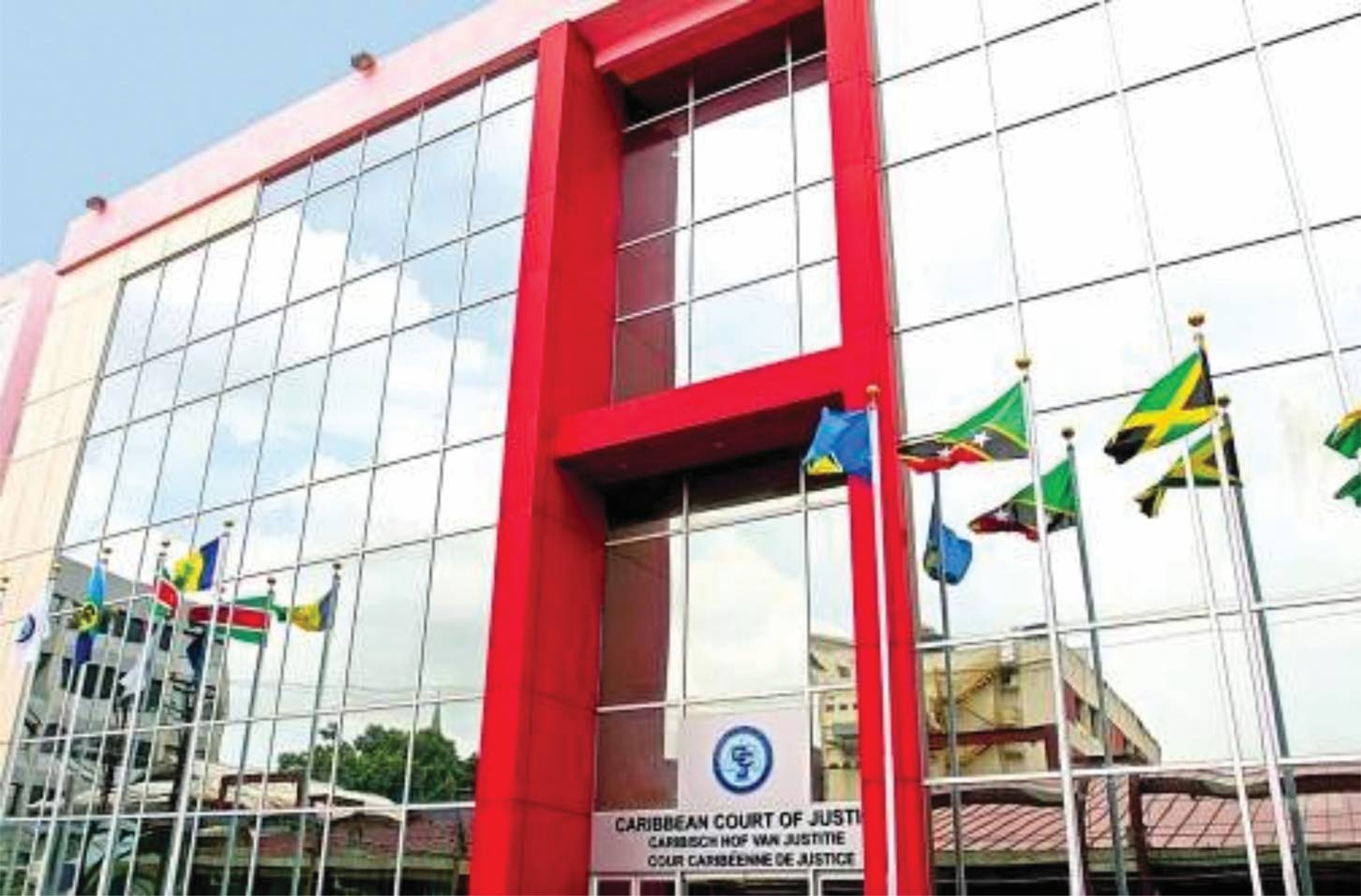
Caribbean Court of Justice in Port-of-Spain, Trinidad


