Creative Resilience Kicks Off Design Week 2025
Coverage of the launch of Jamaica Observer’s #DesignWeekJa2025, held Sunday, October 5, at the S Hotel in New Kingston continues.
Under the theme ‘Creative Resilience’, guests convened to kick off an inspiring week of sharing ideas and insight. Given the ongoing environmental challenges affecting the Jamaican design landscape, an impressive panel of industry experts provided information on designing for the future.
The panel featured National Housing Trust (NHT) Assistant General Manager – Corporate Communications and Public Affairs Dwayne Berbick; Water Resources Authority Managing Director Peter Clarke; Lucea Caribbean CEO Heather Pinnock; Sagicor Group Jamaica Vice-President – Real Estate Peta-Gaye Simpson; Fosrich Company Limited founder and Managing Director Cecil Foster, and Kitchen/Bath Tune-Up franchise principal Steven Livingston.
NHT Assistant General Manager – Corporate Communications and Public Affairs Dwayne Berbick
Delving into proactive building for environmental changes, Berbick highlighted specific design modifications implemented with climate vulnerabilities in mind.
“We want to design homes that adapt and can respond to changing weather. We’re seeing more earthquakes. We’re having more intense rainfall here in Jamaica. And so we have to ensure that when we do design, we’re not just planning for the aesthetics and the beauty of it, but we’re building structures that can withstand these changing weather conditions,” Berbick outlined. “There are some features of Jamaican housing that have worked over the years. They’re not always cute, I must admit. But they serve a particular purpose.”
These features, all aimed at improving a building’s structural integrity, range from small roof overhangs designed to resist storm uplift and small glass panes that increase hurricane safety, to high ceilings that enhance a home’s natural cooling, features that may not win style points, but are effective when it matters most.
“When we do have hurricanes [now] in Jamaica, the damage is not as intensive as it used to be. The result in part is due to building smarter, stronger, and we’re building, of course, with more resilience,” Berbick said.
While outlining the various NHT offerings — which champion creative resilience through loans for building, buying, and repairing structures, support for sustainable initiatives (like solar and rainwater harvesting), and work to rebuild critical infrastructure in early communities — Berbick emphasised that building for the future is not just about structural integrity and sustainability; it is a direct path to generational wealth.
Water Resources Authority Managing Director Peter Clarke
Addressing the impact of climate change on Jamaica’s water resources, Clarke used his presentation, ‘Water Resources & Development’, to outline necessary responses. While solutions currently range from short-term water trucking and rainwater harvesting to long-term sector improvements like new dam construction, Clarke prompted consideration of the Hermitage Dam’s future, as the critical structure approaches its 100th year.
“The question is, do we raise the dam walls higher so you have more storage behind it? Or do we build a new dam a little bit downstream? My own opinion is to build a new dam. Hermitage Dam in two years will be 100 years old. It is one of the oldest working dams on the planet. [So] I suspect that there may be some fragility when it comes to all of the [dam’s structure],” Clarke said.
Additionally, given the changing flood profile, Clarke cautioned the audience about the dangers of building in flood-prone areas, stressing that such projects are inherently risky and can cause irreparable damage.
“A lot of our communities are built on floodplains or along rivers. People have taken the chance to build [in these areas]. Some have gotten away with it, but some have not. A lot of our floods have changed because of our construction. So when our floods used to carry 90 per cent water and 10 per cent silt, some of our floods now carry 90 per cent silt and 10 per cent water,” Clarke said.
Lucea Caribbean CEO
Heather Pinnock
Expounding on ‘Designing for an Uncertain Future’, Pinnock explored Jamaica’s climate change vulnerability, demonstrating how creative resilience can simultaneously generate profit, improve the planet, and benefit the people who inhabit it. To boost profitability, she emphasised the need to diversify income streams through green entrepreneurship and creative design, while also urging the adoption of a circular economy that prioritises reusing, recycling, and repurposing.
“We need to, as we move into our unpredictable future, give more consideration to waste. There is a way we have operated where we think that we can throw things away. Everything you throw away ends up somewhere,” Pinnock said. “We cannot take useful things and throw them away. There is an opportunity there to find things that people aren’t using or are getting rid of that can be used in other ways and support building at various levels,” Pinnock said.
To demonstrate creative resilience for the planet, Pinnock argued that the focus must shift from merely using renewable energy to cut costs toward fundamentally conserving our limited resources.
“The most important thing in energy is conservation. That is, turning it off when there’s no use for it. In the use of energy, that is far more important than putting solar on the roof. So the ability to only use power, energy when you need to, is the baseline and the most important thing in energy. The next level is still not solar, but to use energy efficiently. And the same is true with water. The conservation of anything is the baseline of handling it well,” Pinnock advised.
Concluding her presentation, Pinnock gave the audience actionable ideas ranging from designing spaces driven by the community to ensuring design outcomes prioritise equity and inclusivity.
“We have to consider everyone who will use your space, not only strong, able-bodied people who will use your space,” Pinnock stressed.
Sagicor Group Jamaica Vice-President – Real Estate
Peta-Gaye Simpson
Referencing her work on the One Belmont development project, a high-rise commercial complex, Simpson used her ‘Built to Endure’ presentation to illustrate how creative resilience is the key to delivering successful, within-budget environmental projects that maintain high safety standards and serve as models for future construction.
“This wasn’t just another commercial building. It was a structured vision with specific tenets in mind. A place where sustainability, safety, and dependability were non-negotiable. From hurricane resistance to fire security, from smart infrastructure to over 300 parking bays, One Belmont was built for endurance. Without compromising the breathtaking views of Kingston and the Blue Mountains, it was a bold example of creative thinking from the developer’s side,” Simpson reflected. “Despite the rise in construction costs, the project was delivered within budget variance of a single digit. And if you’re in construction, you know how difficult that is to do these days. That’s what resilience looks like in real time.”
With resilient structures representing the future of design, Simpson stressed that safety takes on heightened importance, especially as taller buildings become the norm in Jamaica. She emphasised that this commitment to safety must extend from the construction site through to the end product.
“As we construct bigger and taller buildings across Jamaica, we must keep safety at the forefront. Not just as a compliance measure, but as a core value. It’s about care. It’s about ensuring that everyone goes home the way they came here. And that our sites reflect the same discipline and foresight that we demand of our designers and professionals,” Simpson said.
Fosrich Company Limited founder and Managing Director Cecil Foster
Foster’s presentation on ‘The Importance of Lighting in Design’, highlighted how crucial a light’s colour temperature is for customising a space’s atmosphere. He broke down the uses of soft white, bright white, and day light, explaining how each option impacts the experience depending on the location.
“If you use day light, you might be in trouble if you use it in the wrong space. It’s good to use it in your kitchen or in your bathroom. Bright white or cool white is what you see in most hotels that are well-designed across the globe. So you have to make sure that you know the experience you want,” Foster advised.
He also outlined the distinct advantages of using light-emitting diodes (LED), noting their increased adoption as a standard element in current building designs.
“Architects can use lights to change a commercial space. These days, the world has gone to LEDs that save energy. Ninety per cent of the energy that you use in incandescent bulbs, you don’t have to use it when you use LEDs. They give you more genuine light than any other light out there, and they are flexible, and robust,” Foster said.
Kitchen/Bath Tune-Up franchise principal Steven Livingston
Livingston’s presentation, ‘From Billion-Dollar Brands to Family Blueprints’, shared lessons learned during his time as a franchise owner, focusing on how to build profitable, enduring customer experiences. He stressed that a business structure built to last is essential for delivering the kind of experience that justifies its price, citing his own company’s growing pains as proof.
“I learned to start again with the design in mind. What’s that structure that you’re going to need when you are starting? Put that in place, and stick to it. You want to have a structure that can operate without you,” Livingston said. “Think about the people that you need to put in place. When you’re doing everything, the accounting, and the marketing, you won’t find time to be able to hire the people that should be doing it.”
Livingston outlined that having the ideal structure, involving the process, technology and the people to support the structure, will go a long way in not only providing customers with a memorable experience but to command a price that will turn your business profitable.
Closing his presentation, Livingston brought his experience full-circle, urging attendees to ensure their business structures are built to last and achieve long-term success.
“Start with the end in mind. If it ends with you, it wasn’t a design; you were just decorating the place. So I encourage everyone to design something. Leave a legacy. Make it go beyond your existence,” Livingston encouraged.
The launch concluded perfectly with Livingston’s presentation, setting the tone for a week brimming with new ideas.
#DesignWeekJA2025
continues with coverage from Arc Manufacturing.

Water Resources Authority Managing Director Peter Clarke provided an insightful presentation on ‘Water Resources & Development’. (Photo: Garfield Robinson)
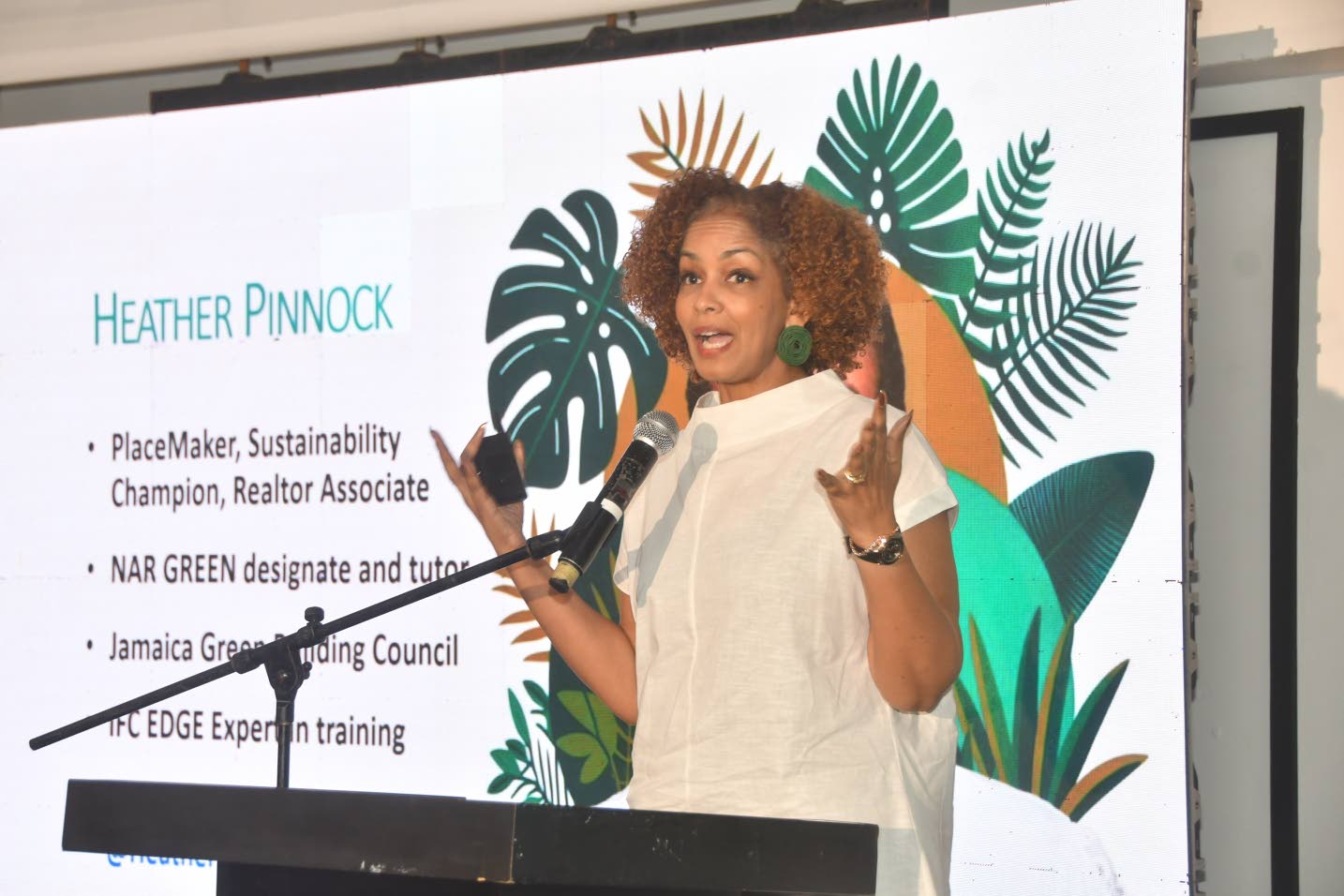
Lucea Caribbean CEO Heather Pinnock spoke on ‘Designing for an Uncertain Future’. (Photo: Garfield Robinson)
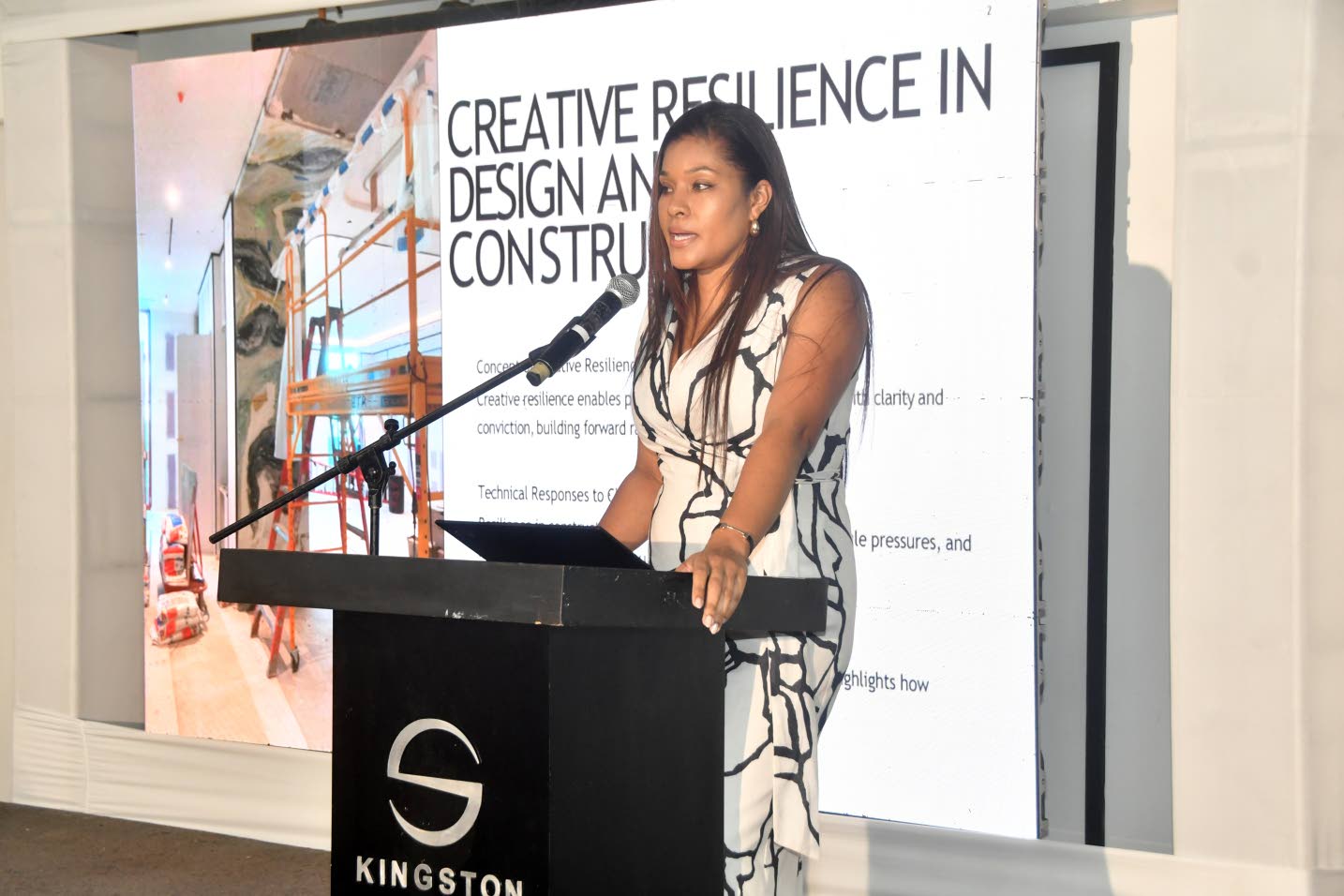
Sagicor Group Jamaica Vice-President of Real Estate, Peta-Gaye Simpson, used her experience to highlight key elements on the topic ‘Build to Endure’. (Photo: Garfield Robinson)

Fosrich Company Limited founder and Managing Director Cecil Foster delivered an engaging presentation on ‘The Importance of Lighting in Design’. (Photo: Garfield Robinson)
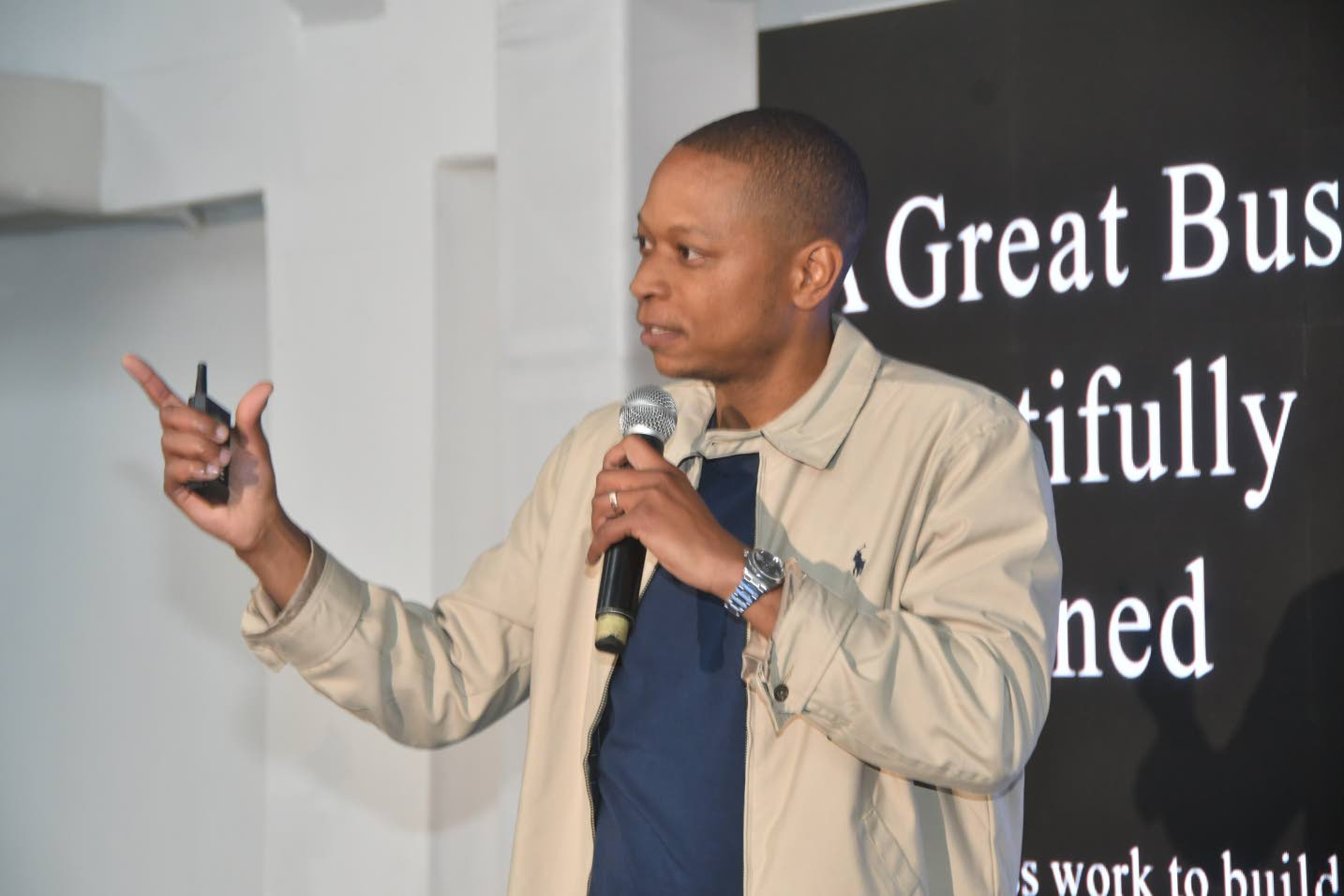
Kitchen/Bath Tune-Up franchise principal Steven Livingston makes a point during his presentation, ‘From Billion-Dollar Brands to Family Blueprints’. (Photo: Garfield Robinson)