



Wambugu apple takes root in Jamaica
…aims to outgrow foreign imports
Jamaica is now growing what it once imported as the Wambugu apple from Kenya shows promising results on local farms and in a number of backyard gardens.
Through an initiative being led by Latoya Panton, a passionate organic farmer and the official Wambugu apple ambassador in Jamaica, steps are now being taken to diversify Jamaica’s fruit production and to make foreign variants of apple a home-grown staple rather than a costly import.
Discovering the fruit online and later moving to learn more about its production, Panton, after visiting Kenya twice, later became the main facilitator of importation for seedlings from the African country.
“I applied for the permit to import seedlings in December 2019 and by April 2021 it was granted,” she explained. “I ordered 50 bare-root seedlings from Kenya, but due to shipping delays caused by the COVID-19 pandemic, 49 of them died. I was left with one tree — but I didn’t give up,” she told the Jamaica Observer as she outlined the journey of bringing the products to local shore — a journey she also regarded as a labour of love.
Determined to see the apple take root in Jamaica, Panton reached out directly to Kate and Matthew Wambugu, the family behind the apple’s development in Kenya. In early 2022, 1,000 seedlings were sent via courier, but upon arrival at Norman Manley International Airport (NMIA) they were confiscated and destroyed by Jamaica’s Plant Quarantine Division due to irregularities in the shipment. Her import permit was also suspended but was reinstated months after persistent follow-up.
“In July 2022 a new shipment arrived, and this time it was approved,” Panton noted.
Following the distribution of seedlings to a handful of farmers and gardening enthusiasts across the island, the trees, to much delight, thereafter not only survived but thrived — showing early blossoms and fruit.
Designed for resilience, the Wambugu apple tree flourishes in both hot and cold conditions, making it ideally suited for tropical environments. Each tree has a lifespan of 80 to 100 years, can bear up to 500 apples within five years, and requires significantly less water than other fruit trees — a key advantage in drought-prone areas.
Despite some challenges with its production, the fruit, which has been steadily capturing interest, is now being planted by a growing number of farmers and some backyard gardeners. A total of 1,200 trees can be planted on any single acre, making it commercially viable.
“We now have farmers in St Elizabeth, Westmoreland, and Manchester as well as in the Amity Hall Agro Park in St Catherine planting Wambugu apples. One farmer in Manchester got her first commercial crate in July of this year. The oldest trees on the island are at least three years old, so we should be seeing an increase in production by next year. While sale to the wider public has not begun, feedback from customers of the farmer who harvested the first crate has been largely positive,” Panton said.
“The College of Agriculture, Science and Education (CASE) is also currently conducting research into the commercial viability of the fruit on the island. We are looking forward to this research as we aim to make these apples more available to Jamaicans and others in the wider Caribbean. We have also sent seedlings to our neighbours in Trinidad and Antigua who are now reaping apples in these countries,” she further stated.
The Wambugu apple, which today continues to be well received locally, sees consumers praising its crisp texture and sweet, juicy flavour. Each fruit weighs about 100-150 grams, is elongated in shape, and typically carries a red colour with specks of yellow. A fruit tree can take approximately nine months to bear fruit once properly cared for.
Amid growing appreciation for the apple, Panton said its growth locally could significantly provide a sustainable alternative to expensive imports.
“Why import/buy what we can grow? We were told that this fruit would not grow in Jamaica, but today we have more trees while yielding greater production, which, at some point in the future, could also allow us to commence exports,” Panton said.
In an upcoming trip scheduled for October 13, 2025, Kate Wambugu is expected to make her first official visit to Jamaica, where she will tour farms, meet with local farmers, and visit CASE to observe the research in progress. She is also expected to bring more apple seedlings as well as some dragon fruit plants, all being done as part of a broader initiative aimed at building a lasting agricultural bridge between Kenya and Jamaica.
“Kenya’s economy is rooted in agriculture and there is so much that Jamaica can learn from their knowledge and expertise — the Wambugu apple is just the beginning,” Panton said.
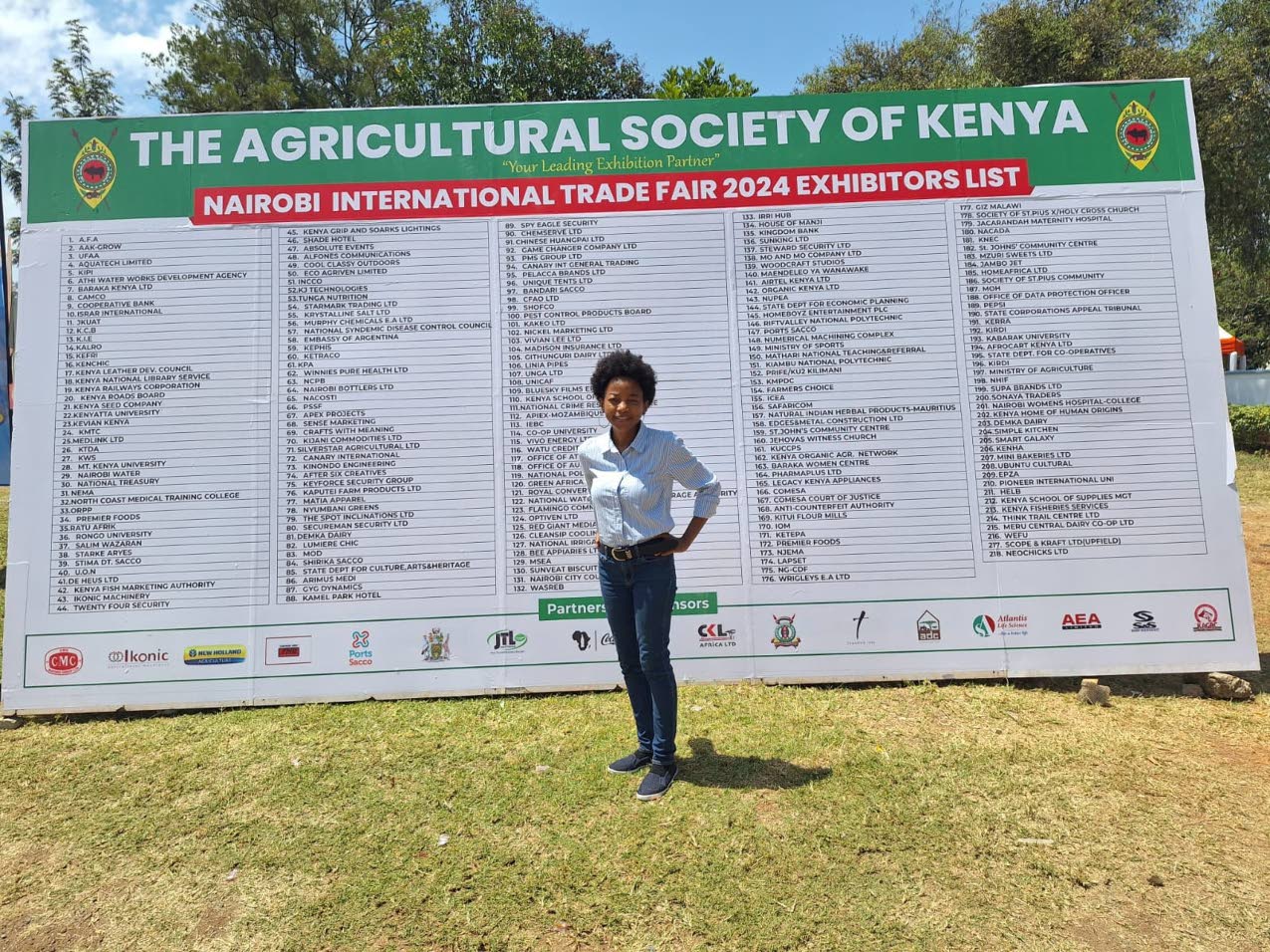
Latoya Panton, Wambugu apple ambassador in Jamaica, photographed during one of her trips to Kenya.
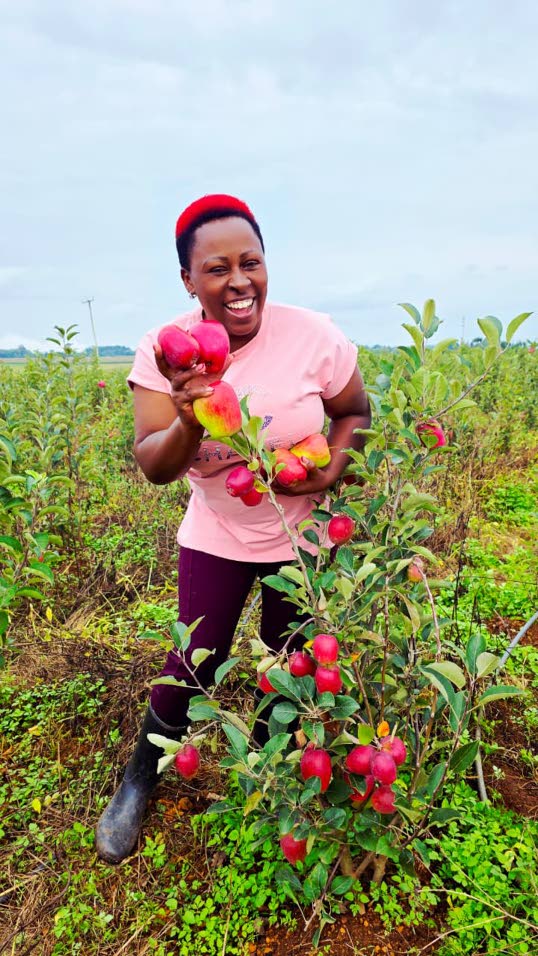
Kate Wambugu, in an upcoming trip scheduled for October 13, is expected to make her first official visit to Jamaica, where she will tour farms, meet with local farmers and visit CASE to observe the research progress.


