



5 years, no progress
Facility for mentally ill prisoners still on hold despite call for urgent action
Five years after the Mental Health (Offenders) Inquiry Committee commissioned by Chief Justice Bryan Sykes called on the health ministry to “take urgent action to designate appropriate facilities” to hold the hundreds of mentally ill people in conflict with the law being detained in correctional institutions, the entity is yet to identify a space.
“We are still working on a facility for them outside of the prison system for them to be housed in a more humane situation,” consultant psychiatrist and director, Mental Health and Substance Use in the ministry Dr Kevin Goulbourne disclosed at last week’s Jamaica Observer Monday Exchange.
The committee of 11 individuals included representatives from the judiciary, the Independent Jamaica Council for Human Rights, Bellevue Hospital, the Department of Correctional Services (DCS), and the health and wellness ministry — had been tasked to probe the reasons for the failures leading to hundreds of mentally ill people in conflict with the law being detained in correctional institutions, some as many as five decades with half listed as awaiting trial.
In the report unveiled in October 2020 the committee said correctional facilities were never designed to focus on the therapeutic needs of mentally ill defendants and, as such, the correctional services have encountered several major challenges in dealing with their housing and care.
By law, Bellevue Hospital in Kingston is the designated public psychiatric facility at which mentally ill defendants should be detained. However, this responsibility was shifted to the shoulders of the DCS in the 1970s and has not been redirected.
“The Ministry of Health needs to take urgent action to designate appropriate facilities for the mentally disordered defendants. These persons have not yet been to trial and have not been found guilty. Correctional facilities are reserved for persons who are serving time,” committee chair Justice Georgiana Fraser said at the time while noting that the court should also be given the discretion to place these individuals in a court diversion programme.
The committee, in its major recommendations, said the improvements being made to the DCS do not cure the failure of successive ministers of health to designate any other psychiatric facility.
Last week, Goulbourne said this has not been lost on ministry officials.
“This has been an ongoing issue with mentally ill offenders as to how best to manage these persons, and in the past we have managed them at the Bellevue Hospital when it used to have a Forensic Unit, but that doesn’t exist any longer. Now we actually have a psychiatric team within the correctional services. One of the problems we were having in the past is that they were not being assessed early enough for them to be processed,” Goulbourne noted.
He, in the meantime, said the ministry is also focused on working with the mental health teams in communities and corrections officials to ensure that when individuals are discharged they are monitored so as to prevent the situation wherein the ministry only becomes aware of their existence when they reoffend.
Calls for the establishment of a forensic psychiatric unit to hold mentally disordered individuals in conflict with law and who are unfit to plead have grown louder over the years. There are reportedly some 300 such individuals in the system.
Health and Wellness Minister Dr Christopher Tufton, in the meantime, said the ministry could not work in isolation where mentally ill individuals in conflict with the law are concerned.
“I think it is important for us to recognise that …someone who commits a crime and is found guilty and placed in a system, the mental health response to that person, having done an evaluation, would have to be in conjunction with whatever term they have to serve,” he maintained.
“We do have a relationship currently, and we work with the prison system and their medical team. The issue is, how we can, in a more comprehensive way, deal with mental health while persons are incarcerated. It really requires a separation of the population, and that separation would have to come from a joint collaboration between the justice and security arrangement and, of course, the Ministry of Health,” Tufton said.
“The extent to which the persons are there and can’t [offer a] plea because of their mental health issues, to the extent that we are requested to intervene and provide support, we will and we do. Maybe there needs to be a more efficient way to do it, but we work with the prison system to ensure that we give support whenever that support is required,” Tufton added.
The chief justice, in commissioning the report, had acknowledged that the court is accountable in part for the fate of defendants who have been incarcerated when found unfit to plead, as well as defendants who do become fit to plead but have not been brought before the courts in a timely way. He mandated that this situation be corrected.
The law, at present, does not allow for the absolute discharge of a mentally disordered defendant unless he/she was tried and found not guilty.


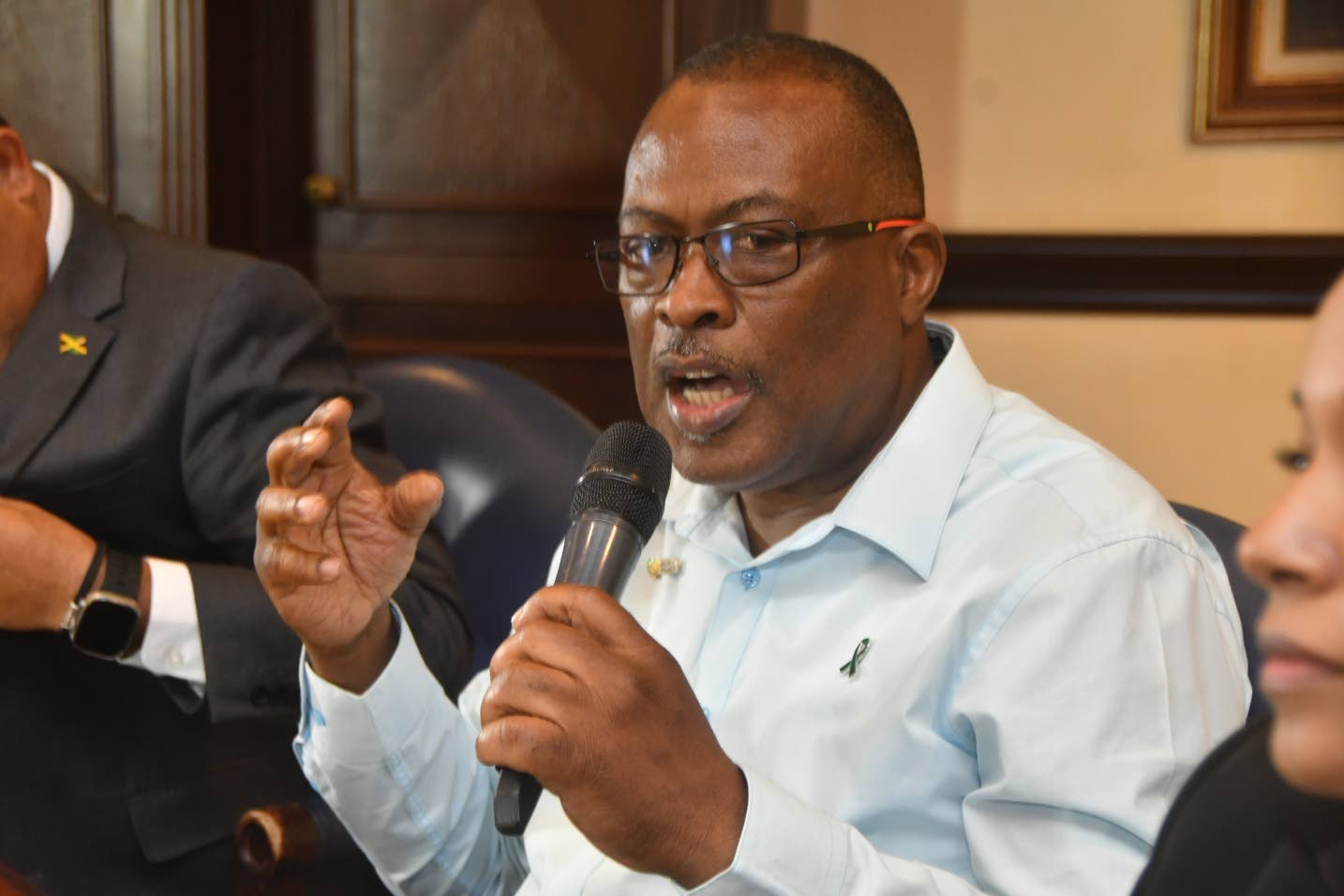
GOULBOURNE… we are still working on a facility for them outside of the prison system (Photo: Garfield Robinson)


