Integrity key to effective corporate governance, says ICAJ
INTEGRITY must come first in corporate governance. That was the warning to business leaders, accountants, and chief financial officers gathered at the Institute of Chartered Accountants of Jamaica (ICAJ) Business Conference at the Pegasus hotel in Kingston. Speakers stressed that poor governance doesn’t just cost companies; it can cost the country and individual reputations.
“Corporate governance is really setting out the principles upon which you actually run an organisation over time,” Archibald Campbell, past president of ICAJ, explained.
Defining corporate governance according to the standards of the Organisation for Economic Cooperation and Development, it is a system of rules, practices, and processes by which companies are directed and controlled, outlining the distribution of rights and responsibilities among key participants. Its primary purpose is to ensure accountability, especially when ownership and management are separate, and to guarantee that decisions are made in the best interest of all stakeholders. Campbell explained that ethical practices help to reduce uncertainty within an organisation. This is achieved by establishing clear systems of direction and control, along with defined rights and responsibilities for individuals across the company. Strong corporate governance ensures that these systems are in place to keep the organisation operating effectively. This includes having functional audit, compensation, risk, and nomination committees to provide oversight and accountability. Another issue raised was the importance of selecting the right directors. Speakers cautioned that in a small country like Jamaica, conflicts of interest can easily arise, such as when a board member also serves as a consultant. While disclosure is important, they warned that it may not always be enough to prevent self-serving decisions. The tendency to appoint friends and family to boards can also create risks, as such directors may be less likely to challenge decisions or hold leaders accountable.
“If you have a group of yes-people… run from that company. There is a thing called groupthink; you all think alike, which means you don’t see trouble,” warned Allison Peart, a member of ICAJ’s tax committee.
She also warned against underpaying professionals, stressing that quality comes at a cost. Inadequate compensation for chartered accountants was highlighted as one of the major issues by Peart, who noted that ineffective corporate governance often stems from companies failing to value and pay for the skills of qualified accountants properly.
“If you are improperly compensating people, you’re not compensating for ethics, but for ‘runnings’, [and] you’re going to get a company that will run somewhere,” she said.
As for accountants in the industry, Peart cautioned employees to be mindful of the organisations they choose to work for, noting that every workplace contributes to their professional reputation. She warned that ineffective corporate governance can cost someone not only their job but also make them unemployable in the long run.
“As an employee, you must understand your own risk management, because nobody wants an accountant associated with a failed company,” she advised.
Extending the discussion on corporate governance beyond accountants and corporations, attention was also turned to the evolving role of chief financial officers. Camille Facey, partner at Facey Law, noted that they must now consider the broader impact of their company’s products and services, not only on profits but also on public health and the environment. With the planet’s resources under strain, she emphasised that value creation must now be achieved in a sustainable manner.
“Your role now has broadened, and your role now is to ensure that all relevant aspects of value creation and value destruction are accounted for and communicated to boards, management and external stakeholders,” said Facey.
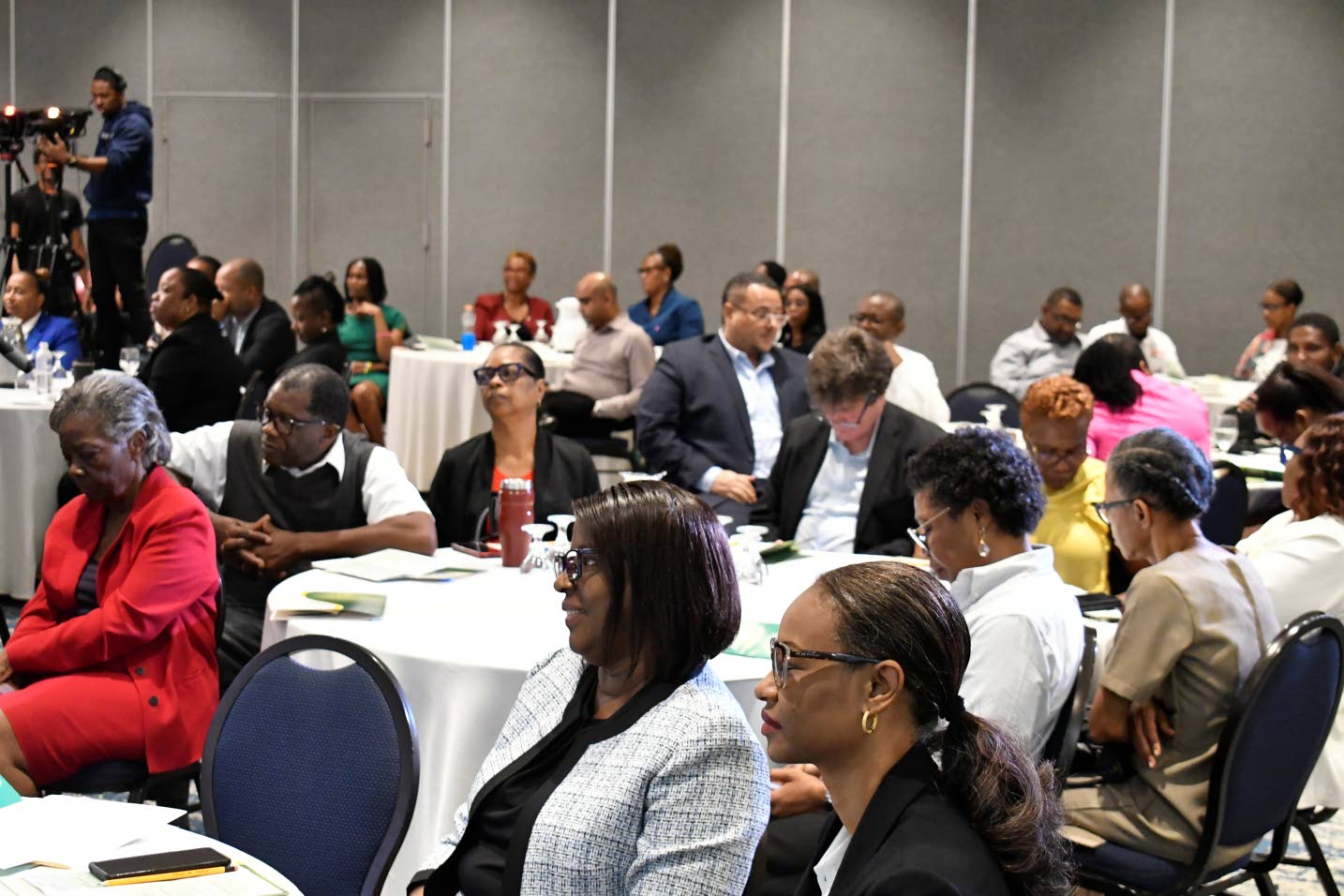
A room filled with accountants and financial controllers at the recent ICAJ Business conference (Photo: Karl Mclarty)
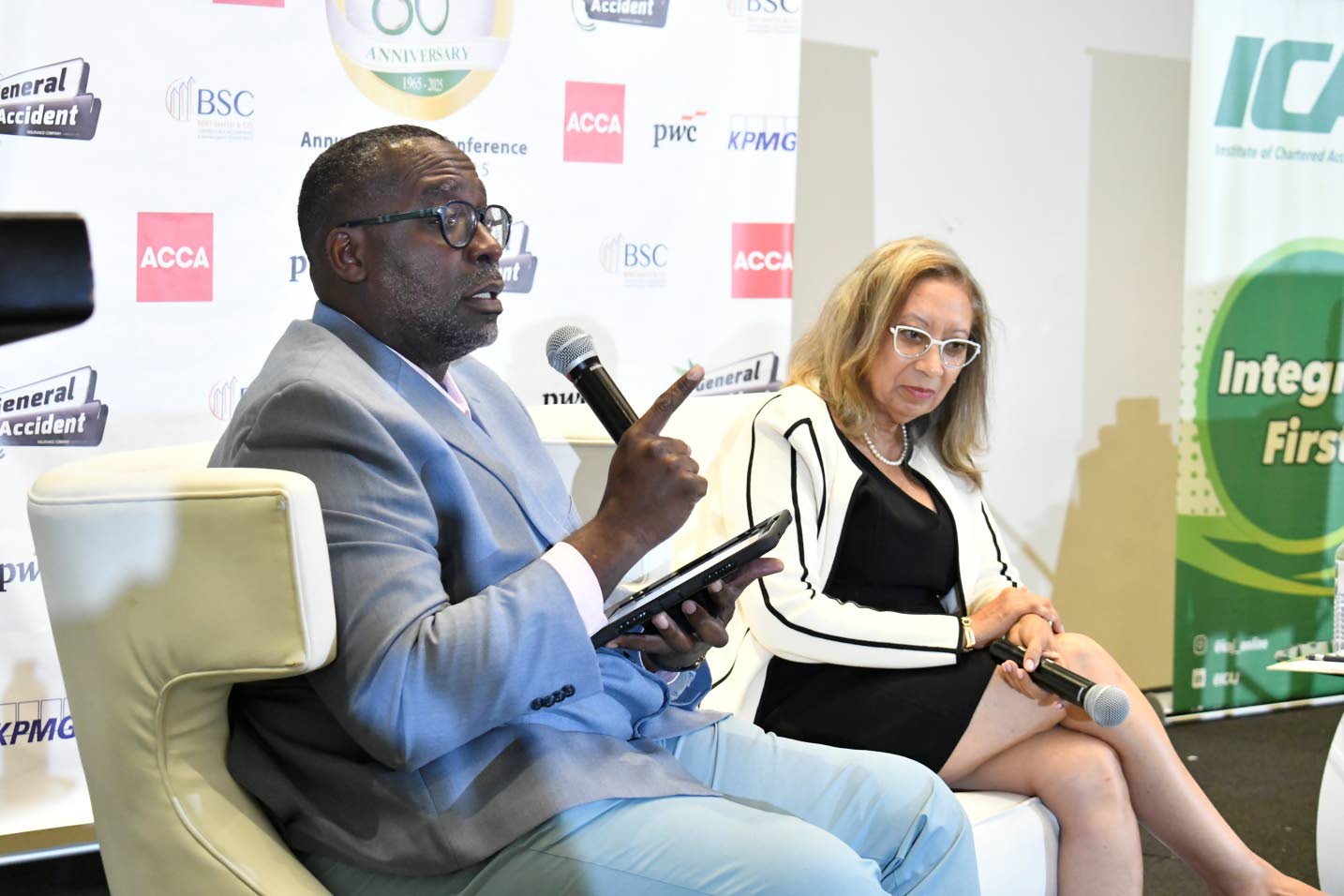
Moderator Garfield Reece and partner at Facey Law Camille Facey who briefly touched on the evolving role of the CFO. (Photo: Karl Mclarty)