



Passion and purpose drive Negril family’s rabbit farm
NEGRIL, Westmoreland — Smack in the hills of Negril is a quaint business that stands out from the norm. Founded in November 2024, J D Wilson Rabbitry is a family-operated enterprise that has quickly become an example of passion and purpose in Jamaica’s agricultural landscape.
Damion and Jhoenea Wilson’s decision to venture into rabbit farming stemmed from a genuine passion for animals and a commitment to promoting healthier living.
“Rabbits are the closest to replicating human family behaviours,” Jhoenea shared, adding that their goal is to introduce a healthier meat option into family nutrition while also utilising by-products such as manure to support sustainable farming projects.
The rabbitry currently raises three major breeds — the New Zealand White, Chinchilla, and Flemish Giant, all known for their superior meat quality and distinctive fur. The farm supplies rabbits for pets, meat, fur and manure from faeces.
Like many new ventures, J D Wilson Rabbitry faced its share of early challenges. Chief among them was maintaining the good health of young kittens, which are highly susceptible to illness. However, through determination and research, the Wilsons overcame these obstacles.
“When passion meets business, it’s pure magic,” Damion stated.
Running the rabbitry requires a structured routine and teamwork. Every family member plays a role to ensure the success of the business. Kadeea, at age six, is very invested and takes her work seriously. She lends a hand in the petting department when it comes to feeding and watering. When orders come in, she matches the pets’ personality with prospective owners.
Naje, the youngest of the lot at two years old, assists with feeding and cleaning the rabbit coops. Each day begins at 4:30 am and ends around 6:30 pm with family members rotating responsibilities around work and school schedules.
Before starting the business, the Wilsons conducted extensive research to ensure their rabbits receive the best nutrition possible. Their diet includes balanced pellets and fresh vegetation such as Spanish needle, purple water grass, banana leaves, and breadfruit leaves, all grown on the family’s property.
The rabbitry maintains strict hygiene standards: hutches are cleaned and sterilised weekly, and the rabbits are provided with fresh water twice daily and new pellets each morning. Breeding pairs are carefully selected after careful observation and testing to ensure strong, healthy offspring.
J D Wilson Rabbitry’s clientèle includes families, farmers, and local consumers, with the meat marketed as a healthy, sustainable protein option. The farm also has ongoing discussions with pharmaceutical companies interested in utilising rabbit fur for specialised products.
Processing is done humanely and with care. All rabbits are dispatched under humane conditions, with the meat processed in a sterilised environment and packaged in sealed five-pound parcels.
Although farm tours are not currently available due to ongoing development projects, the Wilsons plan to eventually open an educational farm to teach community members about rabbit care, sustainability, and the business of farming.
They acknowledge that, like any business, rabbit farming comes with its share of obstacles.
“Our biggest challenge right now is keeping up with demand,” they explained. “We have a waiting list for pet rabbits that extends to March 2026.”
To manage operational costs, the family grows much of the rabbits’ food themselves. Their self-sustaining model turns rabbit waste into manure, which fertilises the same crops that feed the animals.
“What the rabbit eats gives it nutrition, and what it doesn’t absorb becomes manure to nourish its own food supply,” Damion said.
Sustainability is at the heart of J D Wilson Rabbitry. The Wilsons’ approach not only reduces costs but also contributes to environmental conservation by recycling natural resources within their operation.
They believe rabbit farming holds tremendous potential for Jamaica’s agricultural future.
“It’s still a young industry,” Damion noted, “but even though there are other rabbitries across the island, none are quite like ours. J D Wilson Rabbitry is family-oriented and family-driven.”
Their advice to aspiring farmers is simple yet profound: “Do it for the passion, not the profit. The passion will reap the profits in due time. You’ll face losses, but if you love what you do success will follow.”
The Wilsons have ambitious goals for the future. In the short term, they plan to expand operations and increase capacity to meet local demand. Long term, they aim to export Jamaican-bred rabbit meat, showcasing to the world that Jamaica’s rabbit products are as unique and high-quality as its people.
Looking toward the next decade, they hope to see greater public awareness of the nutritional and economic value of rabbit farming.
“We want Jamaicans to understand the benefits of rabbit meat and its by-products,” Jhoenea said. “With the right education and support, rabbit farming can become one of Jamaica’s strongest agricultural assets.”
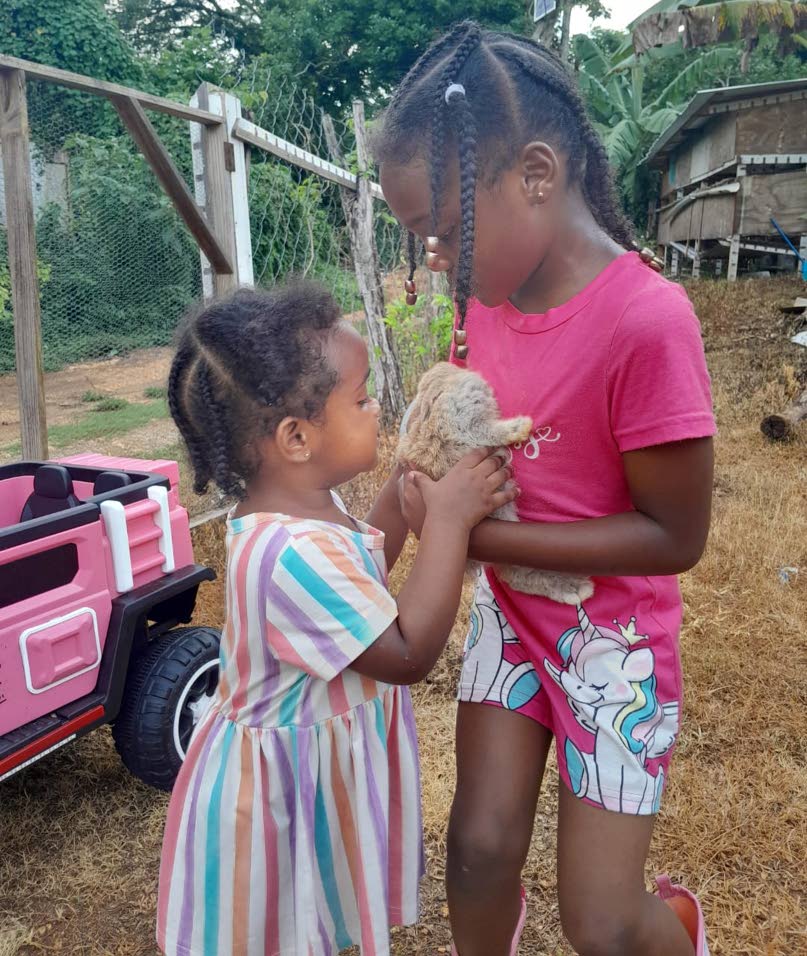
Naje and Kadeea with one of the rabbits on the family farm, J D Wilson Rabbitry. The venture provides meat, pets, fur and manure to its customers. (Photo: Rosalee Wood Condell)
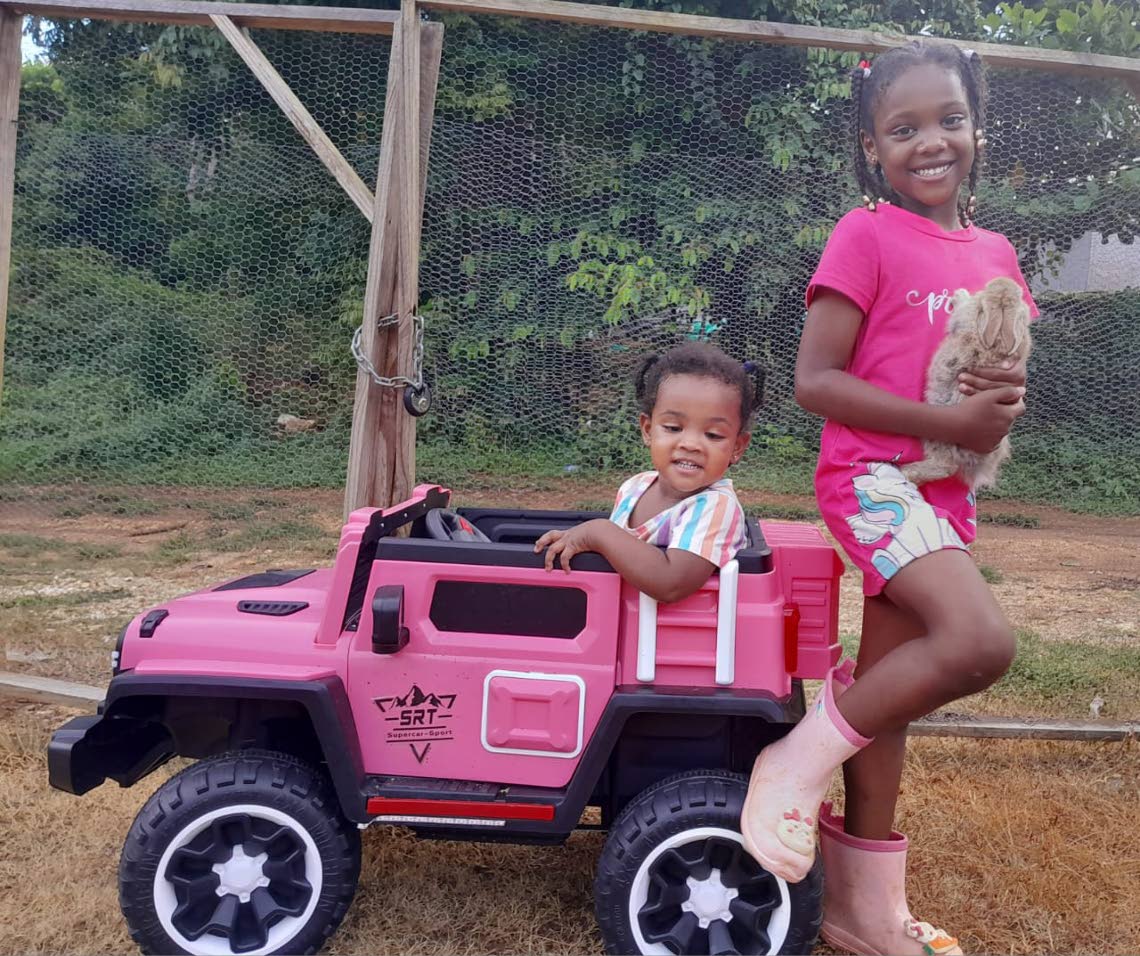
Naje and Kadeea Wilson incorporating into playtime one of the rabbits from the family farm. (Photo: Rosalee Wood Condell)


