



Seprod partners with ICRISAT and CPSO to boost cattle feed security
In a landmark initiative aimed at transforming Jamaica’s livestock sector and enhancing regional food security, Seprod Limited has entered into a strategic partnership with the International Crops Research Institute for the Semi-Arid Tropics (ICRISAT) and the Caricom Private Sector Organisation (CPSO).
The partnership seeks to introduce advanced forage solutions, targeting persistent fodder shortages that have long hampered cattle productivity across the Caribbean. By leveraging cutting-edge agricultural research and private sector capabilities, the collaboration aims to accelerate the adoption of climate-resilient and sustainable livestock feed systems.
ICRISAT, the world’s leading institute for dryland agriculture, will for the first time bring its frontier science and global expertise to the region — joining forces with one of the Caribbean’s largest food manufacturing and distribution companies.
“With CPSO’s visionary leadership in convening this partnership and Seprod’s drive to champion its success, ICRISAT is proud to bring advanced agricultural innovation to Caricom, complementing local expertise,” commented director general of ICRISAT, Dr Himanshu Pathak.
“ICRISAT is part of the CGIAR system and committed to sharing frontier science that delivers strong economic and social returns, and we look forward to making a lasting impact across the region through this initiative,” he added.
Following a recent visit to the island, it was highlighted that Jamaica currently suffers from a 20–30 per cent forage shortage, a challenge that significantly affects cattle health and dairy productivity as milk yields often fall below the break-even threshold of 12 liters per cow per day. This deficit not only impacts the local dairy industry but also fuels dependence on costly imported animal feed.
To address this, the partnership therefore seeks to fast-track the development and deployment of superior forage and dual-purpose sorghum varieties — a proven solution in arid climates. Sorghum, when paired with modern silage technologies, offers enhanced nutrition, greater yield potential, and improved climate resilience.
Under the leadership of Dr Ephrem Habyarimana, ICRISAT’s principal investigator, the project will begin by testing 10 elite multi-cut forage sorghum lines across two growing seasons. The aim is to identify 1–2 top-performing, locally adaptable varieties for rapid commercial roll-out. With the right varieties and crop management practices, sorghum has the potential to significantly strengthen food and feed systems across the Caribbean. It supports not only animal nutrition but the broader goals of improved diets and sustainable livestock development
Initial field trials will be conducted on 1-hectare plots at Seprod’s Belvedere and Golden Grove farms, with possible expansion to Tru-Juice and Serge farms. Additionally, a 50-acre commercial scaling effort will also run concurrently to fast-track the transition from research to large-scale implementation.
“With the right varieties and crop management practices, sorghum has the potential to significantly strengthen food and feed systems across the Caribbean. Beyond animal nutrition, it also contributes to improved diets, better animal husbandry, and long-term agricultural sustainability,” Habyarimana said.
Pending the necessary regulatory approvals, ICRISAT will introduce world-class sorghum lines and hybrids, originally developed and tested in Asia. The initiative will also focus on building local technical capacity, training Seprod staff and national stakeholders in climate-smart agronomy, precision input management, and forage conservation technologies.
An upbeat Richard Pandohie, CEO of Seprod Group, speaking about the partnership, described it as being more than a research project, but also as a bold leap towards a more resilient and self-sufficient agri-food system.
“This partnership positions us to adopt more efficient and sustainable agricultural practices, enabling Seprod to better serve the region and create value for the stakeholders and shareholders. By investing in innovation today, we are building the foundation for a stronger food system that meets the needs of tomorrow’s Caribbean,” he stated.
CPSO CEO and technical director Dr Patrick Antoine, further lauding the initiative, said it is closely aligned with Caricom’s ‘25 per cent by 2030’ goal, which seeks to reduce the region’s US$6-billion food import bill by a quarter within the next five years.
“This partnership marks a defining step for Caricom, highlighting how world-leading science and innovation, coupled with private sector enterprise, can work together to strengthen food security and boost regional self-sufficiency,” Antoine said.
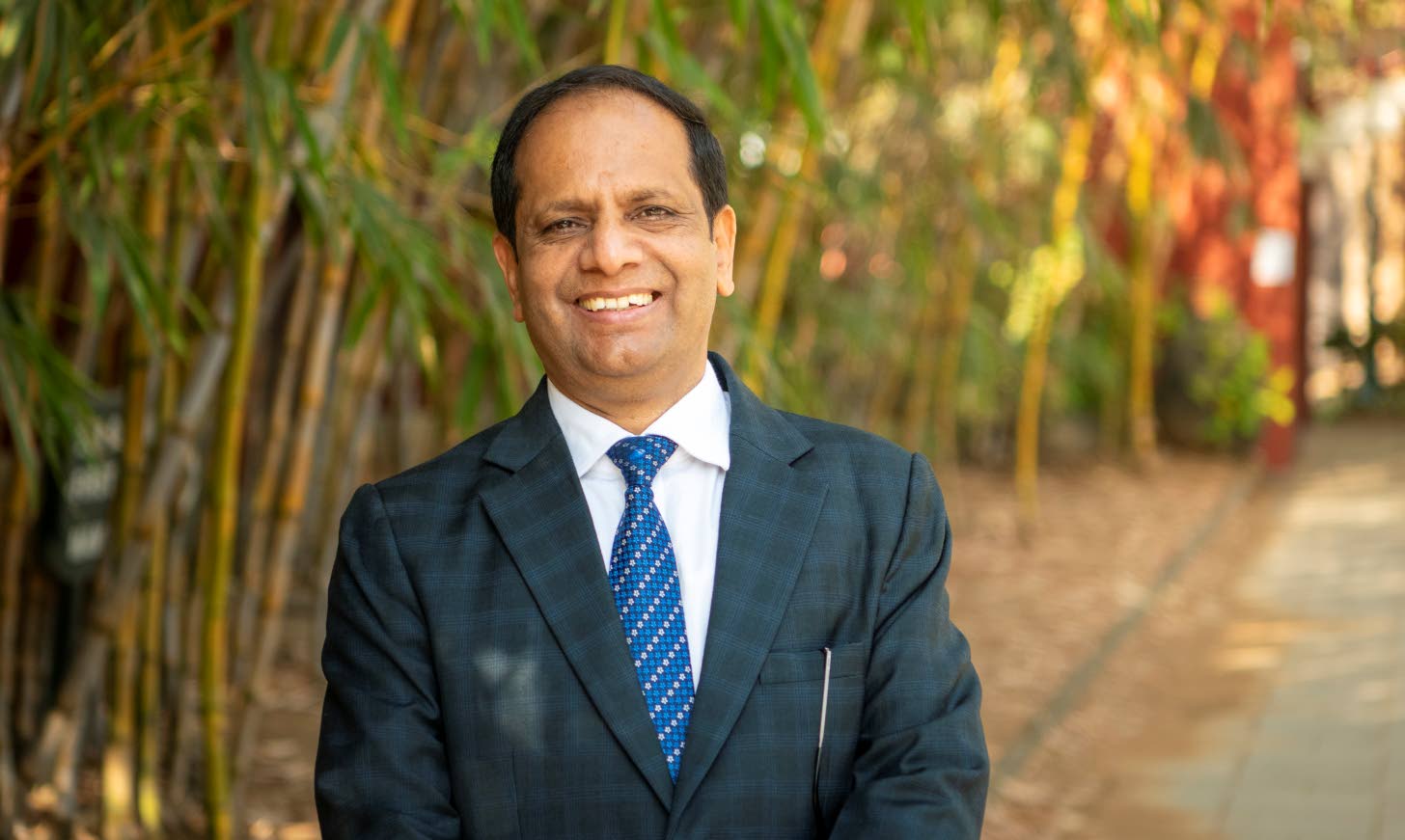
PATHAK…with CPSO’s visionary leadership in convening this partnership and SEPROD’s drive to champion its success, ICRISAT is proud to bring advanced agricultural innovation to Caricom, complementing local expertise

From left: Richard Pandohie, CEO of Seprod; Dr Ephrem Habyarimana, principal scientist for Sorghum Breeding at ICRISAT; Dr Kumaracharyulu Deevi, senior scientist – in agricultural economics at ICRISAT; and Dr Derrick Deslandes, President of the College of Agriculture, Science and Education (CASE) is photographed during a recent visit to Jamaica by ICRISAT


