Vacancy tax on idle properties proposed as part of waterfront’s economic revival
A vacancy tax on unused properties has been suggested as a possible strategy that could be used to jump-start economic activity in downtown Kingston, where long-abandoned and derelict buildings have for years continued to discourage business and investment in the city.
The suggestion was made by Brent Toderian, renowned urban planner and former chief planner for Vancouver, Canada. He was responding to questions following a presentation at the fifth staging of the Maurice Facey Lecture, held at the Jamaica Conference Centre last week.
While Toderian clarified that he was not recommending a vacancy tax as an immediate measure, he acknowledged its potential to motivate property owners to activate unused buildings and vacant lots — whether for commercial or residential purposes.
“When a building is kept empty, there’s a public cost. The Government ends up spending money to manage the consequences of that emptiness which is why a vacancy tax may be justified. While I’m not specifically recommending it, I’m saying such mechanisms do have some amount of legitimacy,” Toderian said in a follow-up interview with the Jamaica Observer.
He cited the example of Montreal, Canada, where a vacancy tax helped transform a long-vacant lot into a thriving housing development — turning a financial drain into a revenue-generating asset.
Around the world, vacancy taxes have been used as policy tools to push property owners to put dormant real estate — both commercial and residential — back into productive use. Though not a universally popular measure, some cities and countries have implemented such taxes for properties left vacant for more than 180 days in a calendar year.
Experts suggest that revenue from such taxes can be reinvested into local infrastructure and amenities to improve the area’s appeal and functionality. In Kingston’s case, Toderian believe these funds could help to rehabilitate the waterfront, particularly by cleaning up waste and addressing the foul odour, thereby transforming the shoreline into a valuable economic asset.
Calling for more “body heat” in the city — through increased housing and commercial activity — Toderian urged action on unutilised spaces, even in cases where generating rent may not be immediately possible.
“Insisting on rent that’s never going to come in will only further keep these buildings empty. “You’re not making any money that way, and the property just sits vacant. That’s likely one of the reasons so many buildings have remained unoccupied for so long. We need to find ways to fill them — and we must do so quickly, even without rent initially,” he said
Highlighting several ongoing revitalisation efforts in downtown Kingston, such as Kingston Creative’s transformation of old walls into murals and the development of an art district, as well as the redevelopment of the former Oceana Hotel into the ROK Hotel, he cited these among two things being done right and also as strong examples of how under-utilised spaces can be reimagined to generate new revenue streams.
As founder of TODERIAN UrbanWORKS, Toderian also urged the Jamaican Government to retain ownership of its waterfront lands or to move decisively to reclaim them if needed, emphasising public control as being essential to unlocking their full economic potential.
He painted a vision for a vibrant, multi-use waterfront that includes swimming, boating, food trucks, container-based pop-up businesses, and other community-focused activities designed to attract both residents and tourists.
“Even if the water quality isn’t great yet, we shouldn’t wait. We must act now — both to improve the water and to activate the space,” he said.
If executed properly, Toderian further said that the transformation of Kingston’s waterfront could yield immeasurable benefits:
“Having a waterfront as an asset is priceless in that one cannot calculate how much good it does economically. Beyond the economics, it’s, however, heartbreaking to see such potential go untapped and that’s why we must move with great urgency to bring more life and body heat to downtown Kingston,” he said.
This year’s public lecture, held under the theme ‘Where the City Meets the Sea: Unlocking Downtown Waterfront as a Public Space and Economic Asset’, drew a large audience of professionals, civic leaders, tertiary students and some stakeholders in national development.
In his opening remarks host and patron of the event Stephen Facey, who is also chairman of the Pan Jamaica Group and CB Facey Foundation, underscored the importance of downtown Kingston’s revitalisation.
“Downtown Kingston and its waterfront must rise to its role. It should be the face by which our country’s capital city is first known, and the commons where Jamaicans gather for commerce, culture, and community,” he noted.
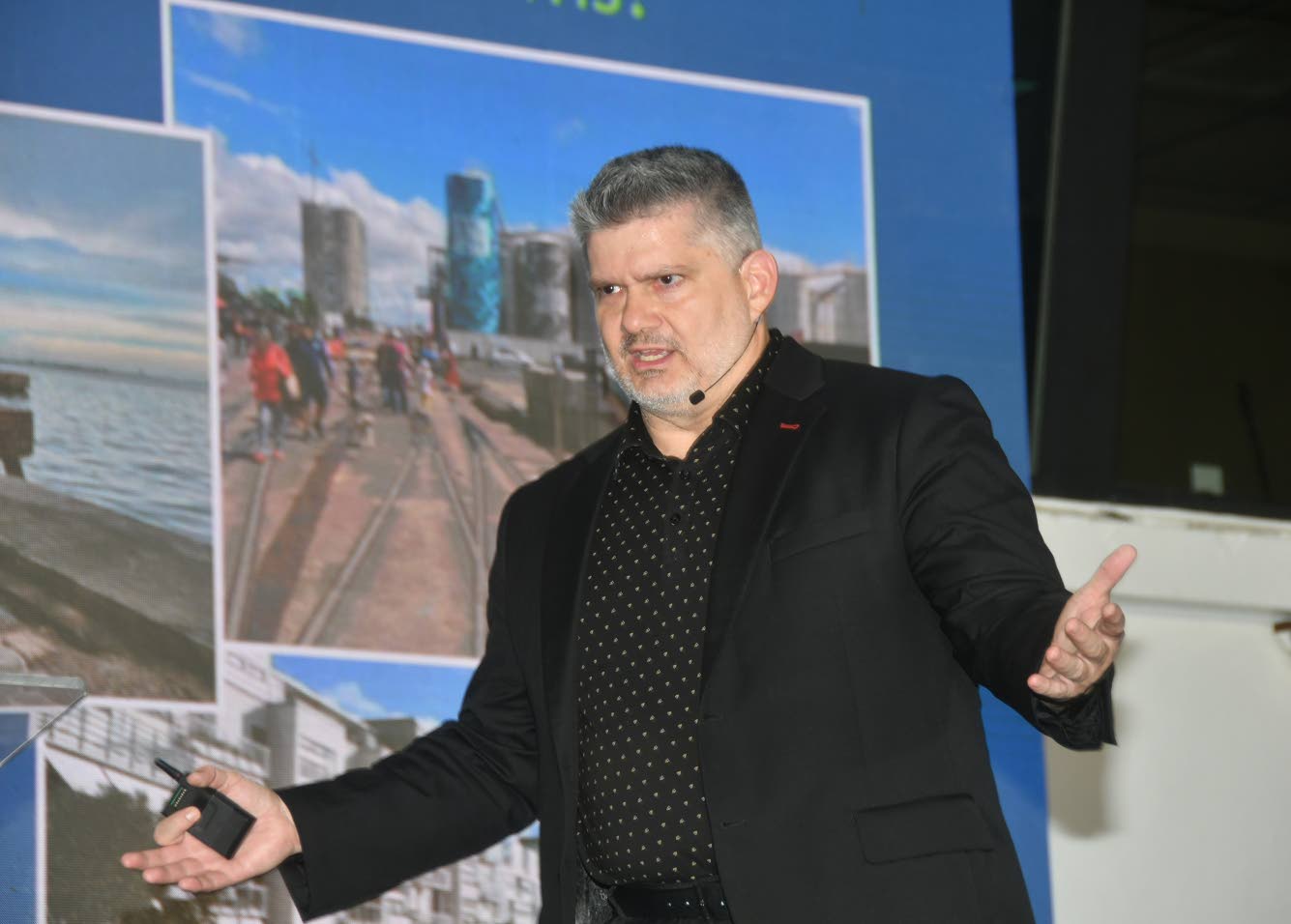
Brent Toderain, urban planner and former chief planner for Vancouver, Canada, delivering his presentation at the fifth staging of the Maurice Facey Lecture, held at the Jamaica Conference Centre on October 9, 2025
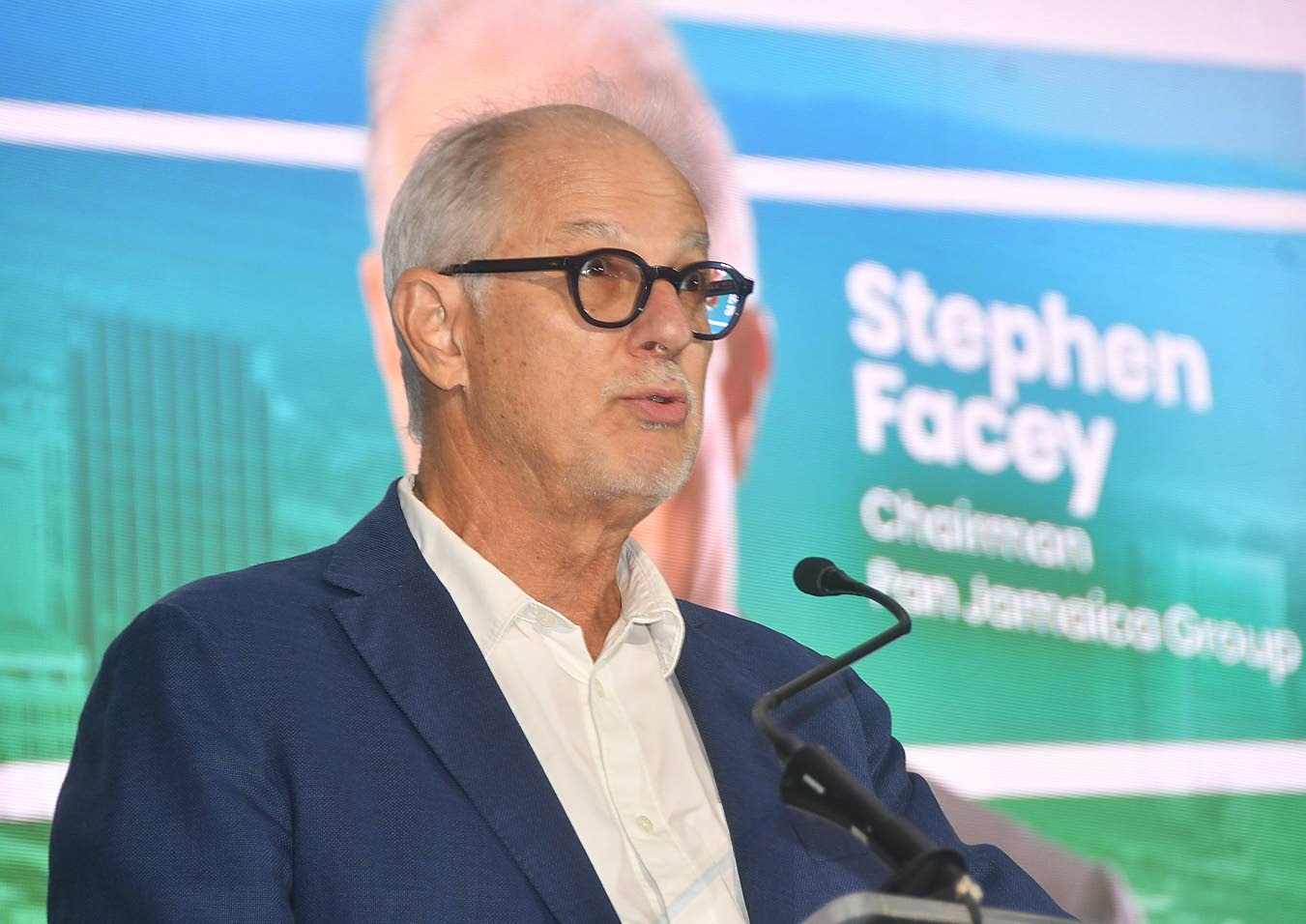
FACEY…downtown Kingston and its waterfront must rise to its role. It should be the face by which our country’s capital city is first known, and the commons where Jamaicans gather for commerce, culture, and community
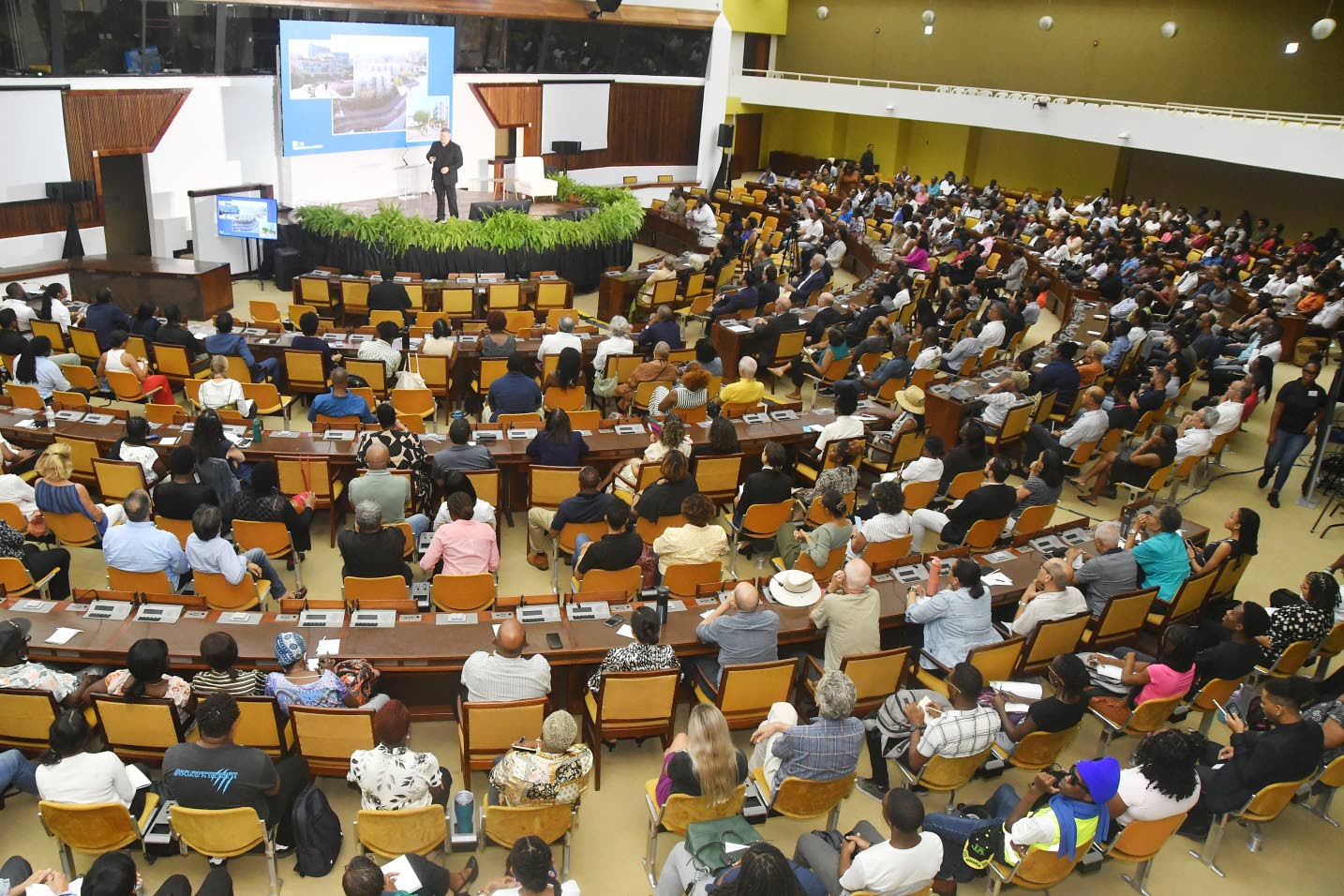
This year’s Maurice Facey Lecture, held under the theme ‘Where the City Meets the Sea: Unlocking Downtown Waterfront as a Public Space and Economic Asset’, drew a large audience of professionals, civic leaders, tertiary students and some stakeholders in national development.