



DIGITAL BOOM, FINANCING BUST
Jamaica’s financial inclusion strategy reveals two-tiered economy
JAMAICA’S drive to broaden financial access is fuelling a surge in digital payments and mortgages while credit growth to small businesses stalls, threatening the sustainability of an economic recovery, according to a government report.
Data from the Bank of Jamaica’s National Financial Inclusion Strategy (NFIS) impact report for the first half of 2025 highlights a stark divergence between consumer finance and business investment. It shows the volume of digital transactions climbed 10.9 per cent from a year earlier to 71.1 million, a behavioural shift most evident in utility bills, where 73.3 per cent are now paid digitally — a figure that has more than doubled since 2015. Concurrently, the value of new mortgages rose 13.5 per cent to $44.4 billion. At the same time, annual credit growth to micro, small and medium-sized enterprises (MSMEs) plummeted to 5.8 per cent from 27.4 per cent.
This positive picture of consumer activity and digital adoption obscures a worrying trend in the very sector meant to drive sustainable economic growth. While overall credit to the private sector held steady, the situation is most severe for the smallest businesses, with credit to micro-enterprises growing a meagre 0.1 per cent.
A Deeper Look at the Digital Ascent and the MSME Crunch
The digital payments boom is not a standalone success. It is the culmination of a decade-long trend. The report’s historical data reveals a steady march away from paper-based transactions. In 2015, only 36.0 per cent of utility bill volumes were paid digitally. That figure now stands at 73.3 per cent, indicating a fundamental and likely permanent shift in how Jamaicans manage their finances. The value of these digital payments for the first half of 2025 reached $6.8 trillion, a 12.2 per cent year-over-year increase.
This consumer confidence is further reflected in the housing market. The number of new mortgage accounts opened in the first half of the year jumped by 22.5 per cent to 2,622, signalling robust demand in the real estate sector. Simultaneously, the nation’s financial resilience is strengthening. The number of savings accounts at deposit-taking institutions grew by 7.2 per cent year-over-year to 4.7 million, a net increase of approximately 320,000 accounts. Crucially, the percentage of these accounts that are dormant fell by 2.8 percentage points to 43.3 per cent, suggesting that more Jamaicans are actively engaging with the formal savings system.
However, this progress stands in stark contrast to the challenges facing MSMEs. The drastic slowdown in credit growth to this sector — from 27.4 per cent to 5.8 per cent — is the most alarming data point in the report. Dr Norman Grant, first vice-president of the Small Business Association of Jamaica, pinpointed the core issue: “The main hindrance to small businesses getting credit is collateral.” He explained that small businesses typically start with personal funds and grow organically, but lack the traditional assets required by lenders.
Dr Grant proposed a targeted solution, calling for “developmental loans” to be made available through institutions like the Development Bank of Jamaica and the Exim Bank. “They provide capital for growth and expansion, improve cash flows and support long-term strategic investment, like hiring, acquisition,” he said. He argued that such loans, which could accept contracts as collateral, would enable businesses to expand, create jobs, and formalise their operations. He also urged the government to consider an amnesty on penalties for late company and tax filings, which he said “stifles the growth and development of small businesses” when combined with existing cash flow issues.
The Policy Response and the Path Forward
The central bank’s strategy, as outlined by Senior Deputy Governor Dr Wayne Robinson, focuses on a broader digital and educational transformation. “Our current strategy focuses on the roll-out of CBDC which targets the unbanked and underbanked… financial literacy; collating and tracking indicators of financial inclusion, including surveys; [and to] collaborate with other agencies on financial inclusion initiatives,” Dr Robinson stated.
He highlighted that the challenge of MSME financing is being addressed from the angle of information asymmetry. “The Ministry of Industry, Investment and Commerce has an MSME digitisation programme aimed at technology adoption by MSMEs. This is motivated by one of the main challenges in MSMEs’ accessing finance being the lack of timely and comprehensive information and information in an easily usable electronic format,” he noted. Furthermore, Dr Robinson pointed to the Bank of Jamaica’s regulatory sandbox, which hosts companies testing new payment methods, as a key initiative for fostering innovation in the financial sector.
This creates a fundamental paradox at the heart of the financial inclusion strategy. The success in digitising payments generates a valuable data trail — evidence of cash flow and financial behaviour that could theoretically be used to assess the creditworthiness of small businesses. Yet, a mechanism to systematically translate that data into affordable capital remains underdeveloped.
The NFIS’s success in boosting access and usage is undeniable. The digital payments revolution and growing financial resilience are landmark achievements. But the latest impact indicators serve as a crucial warning. A nation cannot thrive on consumption and housing alone. For financial inclusion to truly fuel broad-based economic growth, the digital revolution must be harnessed to power the real economy. The challenge is clear: Bridge the gap between the data-rich digital consumer and the collateral-poor entrepreneur, ensuring the future being built includes both the Jamaican consumer and the Jamaican business owner.

Robinson… central bank targets digital inclusion and improved access for Jamaica’s unbanked communities.

Digital payments and mortgage activity surge across Jamaica, but stalled credit growth for small businesses poses new risks for sustainable recovery.
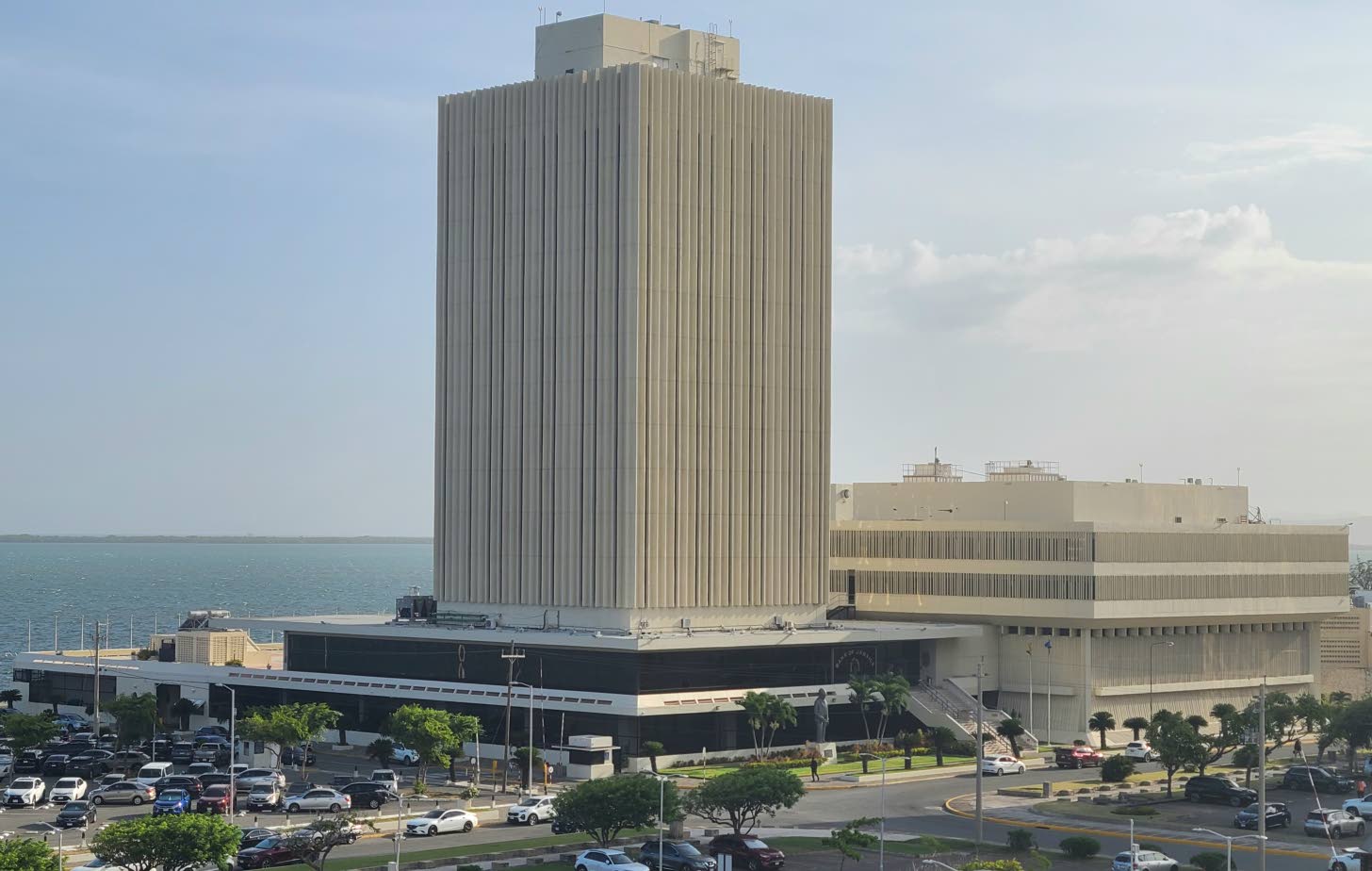
Bank of Jamaica steers financial inclusion as digital transformation reshapes the nation’s banking landscape.
Dr Norman Grant, small business advocate, calls for flexible lending and policy reform to tackle MSME credit barriers.


