



Shelf appeal — designing packaging that competes
JAMAICAN manufacturers are being urged to invest in packaging design that can compete with imported products but the lack of local innovative packaging designers continues to hold them back.
Speaking at a Young Entrepreneurship Fireside Chat hosted by the Young Women and Men of Purpose (YWOP/YMOP) Foundation, Tara Kisco, country manager at PriceSmart Jamaica, said packaging remains one of the biggest weaknesses among local producers.
“Your packaging is your first salesperson,” Kisco told participants.
PriceSmart, a membership-based retail warehouse club, carries both imported and locally made items. Drawing on her experience at Pricesmart, she recalled when it was once easy to distinguish which item was imported and which was locally manufactured, based on packaging alone. That, however, has begun to change. PriceSmart has worked closely with suppliers to improve packaging so that shoppers cannot easily distinguish between local and imported goods.
“Now you look at some items and you would never be able to tell if they were locally produced or imported — and that’s exactly what we want,” said Kisco.
Proper labelling has become just as important as the packaging itself, with retailers such as PriceSmart refusing to stock products that lack key details including who made it, what it does, where it was produced, and how it should be used. At the same time, Jamaica’s Bureau of Standards is developing new labelling rules to help local goods meet export standards and strengthen their presence in overseas markets.
While packaging design can be expensive, Kisco noted that it plays a critical role in how products are perceived by consumers. Labels have also evolved, with features such as QR codes now being used to provide customers with additional product information.
The ability to improve local products is here, according to Kisco, who recommends that manufacturers align packaging with the product’s intended price point. Using bottled water as an example, she explained that consumers can often tell whether a product is premium, mid-level, or entry-level based solely on its packaging.
“If you have an entry-level product its specifications and components are entry-level. However, if the packaging is premium it takes the product out of its marketable price range — you’ve killed your product right there,” she explained.
Packaging should match the product so as to allow manufacturers to keep it within an appropriate price range and ensure it performs well in the market. This requires understanding the product’s production cost, determining the selling price, budgeting for packaging accordingly, and then sourcing the right materials.
While local packaging options are improving due to ongoing investments, Kisco noted that imported packaging remains dominant, particularly for businesses seeking more creative and innovative solutions.
“The more innovative packaging we’re seeing in the market is imported,” she said.
In November last year, one of Jamaica’s largest corrugated box manufacturers, Jamaica Packaging Industries Limited (JPI), completed a $2-billion investment in a new facility on Spanish Town Road, St Andrew, which more than tripled its production capacity. The expansion was aimed at positioning JPI as a reliable local supplier and reducing Jamaica’s dependence on imported packaging. The company estimated that over 60 per cent of corrugated boxes used in Jamaica are imported. According to TradeEconomy.com, Jamaica’s total paper packaging imports amounted to US$49 million in 2023. Corrugated and non-corrugated cartons and boxes made up the bulk of these imports, accounting for 38 per cent (US$19.2 million) and 35 per cent (US$17.8 million), respectively. Smaller shares came from sacks and bags, other paper-based packing containers, and office or retail storage items.
These numbers demonstrate a strong demand for packaging, yet the creative and technical side of packaging design remains underdeveloped, limiting the ability of local manufacturers to compete with imported products on both domestic and international shelves.

KISCO…the more innovative packaging we’re seeing in the market is imported.
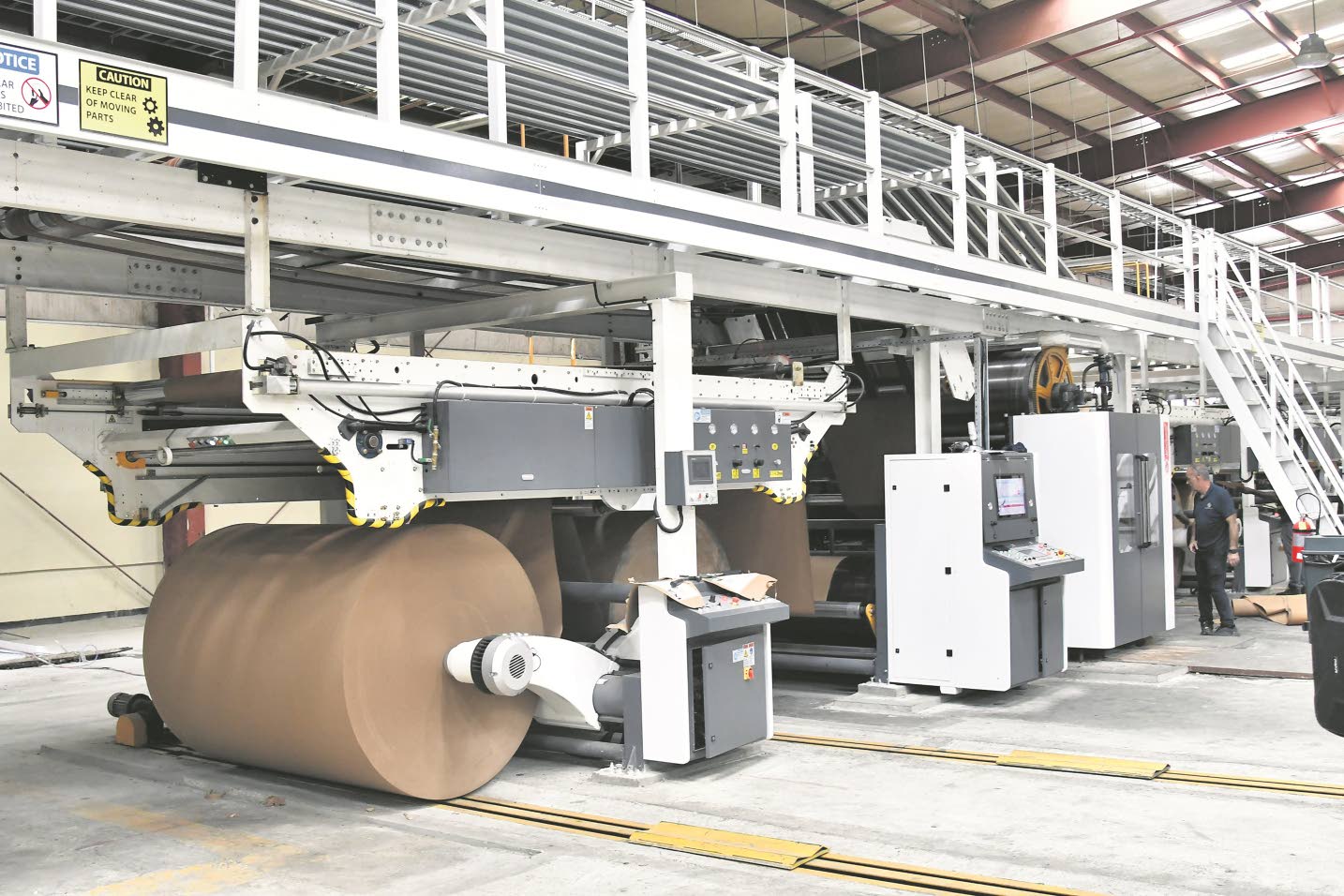
Jamaica Packaging Industries Limited’s facility is located on Spanish Town Road, St Andrew, where the company aims to boost capacity to meet the demand for corrugated boxes.


