Cloaked in spirituality
Understanding the psychology of manipulation, cult behaviour in wake of Kevin Smith
THE natural human desire for purpose and community often drives people towards religion. But, as seen with the tragic events surrounding the 2021 collapse of the late Kevin Smith’s church — Pathways International Kingdom Restoration Ministries in Albion, St James — this quest for purpose can be easily exploited by charismatic leaders, turning a longing for salvation into a journey of deep psychological manipulation and abuse.
Consultant psychiatrist Dr Saphire Longmore explains that manipulation is rooted in the need for control and can range from subtle influence to extreme coercion.
“Manipulation is when an individual alters the natural course or the desired course that another individual would opt for…It is psychologically recognised as a behaviour that is typical of control — of seeking to control other individuals,” Dr Longmore told the Jamaica Observer.
To understand manipulation, she explained that it is often necessary to look at an individual’s past as such behaviour is typically linked to certain personality disorders and, in more severe cases, can escalate to psychosis or a complete loss of touch with reality — making the extent of control appear unreal to those looking on.
“The beginnings of these things tend to start in our earlier years, where there is probably some trauma, there is probably some sort of…adverse childhood experiences that impact on the psyche or the ego, the sense of self, that causes someone to compensate in a way to try and protect that sense of self,” she shared.
“So let’s say a child was abused physically, sexually, verbally, in order for that sense of self to still feel good or survive that abuse, they develop…defence mechanisms. You can have healthy defence mechanisms [and] you can have unhealthy defence mechanisms,” she continued.
An example of a healthy coping mechanism is exercise. However, Dr Longmore explained that some people may deal with their pain by inflicting harm on others, as it gives them a false sense of relief or control. Over time, she said, this behaviour can become ingrained in their personality.
“That now can manifest when they find people who themselves might be vulnerable to that level of control,” she said, noting that the victim may be someone who has also experienced abuse, has a generally negative outlook on life, or is wanting in some way.
“And then the perpetrator basically provides that initially, and then takes that to another level of control,” Dr Longmore added.
The psychiatrist explained that studies have shown that there are sometimes actual changes in the brain of these perpetrators.
“The orbitofrontal cortex, that’s kind of in the front of the brain there that…deals with our cognition and our thinking capacities and so forth; the parahippocampal gyrus, which deals with our memories and so forth; and the amygdala, which is that area that tends to deal with aggression and violence. So those areas seem to also be activated, enhanced in some of these individuals,” she said.
Spiritual and religious settings, Dr Longmore noted, can make individuals especially susceptible to manipulation.
“When persons have a vulnerability towards especially their sense of self, sense of value, self-esteem — which can be associated in religious practice, in spiritual practice — people are desirous of guidance, and that guidance can validate themselves in whatever answers they come to.
“So an individual who seems to be a leader, it is basically like taking candy from a baby, so to speak, [in terms of] the level of vulnerability that an individual might be at when they are listening to or taking the guidance of that leader,” the expert shared.
Explaining that spiritual health is considered the fourth dimension of overall well-being and is protected in constitutions around the world for a reason, Dr Longmore stressed how easily one could be manipulated within a spiritual or religious context.
“It is something that we can’t pinpoint exactly, but we know we all belong to something greater than us…And religion is an organised way of pursuing and getting answers…so when you have an individual who is naturally wanting answers, almost the first source that provides the answers will be given the…highest regard,” she said.
It is because of this, that Dr Longmore emphasised the importance of strong family foundations to avoid such vulnerabilities.
“It is in our families, and especially families that are grounded, families that are very functional, that you get that level of grounding…you get that level of identity. You get that level of guidance as to who you are, what role you may play in society, and your wider involvement in the universe,” she said.
Where this foundation is lacking, individuals can be susceptible to exploitation by those who claim to offer purpose or spiritual clarity.
One such figure was Smith, the controversial pastor who presented himself as a prophet and made headlines in 2021 when two of his congregants were killed in what was believed to be a human sacrifice ritual inside his Albion church.
The reputed cult leader was arrested but died days later in a motor vehicle crash while being transported by police.
The case shocked Jamaicans, raising questions about cult behaviours, religious exploitation and mental health. Smith’s shift from preaching the word of God to demanding money and exerting control over his congregation highlighted how religion could be a powerful and dangerous tool in the hands of manipulative figures.
However, Dr Longmore explained that a key defence against such manipulations is trusting one’s intuition.
“What happens is the other individual is seeking to alter your natural intuition…however, you can learn to develop that — this is why holistic health is important; yourself physically, socially, emotionally, mentally, and spiritually — when you develop those aspects of yourself, you’re more in tune with who you are, who you want to be, and you’re more able to identify when something is just not right for you,” she said.
As it relates to the survivors of manipulative or traumatic spiritual experiences, Dr Longmore said healing is not a one-size-fits-all process.
Noting that trauma affects people differently, she explained that if 10 individuals experience the same traumatic event, one-third may show immediate distress, another third may begin to show symptoms several months later, while the final third might never show any noticeable reaction at all, with the rare individual even growing positively from the ordeal.
“Resiliency factors is what would make that one individual out of the 10 grow positively. It is also what we would want to try and stimulate in the other nine individuals to recover. But, how you do that is based on how they’re presenting to you,” Dr Longmore said.
“When you have a traumatic situation happening…you would want to screen the individuals to see what group they fall into, and then you tailor a specific approach based on what they’re showing, and underline that you are there for them,” she told the Sunday Observer.
She continued: “So whatever stage they may be at, you want to ensure that you let them know that there is help, there are strategies that they can employ when they’re ready, but you don’t want to go and re-traumatise [them].”
The psychiatrist encouraged individuals to watch out for signs that they may be in a controlling or harmful situation.
“If you find that you’re in a situation — a relationship, a situationship of any nature — where your natural desires, especially if your intentions are genuine but [you] are being told that they are not of value, that they should be changed to alter the agenda of someone else, that you’re almost losing a sense of your own self, those are red flags.
“Seek to listen to your inner voice, step back. And, of course, if you’re really in doubt, seek professional help,” she added.
Mental health support is available through health centres, hospitals, private practitioners, and police stations. The Ministry of Health and Wellness also offers helplines like the 888 NEW LIFE and the U-Matter chatline for youth, accessible via text or social media. To access that chatline, youth should text the word SUPPORT to 876-838-4897, or via Instagram and
Facebook Messenger @ureportjamaica.
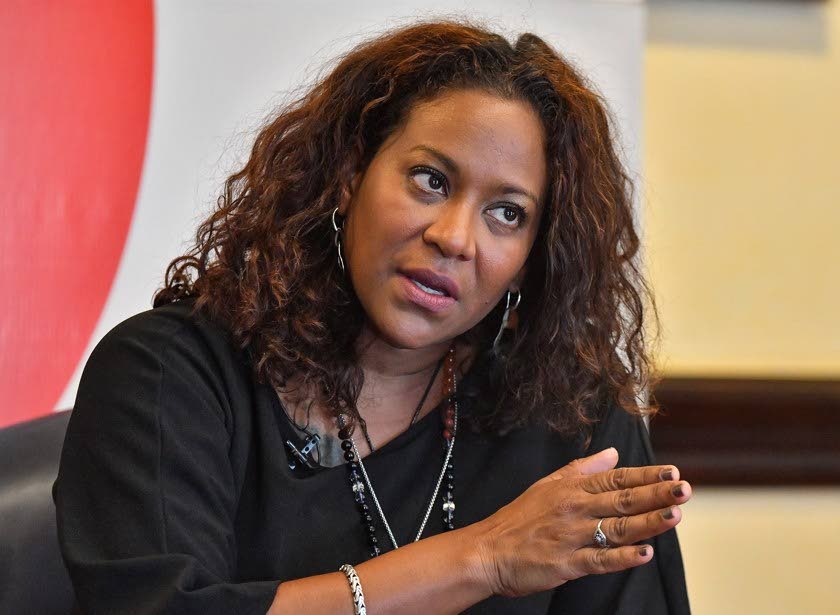
LONGMORE…religion is an organised way of pursuing and getting answers (Photo: Naphtali Junior)