



National resilience wins!
The hurricane will come, Jamaica will recover
Dozens of Jamaicans are picking up the pieces. And pick up the pieces we must. Let us not sink to into despair as we recover. Realistic optimism is very necessary for us to build back faster and stronger.
We have had weather systems like Melissa before. And doubtless others like her are to come, considering that Nature always triumphs. That is a reality of life on Earth.
Some among us who trade in misery and whose forte is devilish pessimism, will trick some into believing that calling it quits at this time is the best way forward. Some will use the widespread damage and sufferings which have been occasioned by hurricanes as an opportunity to abuse our cultural disposition towards certain religion. Beware of prophets for profit. Those charlatans have already crawled out of their dark holes.
Then, of course, there are those who will go to great lengths to blame the Administration for even the very fact that Melissa happened upon our shores. These hoodwinkers are using and will use the despondency of dozens as a vehicle for shameless political mileage. Avoid like the plague those who will try to destroy the better angels in us.
We are resilient. Let us again dig into our resilience stockpile and rebuild Jamaica, better.
LET’S DO IT AGAIN
In the mid-70s, the super talented The Staple Singers had a mega hit titled ‘Let’s Do It Again’. For readers especially of a younger vintage, here is the chorus of that great song.
“Do it again, do it (do it)
Let’s do it again (do it)
Mmm (do it again, do it again)
Gonna do it again (do it)
Do it, do it
Let’s do it again (do it)
Do it again”
Jamaicans will do it again. Jamaica recovered from the devastation of Hurricane Charlie in August 1951. We will recover from the devastation of Hurricane Melissa much faster.
We have in place, now, financial, technological, and external partnerships and arrangements, which support much faster recovery. Anyway, Hurricane Charlie, the famous or infamous “51 storm”, was a monster.
“Reports published in the media stated that the whole island was affected, but the south coast was hit hardest — 154 confirmed dead (including 57 in St Thomas and 54 in the Corporate Area) and 2,000 injured; over 9,000 were left homeless. There was considerable damage to shipping in the Kingston Harbour and five large vessels were driven ashore. Banana and other food crops were destroyed, coconut plantations and citrus groves perished. The British Government assisted Jamaica by giving grants and interest-free loans. Aid came from the United States Army, the United States Red Cross, Trinidad and Tobago, Dominican Republic, Cuba, and many other countries. Following the passing of the hurricane, heavy rainfall continued which resulted in numerous landslides across the island — 80 per cent of Morant Bay was destroyed and several other communities were wiped out.” (The National Library of Jamaica)
My late grandfather told me that Hurricane Gilbert in 1988 was a “boy” compared to the ferocity of Charlie. Charlie did not only do great damage in Jamaica. The Yucatán Peninsula and Tampico felt its fury, too, with a total death toll exceeding 250. Charlie was a very powerful reminder that man is but a mere tenant on this planet. We do not own Earth.
Jamaica recovered from Charlie. We also recovered from Hurricane Hazel, which impacted Jamaica in October 1954. We picked up ourselves and started all over again after Hurricane Janet in September 1955. The passage of this storm “caused islandwide rains which lasted 10 days. The rains caused flooding all over the island. Port Maria was declared a disaster area.” (The National Library of Jamaica)
Jamaica recovered from Tropical Storm Gerda in 1958, Hurricane Flora in October 1963, Hurricane Cleo in August 1964, Hurricane Beulah in September, 1967, Tropical Storm Gilda in October, 1973, Hurricane Carmen in August 1974, Hurricane David in 1974, massive floods due to a tropical depression in June 1979, and Hurricane Allen in 1980. We are resilient.
Allen “caused eight deaths and an estimated $200 million of damage. Hardest hit areas were along the north coast. Banana crops were destroyed and some 5,000 persons were left homeless.” (The National Library of Jamaica)
Then in September 1988, Hurricane Gilbert, still the most frightening hurricane I have experienced, hit Jamaica like a bomb. Gilbert was a direct hit. It was one of the most powerful hurricanes this century.
Gilbert was an exceedingly terrifying weather system. I remember him well. I lived in Port Maria. The roof disappeared like confetti in the wind. And the house became a river. We were terrified.
The Gleaner of September 11, 2023 noted that, “Some 45 lives were lost and 800,000 persons sought shelter as more than 100,000 homes were destroyed and damaged islandwide.
“The island suffered billions of dollars worth of damage, with the agricultural sector the worst affected. The banana and poultry industries, in particular, experienced next-level devastation, as they were obliterated.
“At the time, Gilbert, which peaked at Category Five strength before leaving the island, was the first hurricane to make landfall in Jamaica in 37 years, the previous disaster was Hurricane Charlie in the 1950s. It still holds the distinction of being one of the most devastating Atlantic hurricanes in history, second only to Hurricane Wilma which occurred in 2005.”
Jamaica recovered!
By November 1988 Jamaica was back in business, most schools were reopened. Transportation, land, air and sea resumed. Water was restored to most communities and electricity was also restored in most parts of the country. Hundreds of the then very popular corner shops were reopened. Some hotels were also reopened. The governing Jamaica Labour Party (JLP) Administration, led by Prime Minister Edward Seaga, was commended by the local, regional, and international community for the speed with which the country was returned to normality.
The speed and efficiency with which Jamaica recovered from the devastation of Gilbert was a masterclass. We need to better that lesson today. The big and immediate challenge now is, first, getting back to where we were before the storm. In our recovery the secondary focus must be to build back better. I am realistically optimistic that we can do it. Jamaicans have proved over and over that we can come together, no matter the real and imagined challenges.
We have the goods! We are the direct descendants of a mighty race. Our foreparents triumphed over the immense cruelty of slavery and tamed the dehumanising institution of colonialism. We have the goods to overcome. We will.
I believe we have the tools to build back better.
In September 2004 Hurricane Ivan did great damage to much of Jamaica’s social and physical infrastructure. For example, “The Portland Cottage community in Clarendon was completely destroyed. In total, just over 18,000 were left homeless and 17 persons were killed islandwide. Many roads were washed away due to massive mudslides and flooding.” (The National Library of Jamaica)
Maya Angelou, American poet and civil rights leader, in her celebrated poem Still I Rise, speaks about an indomitable spirit. Jamaicans at heart possess that unbeatable spirit. We again demonstrated that unassailable spirit when we were impacted by Hurricane Dean in August 2007.
“Majority of damage was to Clarendon with 56 per cent of the parish being damaged, followed by St Catherine and Kingston and St Andrew. Losses to the housing sector stretched to over $5 billion. More specifically, 29,000 housing units were damaged across the island (2,854 units were totally destroyed; 12,905 sustained major damage and 13,511 had minor damage). There was some $1 billion in damage to the agricultural sector, $700 million in damage to education sector; and $168 million in damage to the health sector — just about $23.8 billion in total.” (The National Library of Jamaica)
We recovered. We reached in our collective reserves as good people at heart and rose to the challenge of rebuilding. Lesson: Only we can stop us when we are determined to succeed. The first four stanzas of the mentioned poem, among others things, speak to an unconquerable resilience — an innate toughness and good nature, which I believe we Jamaicans have.
Those who are on social media, spreading various forms of “woe is me”, need to understand that they will not achieve their evil objective, which is to plant terminal despair in the minds of the majority. Jamaicans are “made of sterner stuff”. Poisonous seeds often sprout, but ultimately they are choked and killed by the finer and lasting power of truth.
SOME UNCOMFORTABLE TRUTHS
Here is another truth which must not escape our collective consciousness: “The earliest reference to a hurricane in Jamaica dates back to 1559 when a hurricane caused severe damage to the island’s infrastructure.” (The National Library of Jamaica)
There is strong historical and archaeological evidence that the Taíno peoples — said to be the first inhabitants of this land — experienced many hurricanes. It was not hurricanes and other natural disasters which nearly obliterated these peoples from most parts of the region. It was the coming of the Europeans with their various diseases.
Among other things, the lesson is clear. We, today, can and will survive natural disasters like many peoples have done for thousands of years. After every man-made and or natural disaster, the key thing is to learn to prepare better for the next and, as far as humanly possible, prevent the preventable.
I believe that is partly what Genesis 1: 28 meant when it said: “And God blessed them, and God said unto them: Be fruitful, and multiply, and replenish the Earth, and subdue it: And have dominion over the fish of the sea, and over the fowl of the air, and over every living thing that moveth upon the earth.”
In seeking to attain dominion we have, unfortunately, abused Mother Nature, appallingly. It is still not too late to correct that grave error. Hurricane Melissa should also serve as a reminder that we cannot continue to throw garbage in our gullies and rivers and then expect not to have our homes flooded. We cannot continue to denude our hillsides and not expect negative consequences like massive flooding. We cannot continue to build houses and other structures near watersheds and not expect to have water shortage. Those who ride the sufferings of people and benefit economically should watch out. “Hold-dung and tek-weh” is never-ever a virtue. Price gouging is despicable. Indeed, every action or force results in a corresponding and opposite reaction. This is a fundamental principle known as Newton’s Third Law of Motion in physics, and a broader concept of cause and effect in everyday life. The sooner some of us understand this simple rule, the better.
A GOOD THING!
Even bad things have a smidgen of positive. Hours after Hurricane Gilbert left our shores, neighbours who had not spoken to each other for months dropped their battle guards and started to exchange ‘howdies’. The combined necessity of collective human survival and the realisation that no man is island dissolved their individual grievances.
Post-Gilbert rapprochements resulted in increased sharing and caring, albeit temporary in some instances, in many communities throughout Jamaica.
It is very sad that large-scale human sufferings brought on by disasters like hurricanes and earthquakes are often the antidotes to some of the viciousness that we perpetrate on each other. If nothing else, I hope the passage of Melissa will remind everyone, great and small, that we are mere mortals; or, as one character says it in the movie Gladiator, “shadows and dust”. Blessings all!
Garfield Higgins is an educator and journalist. Send comments to the Jamaica Observer or higgins160@yahoo.com.
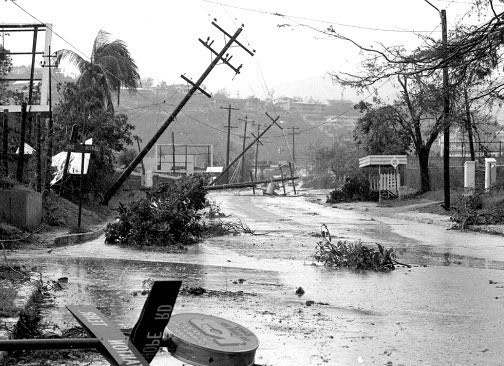
A scene from the Corporate Area after Hurricane Gilbert slammed into the island in September 1988.
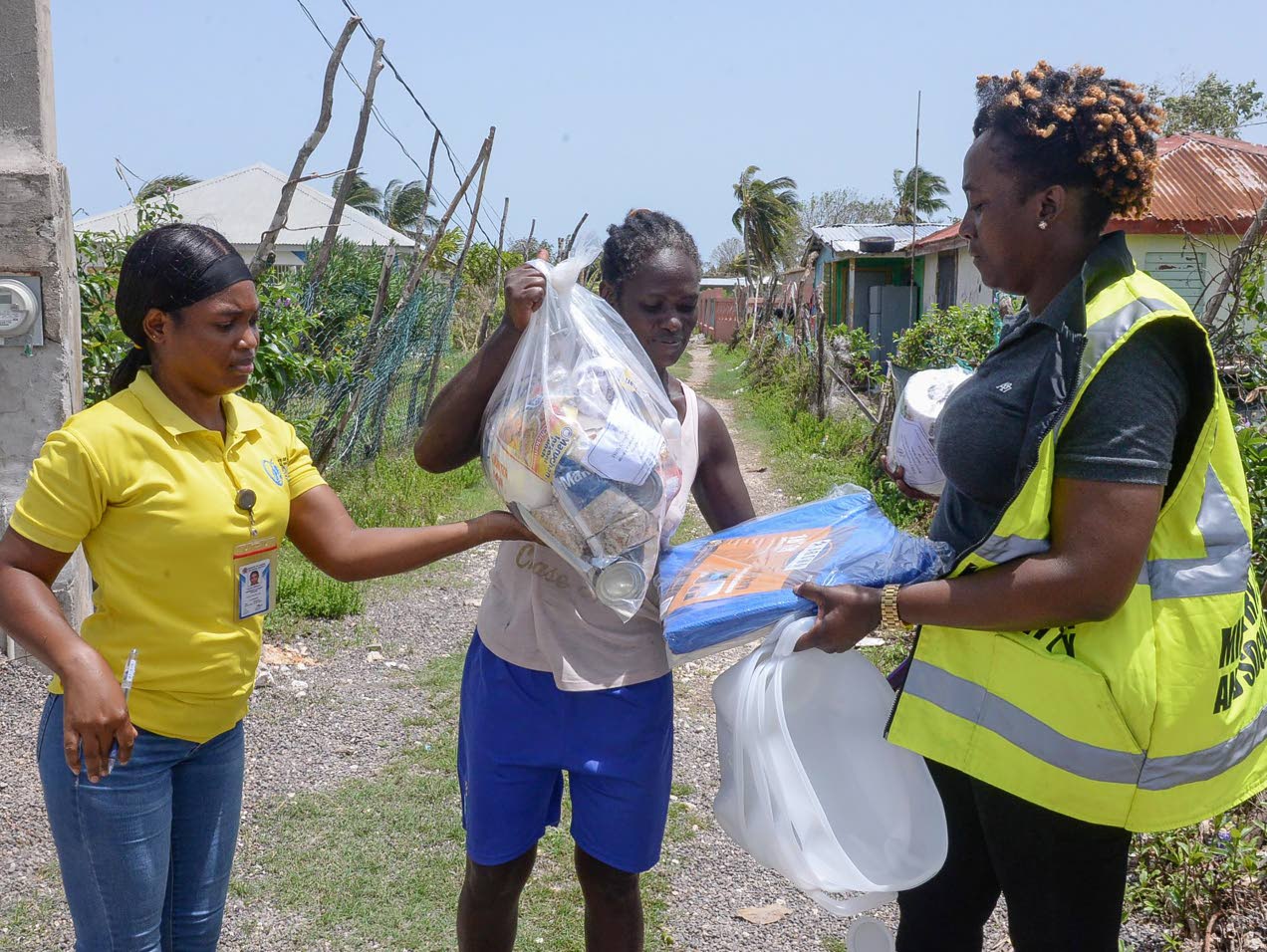
Shernett Williams (centre) from Portland Cottage is presented with relief items by community liaison officer, Ministry of Labour and Social Security, Nadola Williams (left) and National Insurance Scheme (NIS) Inspector Kimberlin Walters after the passage of Hurricane Beryl. (Photo: JIS)
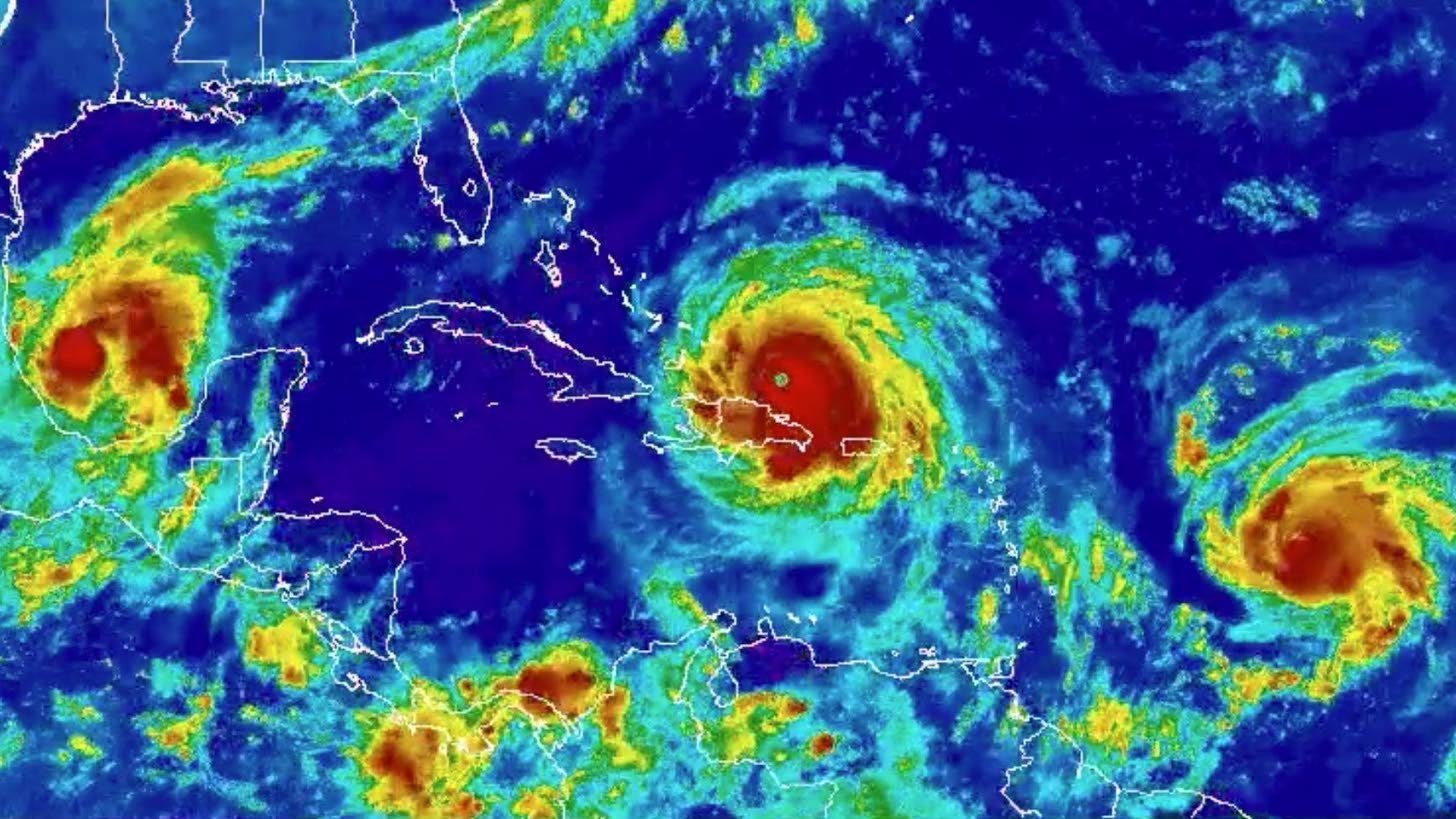
We are in the Atlantic Hurricane Season that runs from June 1 to November 30..
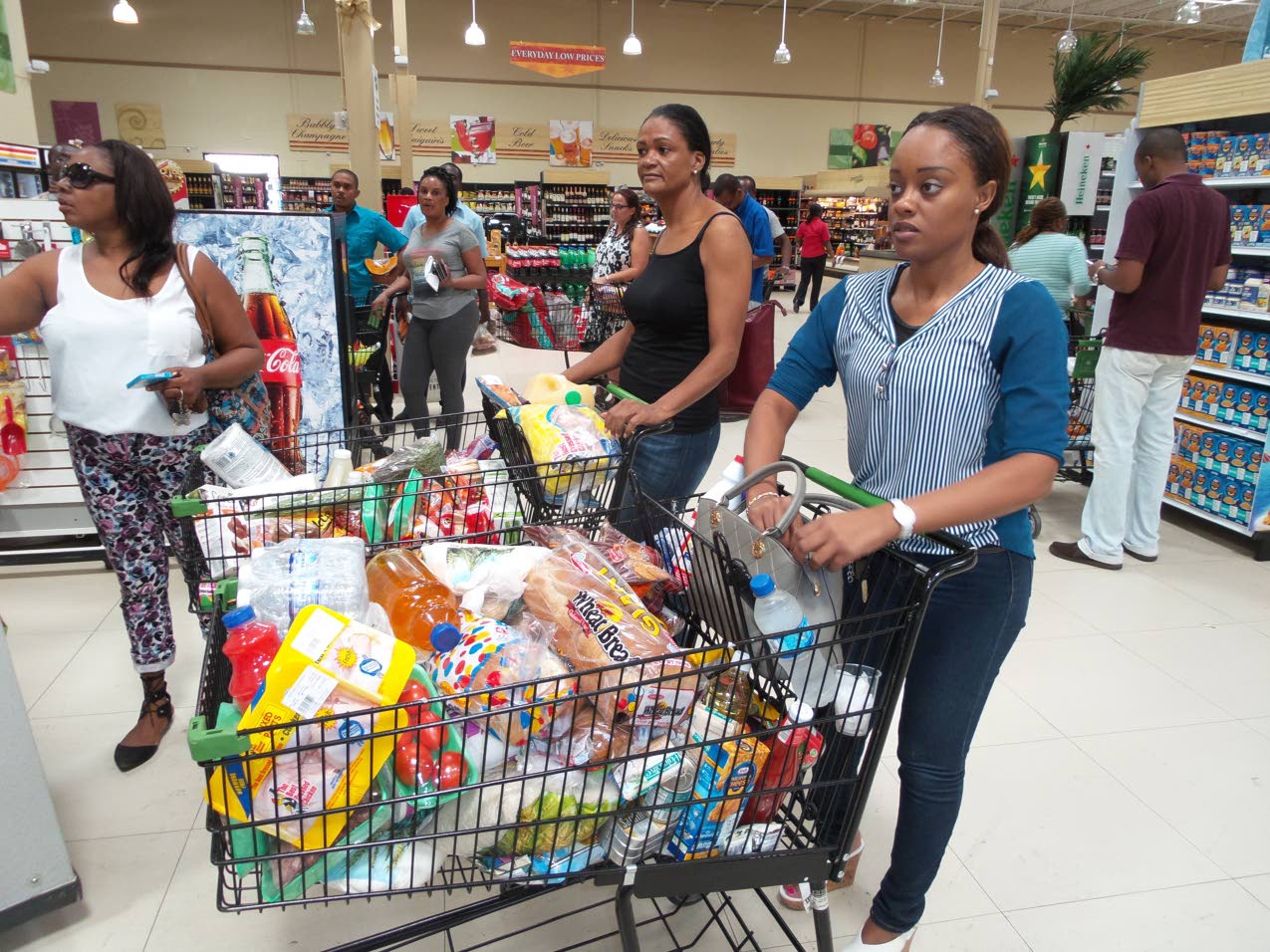
Shoppers at a supermarket in the Fairview Shopping Centre in Montego Bay, Jamaica, stock up on food supplies ahead of the passage of Hurricane Matthew.
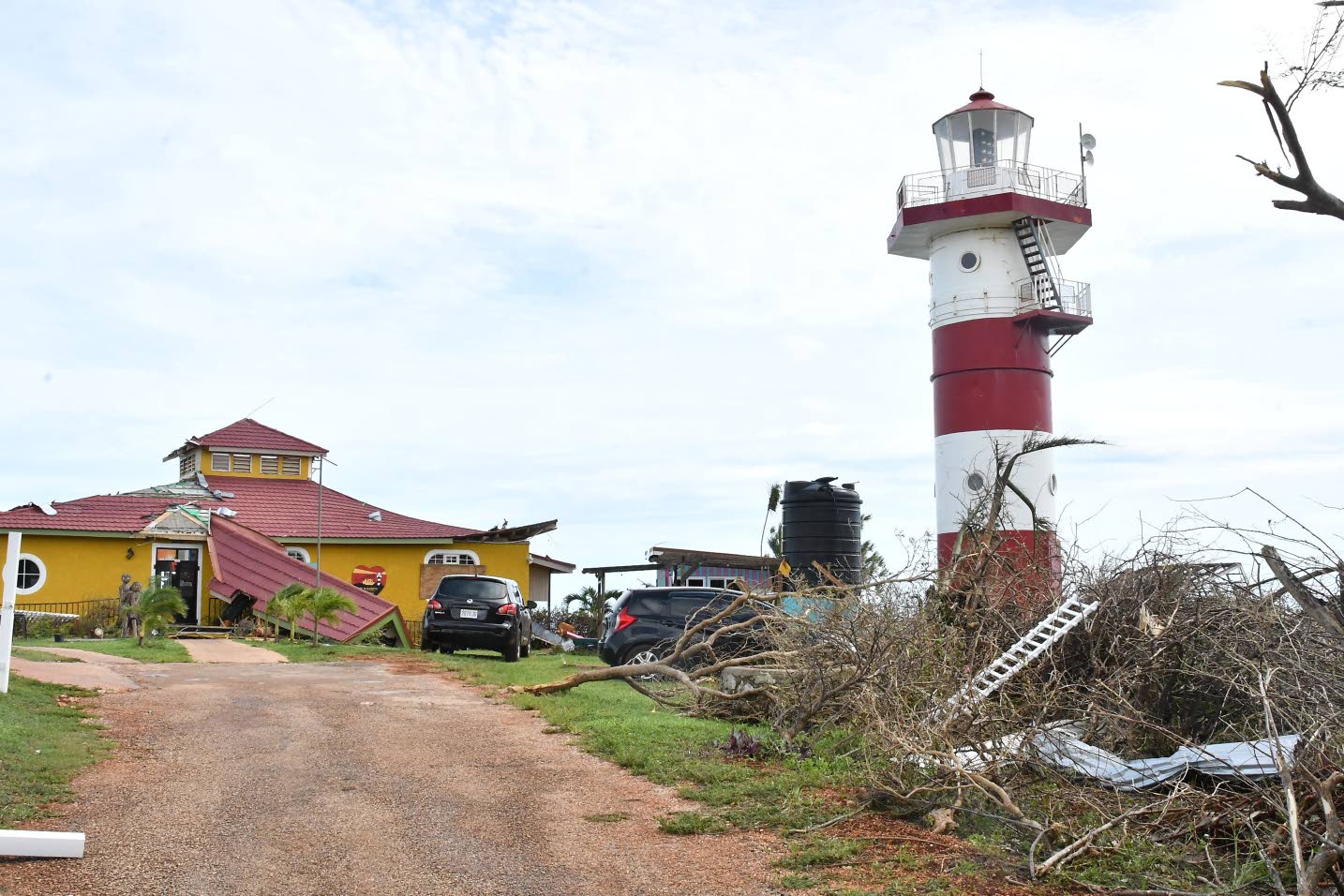
Damage unleashed by Hurricane Beryl at Lover’s Leap, the famous tourist attraction in St Elizabeth, last year July.Photo: Karl Mclarty


